Consider following on social media!
Quick note: if you’re viewing this via email, come to the site for better viewing. Enjoy!

Photo by lil artsy, please support by following @pexel.com
Hey, do you remember the time when you could check the email that you had gotten from a random stranger and have nothing to worry about? Like the thought of you and them becoming pen pals was a possibility.
No, of course, no one would think that way since we’re all trained, due to our parents from a young age to stay away from strangers. However, let’s say that you did, and you were curious as to how this random chance of friendship would play out.
You email each other back and forth and things are going swell, right up until you get a notification saying, “You have twenty-two hours to hand over $65,356.34 if you want any chance of getting your computer back to normal and your dirty little secrets from being exposed.” This scenario isn’t exactly how the attack plays out, but you get the idea, your pseudo-friend has dirt on you and wants you to pay up or else.

Steve: I refuse.
Jake: Okay, I didn’t see that coming so quickly. Oh gosh, you didn’t even think about it.
Photo by cottonbro studio, please support by following @pexel.com
You got Blockbuster
So back in 1989, hot movies were being released like Road House, Batman, and Indiana Jones and the Last Crusade, and the internet was booming. There was the raise of AOL or what’s better known as America Online, the movie The Godfather had been out for some years before then and people were drawing inspiration from the famous line that most jobs and now what seems like the current stance of every landlord, utility service provider, or insurance company are saying, “I’m going to make you an offer you can’t refuse.” Someone who may have taken inspiration from this movie was Joseph L. Popp.
A Harvard-trained evolutionary biologist who was the first person ever to create a ransomware virus. For those who don’t know, ransomware is a type of malware that acquires the victim’s information and denies access until the demands are met. These demands could be sending money, demanding the “truth” if it’s an activist act, or sending nudes. That last one was silly but I’m sure there’s some hacker out there using ransomware on Only Fans accounts for nudes.
Along with the creation of ransomware came interesting names such as “AIDS Trojan” and “PC Cyborg”. Popp made like capitalism and capitalized on the AIDS epidemic by sending out 20,000 infected diskettes labeled “AIDS Information” to people of the World Health Organization or widely known as W.H.O.
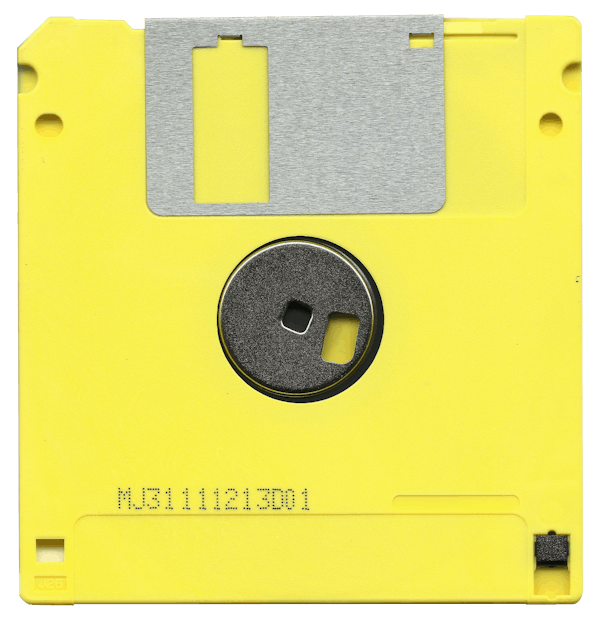
Photo by Pixabay, please support by following @pexel.com
The diskettes housed malicious code able to hide file directories, lock file names, and demand victims send $189 to a PO Box in Panama to get their information back. This was the first generation of ransomware, and things have become more advanced since then.

Photo by cottonbro studio, please support by following @pexel.com
Father of Ransoms
After Joseph was deemed “The Father of Ransomware”, what category of people came to follow in his footsteps, not only to use but later improve this malware? They are called hackers and just a side note; anyone can use malware making them cyber-attackers, but I’m going to use hackers since their main objective is to exploit for profit.
Hackers tend to use ransomware via various methods such as phishing emails with malicious files attached, and drive-by downloading – a method where a file is downloaded without your interaction. And finally spoofing – is another method where a hacker is posing as a trusted entity.
Hackers can often obtain Ransomware-as-a-Service (RaaS) or malware-for-hire which has easier use and is cost-efficient for performing ransomware attacks. This is insane because this means hackers actually have a budget created to perform cyber-attacks. There are several ransomware variants, some of which could have you buck-naked out in the cold (or heat, depending on when and where you’re at in the world).
Popular ones are Ryuk – delivered through spear-phishing emails or gaining access to a desktop remotely, this variant can encrypt certain files avoiding the crucial ones for the computer’s operation and presenting the demand for ransom.
Ryuk can account for an average of $1 million. Maze can combine file encryption and data theft, this is done with the intent that if the victim decides not to pay the ransom their information could be exposed, sold online, or both.
REvil also known as Sodinokibi is a variant that has large organizations on the menu. This variant has been responsible for a number of large data breaches, a couple being “Kaseya” and “JBS” and has been known to have demanded a ransom of $800,000.
Lockbit, operating since September 2019, this variant rapidly encrypts data to prevent detection by security appliances and SOC (System and Organization Control) teams. There are a couple of other variants but at this junction, you pretty much get the point, they get access to your information, lock you out, and hold it for ransom.
Enjoy the read so far? Why don’t you consider subscribing so you can keep up to date?

Photo by Wallace Chuck, please support by following @pexel.com
Payments Not Made
Being hit with a ransomware attack is insanely dangerous and many vital organizations such as hospitals and public services have experienced significant losses from it as not paying the ransom can halt access to critical care.
Paying the ransom can lead to a chain reaction of events, a few being loss of the money used in ransom payment, productivity time lost, and the need to hire IT for disaster and recovery. And choosing not to pay the ransom could lead to whatever consequences the hacker has set in place.
So, how do you stop your information from being held against you? Well, there are a number of ways, most of which are pretty basic and get overlooked every day since we’re all creatures of habit.
Avoid clicking on links sent via email or other messaging means, staying away from compromised websites, ones where you may get a warning from your browser which displays “This site is not secure and may be unsafe, turning back is recommended.” Heed this warning as it may save you and your computer from being hit with a drive-by download.
And the most likely out of the bunch, if you suffer from being attracted to shiny things as I do, are ads that may pop up on your screen. A malicious link could be hidden within the ad to redirect you to an un-secure site for some non-consent time for your computer.
Photo by Tima Miroshnichenko, please support by following @pexel.com
Made it this far and found this to be entertaining? Then a big thanks to you and please show your support by cracking a like, sharing this with whomever, scripting a comment, or plug-in to follow.
Would like to give sincere thanks to current followers and subscribers, your support and actions mean a lot and has a play in the creation of each script.
Do you think there’s something I missed on ransomware and want to add? Script a comment below.
Discover more from Scriptingthewhy.com
Subscribe to get the latest posts sent to your email.

