
Pennelope, the Disco Pen of Destiny: Unleashing Spreadsheet Magic

Has anyone seen my pen by the way? It’s nothing special, just the principle.
Photo by Andrea Piacquadio, please support by following @pexel.com

Stand-up Saturdays

Dave’s life was a beige buffet of boredom. Every day was a lukewarm cup of instant noodles – the same mushy flavor, guaranteed to induce existential dread. His cubicle was a monument to monotony, decorated with the inspiring posters of “Stapler Safety: Don’t Be a Pinhead” and “How to Spot Signs of Spreadsheet Burnout” (spoiler alert: it involved uncontrollable weeping and a desperate yearning for stapler darts).

One particularly tedious Tuesday (which felt suspiciously like a Wednesday – time was a slippery eel in Dave’s world), a rogue sparkle dared to break the fluorescent monotony. Nestled amidst the usual suspects – a chewed-up pen with a grudge against paper, a highlighter with the lifespan of a mayfly, and a suspiciously sentient eraser – lay a pen. Not just any pen, mind you, but a pen that pulsed with the rhythmic glow of a disco ball on overdrive.

Intrigued (and slightly terrified his fish tank screensaver had come to life), Dave gingerly reached for the pen. A jolt of electricity crackled through him, the kind you only get by accidentally plugging your phone into the toaster (highly unrecommended, but excellent for party tricks).

Then, in a transformation so outrageous it would make David Copperfield choke on his disappearing handkerchief, the pen morphed. Gone was the plastic prison, replaced by a vision of dazzling brilliance. Her hair shimmered like a perfectly formatted rainbow chart, and her eyes held the calculating glint of a master pivot table manipulator. It was like his stapler safety poster had come to life, only way more helpful and far less judgmental about his questionable stapler dart-throwing technique.

How am I going to explain this in my exit interview!?
Photo by AlphaTradeZone, please support by following @pexel.com

Dave, his jaw slacker than a hot dog in a clown’s pocket, gaped at this disco pen goddess. Was this a fever dream brought on by too many stale donuts and lukewarm coffee? A figment of his spreadsheet-addled mind? No, this was real, and judging by the wink she threw him (yes, the pen winked!), she was ready to party.

“Greetings, cubicle drone,” the disco pen purred, her voice smoother than freshly buffed data (which, let’s be honest, is smoother than anything Dave had ever experienced). “I am Pennelope, the Disco Pen of Destiny, and I’m here to make your spreadsheets sing!”

And sing they did. Dave, under Pennelope’s tutelage, started generating reports that resembled fever dreams of a graphic designer on acid. Charts danced the Macarena, formulas morphed into disco anthems, and pivot tables became light shows worthy of a Vegas casino. His boss, a man whose frown lines could store more stress than a maxed-out credit card, did a double take, then started humming along to the “Profit Margin Mambo” erupting from Dave’s printer.

The office, once a graveyard of sighs and stifled yawns, was transformed into a disco inferno. Staplers moonwalked, clipboards did the robot, and even the grumpy filing lady tapped a toe to the beat. Dave, once the king of beige, was now the sultan of spreadsheets and the undisputed ruler of office-supply-fueled pandemonium.

So, dear readers, remember: a little disco ball magic can turn your Tuesday into a full-blown fiesta. And who knows, maybe your pen cup holds the key to unlocking a world of spreadsheet-fueled dance parties. Just make sure you have a good stapler for self-defense – things can get wild when the office supplies start grooving.

Love learning tech? Join our community of passionate minds! Share your knowledge, ask questions, and grow together. Like, comment, and subscribe to fuel the movement!

Gaming Industry: A Journey from OXO to PlayStation 5 and Nintendo Switch

Key Takeaways

  • Early gaming began in the 1950s and 1960s with simple computer games for research.
  • The 1970s saw the rise of arcade video games, with Pong sparking a golden age.
  • The video game crash of 1983 led to a shift, with Nintendo’s NES revitalizing the industry.
  • 3D gaming and online gaming emerged in the 1990s with advancements in technology.
  • Today, the gaming industry offers a vast array of experiences across diverse consoles.
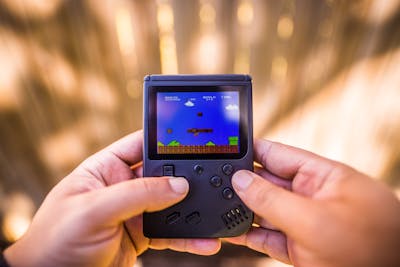
This was impressive back in the day, and it still is.
Photo by Caleb Oquendo, please support by following @pexel.com

From Bits to Meta

The history of gaming is a fascinating journey that spans over seven decades, evolving from simple scientific experiments to a multi-billion-dollar industry that captivates audiences worldwide. It all began in the 1950s and 1960s when computer scientists started designing simple games as part of their research. One of the earliest known games was a tic-tac-toe game called OXO, developed in 1952 by British professor A.S. Douglas for his doctoral dissertation at the University of Cambridge. Another milestone was in 1958 when William Higinbotham created Tennis for Two on an oscilloscope at the Brookhaven National Laboratory in New York.

The 1960s saw the invention of Spacewar!, a space combat video game developed by Steve Russell and others at MIT for the PDP-1 computer. This game marked the first video game that could be played on multiple computer installations. The dawn of the home console era began with the “Brown Box,” a prototype developed by Sanders Associates in 1967, which Magnavox later sold as the Odyssey in 1972. This was the world’s first home video game console, albeit with limited success commercially.

Bro, I’m telling you, it’s just like we practice playing pong.
Photo by cottonbro studio, please support by following @pexel.com

The real breakthrough for gaming came with Atari’s Pong, an arcade game released in 1972, which became wildly popular and led to a home version in 1975. The success of Pong sparked a boom in the video game industry, leading to the golden age of arcade video games with titles like Space Invaders and Pac-Man. The late 1970s and early 1980s were dominated by the console wars, with companies like Atari, Nintendo, and Sega vying for market dominance.

The video game crash of 1983, largely due to market saturation and poor-quality games, led to a significant shift in the industry. This period saw the rise of Japanese companies like Nintendo, which released the Nintendo Entertainment System (NES) in the United States in 1985, revitalizing the industry. The late 1980s and early 1990s witnessed the emergence of handheld consoles, with Nintendo’s Game Boy leading the way.

Advancements in technology during the 1990s brought about the era of 3D gaming and the use of CDs for game storage. Sony’s PlayStation and Sega’s Saturn were among the first to utilize this technology, changing the landscape of gaming. The late 1990s also saw the rise of online gaming, with the internet becoming more accessible to consumers.

The early 2000s were marked by the entry of Microsoft into the console market with the Xbox, which competed with Sony’s PlayStation and Nintendo’s consoles. The gaming industry continued to grow, with mobile gaming becoming a significant force thanks to the proliferation of smartphones.

Game well, and game often.
Photo by Artem Podrez, please support by following @pexel.com

Today, gaming is a diverse and vibrant community, with consoles like the PlayStation 5, Xbox Series X, and Nintendo Switch offering a wide range of experiences for gamers. Each console has its unique features and exclusive games, making the choice of a favorite gaming console a personal one for many gamers.

As we reflect on the rich history of gaming, we invite you to share your favorite gaming console and why it holds a special place in your heart. Whether it’s the nostalgia of the NES, the innovation of the PlayStation, or the versatility of the Switch, each console has contributed to the tapestry of gaming history. Share your thoughts and join the conversation about the evolution of gaming and the consoles that have shaped our experiences.

Love learning tech? Join our community of passionate minds! Share your knowledge, ask questions, and grow together. Like, comment, and subscribe to fuel the movement!

Don’t forget to share.

Every Second Counts. Help our website grow and reach more people in need. Donate today to make a difference!

One-Time
Monthly
Yearly

Make a one-time donation

Make a monthly donation

Make a yearly donation

Choose an amount

$5.00
$15.00
$100.00
$5.00
$15.00
$100.00
$5.00
$15.00
$100.00

Or enter a custom amount

$

Your contribution is appreciated.

Your contribution is appreciated.

Your contribution is appreciated.

DonateDonate monthlyDonate yearly

The Importance of Firewalls in Digital Security: Protecting Your Castle

Mark: We have iOS, we don’t need a firewall.
Tanya: You’re wrong, I say we do, and here’s why.
Photo by Jopwell, please support by following @pexel.com

Expanding Your Digital Castle: A Deeper Dive into Firewalls

Understanding the Digital Frontier: A Wilder and More Perilous Place

Let’s be real, the internet is a wild west of ones and zeros. It’s like a sprawling, neon-lit jungle filled with exotic creatures (read: weird websites) and hidden traps (read: malware). Your computer? That’s your castle, a digital fortress where you hoard your precious memes and cat videos. But let’s face it, even the best castles need a moat or two. Enter the firewall: your knight in shining armor, or more accurately, your digital bouncer.

The Firewall: A Closer Inspection

Imagine your firewall as a highly caffeinated, robot bouncer with a serious grudge against intruders. This digital doorman isn’t just checking IDs; it’s scanning for suspicious characters, decoding secret languages (code), and generally being a badass. It’s like having a tiny, tireless bodyguard living inside your computer, ready to pounce on any digital troublemakers.

The Need for a Firewall: A Matter of Digital Survival

The online world is a cutthroat place. Hackers are the digital equivalent of pickpockets with tech degrees, always on the lookout for easy targets. Malware is like a digital flu, spreading faster than you can say “delete, delete, delete!” And let’s not forget the identity thieves, those sneaky cybercriminals who want to steal your life (or at least your bank account). A firewall is your insurance policy, your bodyguard, and your emergency contact all rolled into one.

Correction, firewalls only slow me down. They don’t stop me entirely.
Photo by Ashutosh Sonwani, please support by following @pexel.com

Protection from Hackers: Hackers are the villains of our digital story. They’re like those pesky raccoons that keep raiding your trash. A firewall is your bear trap, electric fence, and motion-activated sprinklers combined. It’s there to scare off those digital critters and keep your precious data safe.

Data Privacy: Your personal information is like your most prized possession. It’s the digital equivalent of your underwear. You wouldn’t want just anyone seeing it, right? A firewall is your digital chastity belt, protecting your sensitive data from prying eyes.

Malware Prevention: Malware is the digital equivalent of a really bad roommate. It crashes your system, steals your stuff, and generally makes your life miserable. A firewall is like a bouncer at a trendy nightclub, keeping those digital party crashers out.

Network Resource Protection: Your network is like your living room. You want to share it with friends and family, but you don’t want strangers coming in and making a mess. A firewall is the digital velvet rope, keeping unwanted guests out and ensuring your network runs smoothly.

How Firewalls Work: The Magic Unveiled

Let’s break down the firewall’s magic tricks.

  • Packet Filtering Firewalls: Think of these as the TSA agents of the digital world. They examine every piece of digital luggage (data packets) and decide if it’s allowed in. Simple but effective, unless you’re dealing with a really good hacker.
  • Stateful Inspection Firewalls: These firewalls are like the bouncers who remember your face. They keep track of who’s coming and going, making it harder for unwanted guests to sneak in.
  • Proxy Firewalls: Picture a super-protective parent who screens all your calls. Proxy firewalls act as intermediaries, shielding your computer from the outside world. But like a helicopter parent, they can be a bit overprotective.
  • Next-Generation Firewalls (NGFWs): These are the James Bonds of the firewall world, equipped with gadgets and gizmos galore. They can do everything from blocking attacks to identifying suspicious behavior. But they also come with a higher price tag, so you might need a license to operate one.

Building a Fort Knox: Fortifying Your Digital Castle

A firewall is a great start, but it’s not a magic bullet. You need to create a layered defense strategy. Think of it like building a castle with multiple walls, a moat, and a dragon.

  • Keep Your Software Updated: This is like replacing the old, creaky drawbridge with a shiny new one.
  • Create Strong, Unique Passwords: Your passwords are the keys to your castle. Don’t use “password123.” It’s like leaving the front door unlocked.
  • Beware of Phishing Attacks: Phishing is like a digital wolf in sheep’s clothing. Don’t click on suspicious links or open attachments from unknown senders.
  • Enable Two-Factor Authentication: This is like adding a second door to your castle. It makes it much harder for intruders to get in.
  • Back-Up Your Data: This is like storing your valuables in a safe deposit box. It’s always a good idea to have a backup plan.
  • Educate Yourself: Knowledge is power. Stay informed about the latest cyber threats and best practices.

Debunking Firewall Myths: Let’s clear up some misconceptions.

  • Myth 1: A firewall is enough to protect me. Think of a firewall as a helmet. It protects your head, but you still need to wear a seatbelt.
  • Myth 2: All firewalls are created equal. Firewalls come in all shapes and sizes, from budget-friendly to top-of-the-line. Choose one that fits your needs.
  • Myth 3: Firewalls slow down my internet. Modern firewalls are like athletes. They’re fast, efficient, and won’t slow you down.
You may need to hire Mario to protect your castle.
Photo by Riedelmax, please support by following @pexel.com

Conclusion: Your Digital Castle’s Cornerstone

A firewall is the foundation of a strong digital defense. It’s like the sturdy walls of your castle, protecting you from the digital wild. But remember, even the best castle needs a vigilant guard. So keep your eyes open, stay informed, and enjoy your digital kingdom.

Want to learn more about the dark side? Let’s talk about ransomware, phishing, or those pesky botnets. Or maybe you’re ready to dive deeper into the world of advanced firewall technologies. Your call!

Love learning tech? Join our community of passionate minds! Share your knowledge, ask questions, and grow together. Like, comment, and subscribe to fuel the movement!

Don’t forget to share.

Every Second Counts. Help our website grow and reach more people in need. Donate today to make a difference!

One-Time
Monthly
Yearly

Make a one-time donation

Make a monthly donation

Make a yearly donation

Choose an amount

$5.00
$15.00
$100.00
$5.00
$15.00
$100.00
$5.00
$15.00
$100.00

Or enter a custom amount

$

Your contribution is appreciated.

Your contribution is appreciated.

Your contribution is appreciated.

DonateDonate monthlyDonate yearly