
Unconventional Route to Success: A Hilarious Marketing Presentation

Stand-up Saturdays

The Teleporting Toilet: My Most Bizarre Office Adventure (That Somehow Landed Me a Win)

Let’s talk about presentation day jitters. You know the feeling – that nervous energy that thrums through your veins, the butterflies doing a mosh pit in your stomach. Today, for yours truly, Brenda the marketing maven, those jitters were being soothed by the dulcet tones of “Boss Babe Boogie” blasting through my headphones. My secret weapon against the pre-meeting freakout.

This presentation was my baby, a bold new marketing strategy that was practically guaranteed to revolutionize our approach. I envisioned myself strutting into the boardroom with the confidence of Beyonce and the PowerPoint skills of a preternaturally gifted toddler. But the universe, it seems, had a different plan in store for me – a plan that was equal parts hilarious and terrifying.

Ugh, I just had to try out a new blend of coffee.
Photo by Philip Justin Mamelic, please support by following @pexel.com

Nature called right as I was about to slay the boardroom with my brilliance. Bathroom break, deep breath, conquer the conference room – that was the plan. Except, the universe, with its penchant for comedic timing, had a different destination in mind.

Instead of the familiar glass doors of the boardroom, I found myself face-to-face with a wall plastered with vintage movie posters. Panic started to simmer. “Wrong floor?” I mumbled, patting my pockets for my phone (another nervous tic I apparently have). And wouldn’t you know it, my phone was missing?

Just then, the door creaked open, revealing a startled janitor with a cart overflowing with mops. “Woah! A new face in the broom closet?” he boomed, clearly mistaking the break room for a janitorial haven.

“Broom closet? This is the break room, right?” I squeaked, gesturing at the posters.

The janitor’s eyes widened comically. “The break room? Lady, you’re on the 17th floor. This is the projection booth!”

My jaw dropped. The 17th floor? My presentation was on the 3rd! Was this some elaborate hazing ritual for newbie marketing heads? But I’d been with the company for five years! Where were the hidden cameras, the confetti cannons, the cheering colleagues waiting to unveil the hilarious prank?

With a sliver of hope, I retraced my steps back to the “bathroom,” the familiar avocado tiles a beacon of comfort. Thankfully, the reflection staring back wasn’t some bizarre office doppelganger. Emerging with renewed determination, I braced myself for the boardroom this time.

Except, this time the door led me straight to the… supply closet? Crammed between printer paper and sticky notes, I let out a burst of hysterical laughter. This was just too absurd!

Maybe, just maybe.
Photo by Lucas Pezeta, please support by following @pexel.com

Just as I began plotting my escape route, the door swung open again. There stood Mr. Kensington, our impeccably dressed CEO, a man who could probably quote Shakespeare in his sleep. His eyes widened in surprise.

“Brenda? In the supply closet? With printer ink on your… shoe?” He gestured to a rogue black streak I hadn’t even noticed.

I could only manage a sheepish grin. “Bathroom malfunction, sir? Teleportation kind of malfunction?”

Mr. Kensington, a man not exactly known for his humor, blinked. Then, to my surprise, a slow smile crept across his face.

“Brenda, you never cease to amaze me. Now, about this presentation…”

His unexpected amusement sparked a fire under me. I launched into my pitch, weaving a narrative that showcased the brilliance of my marketing strategy. The initial shock of the situation faded, replaced by a healthy dose of self-deprecating humor as I recounted my bizarre journey to the supply closet.

And guess what? The presentation was a hit! The board was engaged, Mr. Kensington even chuckled a few times about my “unconventional route” to the boardroom. (Thanks, Mr. Kensington!) As I left the room, a wave of relief washed over me mingled with a strange sense of exhilaration.

Back at my desk, I spotted a small, framed picture on a colleague’s desk. It was the avocado-tiled bathroom, the one I’d so confidently mistaken for the restroom. Underneath, a caption read: “Out of Order. Use at Your Own Risk.” My eyes widened. So, the “teleporting toilet” wasn’t a malfunction at all…

Looks like this office has a few more surprises up its sleeve. Stay tuned for the next chapter of my adventures in teleportation and marketing domination!

Love learning tech? Join our community of passionate minds! Share your knowledge, ask questions, and grow together. Like, comment, and subscribe to fuel the movement!


Still Wakes the Deep: A Chilling Descent into North Sea Horror

Key Takeaways

  • Strengths:
    • Haunting atmosphere: North Sea oil rig setting, great sound design
    • Excellent voice acting brings characters to life
    • Interesting story with themes of isolation, corporate greed, and disturbing the natural order
  • Weaknesses:
    • Linear gameplay with limited exploration
    • Short playtime may leave some wanting more
    • Relies on atmosphere and psychological horror, not jump scares, which may not appeal to everyone
  • Overall:
    • Great for fans of atmospheric horror who value story and mood
    • Less appealing for gamers who crave exploration, deep mechanics, and replayability
The new life at sea.
Photo from wall.alphacoders.com

Still Wakes the Deep: A Descent into Claustrophobic Horror (But is it Enough?)

A Haunting Setting: North Sea Gloom and Scottish Grit

North Sea. 1970s. A lone oil rig, the Cormorant, claws its way out of the churning grey water, a beacon of human industry against the unforgiving wilderness. But beneath the surface, something stirs – an ancient, unknowable entity awakened by man’s insatiable hunger for black gold. This is the setting for Still Wakes the Deep, a horror game that promises a chilling descent into the abyss, both literal and metaphorical.

You take on the role of Caz, a rough-around-the-edges electrician with a thick Scottish brogue. The voice acting throughout the game is superb, each character imbued with a distinct personality that shines through despite the ever-present tension. As Caz, you’ll find yourself quickly drawn into the tight-knit crew of the Cormorant, a camaraderie that makes the looming threat all the more terrifying.

Atmosphere Unbound: A Masterclass in Unease

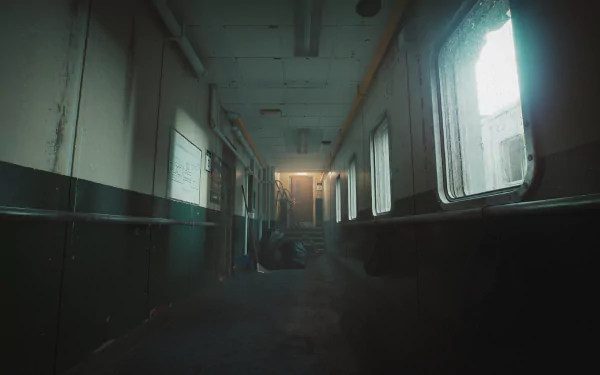
The atmosphere is Still Wakes the Deep’s undisputed strength. The developers, of The Chinese Room, are veterans of crafting hauntingly beautiful worlds (think Dear Esther and Everybody’s Gone to the Rapture), and here they excel once again. The weathered metal of the oil rig groans with every gust of wind, the ever-present creak and clang a constant reminder of your isolation. The North Sea itself is a character, a churning, unforgiving expanse that threatens to swallow the rig whole.

But the true horror lies beneath the waves. The game masterfully builds dread without relying on jump scares. Glimpses of twisted metal and unnatural movement hint at the lurking monstrosity, your imagination filling in the horrifying details. The narrative, bolstered by the fantastic voice acting, plays a crucial role in this. As Caz investigates strange occurrences and stumbles upon the crew’s panicked whispers, you become genuinely invested in their fates. The story delves into themes of isolation, corporate greed, and the consequences of disturbing the natural order, adding depth to the chilling experience.

The quietness will send chills down your spine.
Photo from wall.alphacoders.com

Linearity’s Grip: A Claustrophobic Cage

However, Still Wakes the Deep isn’t without its flaws. The biggest culprit is its frustrating linearity. Exploration, a key element in horror games, is severely limited. The game tightly controls your path, leading you from point A to point B with little room for deviation. This not only undermines the sense of dread (“Surely there’s somewhere I can hide?”) but also makes the experience feel more like an interactive horror movie than a truly engaging game. For hardcore gamers craving the freedom to explore and uncover secrets, this relentless linearity might feel like being trapped in a rusty cage.

A Short Shudder: Is Brevity the Soul of Horror?

This linearity also contributes to the game’s relatively short playtime. While some might appreciate a concise horror experience, others might feel left wanting more, especially considering the game’s intriguing premise and captivating atmosphere. The lack of replayability further diminishes the value proposition.

Stillness down every hallway.
Photo from wall.alphacoders.com

Horror’s Echo: A Whisper, Not a Scream

The horror itself, while effectively unsettling, falls short of delivering true scares. The reliance on atmosphere and psychological horror is admirable, but some might crave a more visceral experience. The encounters with the monstrous entity, while appropriately disturbing thanks to the excellent sound design, lack the punch some horror fans might be looking for.

Taking the Plunge: A Verdict for Horror Seekers

So, is Still Wakes the Deep worth taking a plunge into? It depends on what you’re looking for.

For horror aficionados who value atmosphere and narrative over jump scares and exploration, Still Wakes the Deep offers a compelling experience. The meticulously crafted world, strong voice acting, and interesting story will keep you engaged for its short runtime.

However, hardcore gamers craving exploration, deep gameplay mechanics, and a long-lasting experience might find themselves disappointed. The game’s linearity and lack of replayability might leave them feeling like they haven’t truly plumbed the depths of the horror it presents.

Ultimately, Still Wakes the Deep is a haunting experience with undeniable potential. It masterfully builds dread and creates a truly unsettling atmosphere, but its shortcomings in level design and gameplay limit its overall impact.

Love learning tech? Join our community of passionate minds! Share your knowledge, ask questions, and grow together. Like, comment, and subscribe to fuel the movement!
Don’t forget to share.

Every Second Counts. Help our website grow and reach more people in need. Donate today to make a difference!

One-Time
Monthly
Yearly

Make a one-time donation

Make a monthly donation

Make a yearly donation

Choose an amount

$5.00
$15.00
$100.00
$5.00
$15.00
$100.00
$5.00
$15.00
$100.00

Or enter a custom amount

$

Your contribution is appreciated.

Your contribution is appreciated.

Your contribution is appreciated.

DonateDonate monthlyDonate yearly

Facial Recognition in Vending Machines: Privacy Concerns and Security Risks

Key Takeaways

  • Facial recognition technology is being integrated into vending machines, raising privacy and security concerns.
  • The “Waterloo Incident” exposed how vending machines might collect facial data without user knowledge.
  • Even if data isn’t transmitted, on-device data security is crucial to prevent breaches.
  • Facial recognition algorithms can be biased based on the training data they receive.
  • Spoofing techniques can potentially trick facial recognition systems in vending machines.
  • Transparency and user control are essential: consumers deserve to know what data is collected and how it’s used.
  • Strong encryption, secure data storage, and unbiased algorithms are crucial for responsible innovation.
  • Regulations regarding data collection and usage are needed to protect consumers.
  • The potential impact on children’s privacy and the environmental cost of this technology requires further exploration.
Unlock at first sight.
Photo by George Dolgikh, please support by following @pexel.com

Facial Recognition in Vending Machines: A Looming Threat in Disguise

The convenience of modern technology often comes with hidden costs. Facial recognition, a powerful tool with growing applications, is now finding its way into an unexpected place: vending machines. While the idea of a quick snack purchase with a simple face scan might sound futuristic and effortless, the reality raises serious concerns about privacy, security, and potential misuse.

The Waterloo Incident: A Glimpse into the Data Collection Machine

In 2018, a student at the University of Waterloo in Canada stumbled upon a troubling discovery. A seemingly ordinary vending machine displayed an error message revealing its ability to collect facial data. This incident brought to light the use of “demographic detection software” by the manufacturer, Invenda Group. This software, according to the company, estimates the age and gender of users. However, even if the processing happens solely on the device, as Invenda claims, the very notion of facial recognition technology embedded in a vending machine is a red flag for cybersecurity experts.

Beyond “Local” Data: The Illusion of Security

The blog post you mentioned rightly emphasizes the importance of user privacy. However, it focuses primarily on the concept of data not being transmitted. While this might seem reassuring, it overlooks a crucial aspect: on-device data security. Even if data isn’t actively sent to remote servers, it remains vulnerable within the machine itself. Without strong encryption, a physical breach or a software exploit could expose the collected facial scans. Imagine a hacker gaining access to a network of vending machines across a university campus or a corporate office building. Suddenly, a vast trove of facial data linked to unknown individuals is compromised.

If we use this equation, the machine will be less biased towards me.
Photo by ThisIsEngineering, please support by following @pexel.com

The Algorithmic Bias Problem and Security Vulnerabilities

The blog post mentions machine learning, but it fails to delve into the potential pitfalls associated with this technology. Facial recognition algorithms are trained on massive datasets of images. If these datasets are biased, the algorithms themselves can inherit and perpetuate those biases. Imagine a vending machine programmed to highlight “healthy options” only for users identified as young, potentially shaming or excluding older individuals who might be more health-conscious.

Furthermore, the inherent vulnerability of facial recognition systems themselves needs to be addressed. These systems can be fooled by spoofing techniques, where attackers use photographs or masks to bypass authentication or even enable fraudulent transactions.

Transparency, User Control, and the Road Ahead

The University of Waterloo took a commendable step by removing the facial recognition-equipped vending machines following the student’s discovery. Transparency and user control are fundamental principles that must be upheld. Consumers deserve to be informed about what data is being collected from them, how it’s being used, and importantly, have the clear option to opt-out entirely.

I don’t care if the machine recorded me, I want my M&M’s!
Photo by Moose Photos, please support by following @pexel.com

A Call for Responsible Innovation: Beyond Convenience

Facial recognition technology offers undeniable convenience, but at what cost? As consumers, we need to be vigilant and demand answers from companies implementing such technologies. Cybersecurity experts advocate for strong encryption, secure on-device data storage, and the development of robust algorithms free from bias. Regulatory frameworks regarding data collection and usage in these emerging technologies are crucial to ensure consumer protection.

Ultimately, the future of technology shouldn’t compromise our privacy and security. We, as consumers, have a role to play by staying informed and demanding control over our facial data. The vending machine of the future might scan our faces, but that shouldn’t come at the expense of our fundamental rights.

Additional Considerations:

  • The potential impact on children’s privacy deserves further exploration. Are there legal or ethical considerations regarding collecting facial data from minors?
  • The environmental impact of this technology, particularly the energy consumption associated with running facial recognition software on a continuous basis, could be addressed.
  • Alternative solutions for user identification and product selection in vending machines, such as QR codes or near-field communication (NFC), could be explored.

By promoting a well-informed discussion about the implications of facial recognition technology in vending machines, we can pave the way for responsible innovation that prioritizes consumer security and privacy.

Love learning tech? Join our community of passionate minds! Share your knowledge, ask questions, and grow together. Like, comment, and subscribe to fuel the movement!

Don’t forget to share.

Every Second Counts. Help our website grow and reach more people in need. Donate today to make a difference!

One-Time
Monthly
Yearly

Make a one-time donation

Make a monthly donation

Make a yearly donation

Choose an amount

$5.00
$15.00
$100.00
$5.00
$15.00
$100.00
$5.00
$15.00
$100.00

Or enter a custom amount

$

Your contribution is appreciated.

Your contribution is appreciated.

Your contribution is appreciated.

DonateDonate monthlyDonate yearly