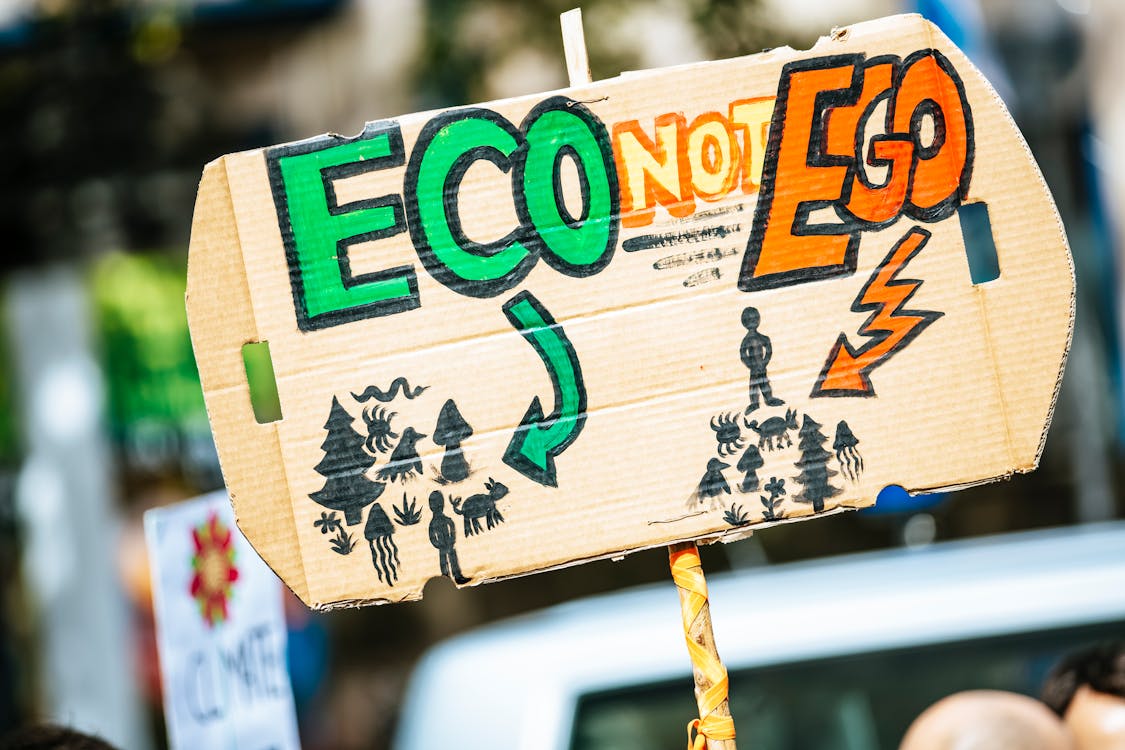
AI Impact on Job Market: Automation and New Opportunities

Key Takeaways

Humans and AI have distinct strengths: AI excels at processing data and specific tasks, while humans bring creativity, empathy, and critical thinking to the table.

AI isn’t replacing humans, it’s evolving collaboration: The future of work involves humans and AI working together, with AI augmenting human capabilities.

New job opportunities will emerge: While some jobs may be automated, AI creates new possibilities in fields like healthcare and technology.

Focus on human strengths: The skills that will be most valuable in the future are those that leverage uniquely human abilities like complex decision-making and emotional intelligence.

The future is collaborative: Humans and AI are on the same team, working together to achieve new heights.

I’m telling you Google AI is better.
Photo by Vera Arsic, please support by following @pexel.com

Showdown, show up

Ladies and gentlemen, boys and girls, and all the tech enthusiasts out there welcome to the ultimate showdown of the century: Humans vs. Artificial Intelligence! It’s the classic tale of brains versus bytes, and let us tell you, it’s going to be a wild ride.

First off, let’s give a round of applause to humans – the reigning champs of planet Earth. We’ve done some pretty impressive stuff, like sending our own kind to the moon and back without asking for directions. That’s right, no GPS needed when you’ve got a giant rocket and a dream. And let’s not forget, we’re the only species that can enjoy a good Netflix binge or appreciate the fine art of sarcasm.

But wait, there’s a new challenger on the horizon, and it’s got silicon swagger. AI is stepping into the ring with its neural networks flaring and algorithms pumping. It’s learning, it’s adapting, and it’s doing it all without needing a coffee break. What’s the difference between AI and human learning? Well, AI can crunch data faster than a teenager can text, but it still can’t understand why we laugh at cat videos.

Now, onto the million-dollar question: Will AI replace us at work? It’s already happening in some areas, folks. AI is out there making spreadsheets, scheduling meetings, and even writing articles. But before you start worrying about robots stealing your job, remember that AI is also creating new opportunities. It’s like when the microwave was invented, and everyone thought chefs were done for. Spoiler alert: we still love our gourmet meals.
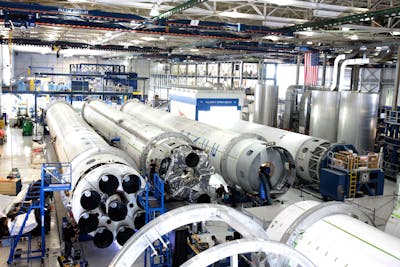
AI plays a role in the most unlikely of places.
Photo by Pixabay, please support by following @pexel.com

Artificial Intelligence (AI) has been a transformative force in various industries, and its impact on the job market is a topic of intense debate. The concern that AI is “taking our jobs” has been a recurring theme as technology advances. However, the reality is more nuanced than a simple binary of AI versus human labor.

Traditional AI, also known as weak AI, is designed to perform specific tasks by following preset algorithms and rules. This type of AI excels in structured environments where tasks are clear-cut and repetitive. For instance, self-checkout kiosks in retail stores are a manifestation of traditional AI, automating the cashier’s role to some extent. These systems are adept at handling transactions but lack the ability to engage in the nuanced interactions that a human cashier might offer.

On the other hand, Generative AI represents a leap forward in the AI landscape. Unlike traditional AI, generative models can create new content, learn from data patterns, and even innovate. This form of AI is not confined to predefined rules; it can generate text, images, and ideas that were previously thought to be the exclusive domain of human creativity.

The impact of AI on jobs is complex. While some roles may be automated, AI also has the potential to create new job opportunities. According to the World Economic Forum, nearly half of the companies surveyed expect AI to be a net job creator in the next five years. This is particularly true in industries like automotive and aerospace, where AI is expected to drive employment gains.

Moreover, AI’s role in the job market is not just about replacement but augmentation. AI can enhance human capabilities, leading to increased productivity and the creation of new roles that did not exist before. For example, AI can assist doctors in diagnosing patients more accurately, but it cannot replace the empathetic care that healthcare professionals provide.

The conversation around AI and employment is also a matter of perspective. While rapid advances in AI threaten to eliminate certain jobs, they also present an opportunity to redefine work. Jobs with routine elements may be at risk, but those that require complex decision-making, emotional intelligence, and creative thinking are likely to see growth.

I just blogged with AI and it was funnier than me.
Photo by Christina Morillo, please support by following @pexel.com

In conclusion, the human vs. AI showdown isn’t a battle; it’s a collaboration. We’re teaming up with our digital buddies to reach new heights. So, let’s embrace the future, keep our wits sharp, and maybe, just maybe, teach our AI friends the joy of a good old-fashioned dad joke.

Remember, whether you’re made of flesh or code, it’s all about working smarter, not harder. Now, if you’ll excuse us, we need to go teach our virtual assistant the difference between ‘there,’ ‘their,’ and ‘they’re.’ Wish us luck!

Enjoy what you read? Why not consider subscribing for more?

Don’t forget to share.

The Influence of Data Science: Unveiling the Strategies of Retail Layouts

Consider following on social media!

Quick note: if you’re viewing this via email, come to the site for better viewing. Enjoy!

woman with pineapple in store.
Why would he tell me to buy a pineapple and put it upside down on our counter? We’re just having dinner with my coworker and his wife.
Photo by Anna Shvets, please show support by following @pexel.com

Here’s a scenario, you walk into your local grocery store to get some items for the house, stroll down the aisle to the baby (or “oops I did it again”) care section to pick up a few packages of diapers. While enjoying the “dear god, why didn’t I make like a git request and just pull” section, you pause and rewind to do a double take because you see something located where it shouldn’t be.

You hurry back to confirm what you thought you saw, and you think to yourself “no, that’s not right. There’s no way this would be placed here.”

Looking around to see if anyone else can view the wonder on your face to share your experience.

man drinking out of a bottle.
Typically don’t drink this much but it’s near Christmas time and I don’t feel like being a present father so challenge accepted.
Photo by RODNAE Productions, please show support by following @pexel.com.

You ponder the almighty question… “why would there be a drinking hip flask in the same aisle right across from the baby products?”

Your mind scrambles to figure out what was the elevator pitch and who greenlight this nonsense.

Now, would you believe me if I told you that said item was placed there with you in mind? Well, not for you per se but for you to purchase leading to a raise in sales.

If you have wondered about this, you’re not alone and I can tell you that it’s attributed to a collection of “data” with a dash of “science” is the reason why this and many other layouts occur.

Sidenote, starting now take a shot every time you read the word “data”. You just might be hammered by the end of this post, enjoy.

Data Science is to blame which I will explain how, so like usual, I’ll be going over what, who, and what uses it, and if this is a field you could venture into without breaking the bank because…well, I don’t know anyone who doesn’t like saving money.

Science Behind the Data

scientist pouring something into a beaker.
It’s my first day on the job and I have to infect rats. But why? Photo by ThisIsEngineering, please show support by following @pexel.com.

Data science is the study of data to pull meaningful insights for a business. Data is typically pulled from either a method called “scraping” (or web-scraping, meaning to extract information from websites) or acquired from sites that provide a database collection on domain knowledge of interest.

What is data science? Well, I can tell you it’s nothing like Breaking Bad, although… there may be some applications that could be applied. I’m going to stop right there; kids never use data science to boost sales for narcotics.

Various fields such as mathematics, computer engineering, artificial intelligence, and statistics come together to answer questions in the event of what happened and try to make possible predictions of what will happen.

So, imagine data science as if your ex and a bunch of their friends got together to talk about everything you’ve ever done and run through the possibilities of you finding true love or dying alone. Man, that’s cold.

Even though it’s primarily used to evaluate and provide possible models to help drive business decisions, it can be applied to many domains. Now, it’s time to explain the evil masterminds behind trying to see you as the “best parent of the year” by Child Protective Services standards.

You just may start breaking bad after you read this.

Enjoy the read so far? Why don’t you consider subscribing so you can keep up to date?

Overlords and You

Why did you pick up that flask? You know we are here for diapers.
Photo by Anna Tarazevich, please show support by following @pexel.com.

Touching back on that lovely stroll down to the baby section only to find the drinking hip flask (or what some may call a coping mechanism for the sleepless nights). The people who use data science are well… called Data Scientists (a very creative name, I know but trust me they are the culprits).

Data Scientists (not to be confused with Data Analysis) undergo several processes to provide insights. Data scientists wrangle data, put information through data preprocessing, clean, transform, and reduce what’s called “noise” (having too much data).

After this, the fun part begins where questions are framed, and data experimentation is performed many times over to produce insightful models.

Sue, are you really going to shoot me?
Sue: for a free membership at Costco, I will.
Photo by cottonbro studio, please show support by following @pexel.com.

So think of it like this, evil store overlords want to know how they can boost sales of alcoholic items, scientist acquires the data either provided by the overlord imparting spreadsheets or collection through other means mentioned earlier, and scientists spend day and night combing over details such as product placement, amount of time spent picking items in a given location, and how likely people are to make purchases for certain items.

Finally, they present their findings to evil overlords using visualization models to determine where customers are more likely to pick up items.

Yes, customers… you all were the victim in this situation.

You always have been.

Science of Data and Us

Saw Ego, thought Eggo, got hungry.
Photo by Markus Spiske, please show support by following @pexel.com.

Right, so you’re probably getting a good idea of how data science plays in our world, but you might not be aware of how far this rabbit hole goes. (That’s what she said.)

I illustrated a picture of betraying business owners as evil people who are out to collect money using your vice, this happens but it is not always the case.

Since data science can be applied to many domains such as healthcare, where it was used to track covid-19 cases by visualizing the spread of the infection to better drive health policy decisions.

Environmental care, where data science has helped nations drive solutions to better manage resources, and brace for climate change.

Companies use data science to better know their customers so they can prescribe products to best suit the customers’ needs.

The areas where data science is being applied are endless.

So, could you imagine what we would have if we never examined and experimented with data? Still don’t have flying cars though (I’m a bit salty about that.)

Schooling Required

I bet you he’s gonna say this is going to be easy, I already know his content.
Photo by Buro Millennial, please show support by following @pexel.com.

If you have made it this far and you’re probably interested in trying to pursue becoming a data scientist as a career. Wondering, “how does someone like me get into this field without a degree?”

I’m not going to lie to you, it’s going to be tough.

Don’t like school and have no plan to attend? Be prepared to take a metric ton of courses.

You’re going to need decent programming skills (two languages to start with are Python or R), knowledge and understanding of mathematics, statistics, and calculus, and finally being able to attain domain knowledge because there will be many areas to work in.

There is a trade-off with learning so much, aside from the pay (depending on your location in the world) which could range from $63k – $160k (according to Glassdoor, feel free to check your location) your work is never boring unless the company you’re researching for is boring.

Being able to display your findings and back your information will be a must.

Picture how it would look if you did a presentation for a company on increasing their sales for a product, they go with your models only for them to be in the red into their next quarter.

They more or less would treat you like Ms. Cleo and not call you back for another reading.    

The result from a bad fourth quarter.
Photo by Lucas Pezeta, please show support by following @pexel.com.

Made it this far and found this to be entertaining? Then a big thanks to you and please show your support by cracking a like, sharing this with whomever, scripting a comment, or plug-in to follow.

Would like to give sincere thanks to current followers and subscribers, your support and actions mean a lot and has a play in the creation of each script.

Think you have what it takes to be a Data scientist?

Drop a comment about a domain area that would be of interest to you.

Empowering the Future: The Role of Machine Learning and Deep Learning in AI

Key Takeaways

  • Machine Learning (ML) and Deep Learning (DL) are powerful tools that drive Artificial Intelligence (AI).
  • ML algorithms learn from data, identify patterns, and make predictions.
  • Real-world examples of ML include spam filters and recommendation systems.
  • Deep Learning is a type of ML inspired by the human brain and uses artificial neural networks.
  • Facial recognition and natural language processing are powered by Deep Learning.
  • Deep Learning models can sometimes fine-tune themselves through backpropagation.
  • ML and DL are transforming fields like medicine and transportation.
  • These technologies require a lot of data and can be susceptible to bias.
The A.I. is learning from my doom-scrolling?
Photo by Ahmed Aqtai, please support by following @pexel.com

Demystifying the Power Behind Your Tech: Machine Learning and Deep Learning

Ever scrolled through your social media feed and felt a shiver down your spine because the ads seemed to know your deepest desires? Those eerily accurate recommendations aren’t magic, but the product of a powerful technology called Machine Learning (ML).

Welcome to the AI Revolution: Powered by Learning Machines

Artificial Intelligence (AI) is rapidly transforming our world, and Machine Learning and Deep Learning (DL) are two of its most impactful tools. This blog post will be your guide to understanding these fascinating concepts and how they’re shaping the future.

Machine Learning: Learning from Experience, Like a Pro

Imagine a program that gets better at a task the more data it’s exposed to. That’s the core principle behind Machine Learning. We feed data to algorithms, and they learn to identify patterns and make predictions based on those patterns.

Think of your email spam filter. It utilizes ML to analyze your emails and identify unwanted messages, keeping your inbox clutter-free. The more spam emails you mark, the better your filter becomes at recognizing them in the future.

Deep Learning: Diving Deeper with Artificial Neural Networks

Deep Learning is a specialized form of Machine Learning inspired by the structure and function of the human brain. It utilizes complex artificial neural networks, with multiple interconnected layers, that can process massive amounts of data and excel at recognizing intricate patterns.

These “smart learning machines” power amazing applications like facial recognition software that unlocks your phone with a smile and natural language processing that allows you to have conversations with virtual assistants.

In machine learning, you have to fine-tune for the results that you want.
Photo by cottonbro studio, please support by following @pexel.com

ML vs. DL: Understanding the Nuances

While both ML and DL are subsets of AI, there are key differences. Traditional Machine Learning algorithms often require human intervention to improve their performance. If an ML model makes a mistake, a data scientist might need to adjust its parameters.

Deep Learning, on the other hand, can sometimes fine-tune itself through a process called backpropagation. This allows Deep Learning models to achieve higher levels of accuracy on complex problems, particularly those involving vast amounts of data, like image and speech recognition.

The Future is Learning: The Impact of ML and DL

From personalized medicine that tailors treatments to your unique biology to self-driving cars that navigate city streets with human-like precision, Machine Learning, and Deep Learning are transforming our world at an incredible pace.

You can’t hop over every barrier, then again, you can’t let every barrier stop you.
Photo by Andrea Piacquadio, please support by following @pexel.com

It’s All About the Data: Strengths and Limitations

While incredibly powerful, ML and DL have limitations. These models require a lot of data to function effectively, and biases within that data can lead to biased results. Additionally, understanding how Deep Learning models arrive at their conclusions can be challenging, creating a bit of a “black box” effect.

Keep Exploring!

This post has hopefully sparked your curiosity about the fascinating world of Machine Learning and Deep Learning. Stay tuned for future articles that delve deeper and explore the ethical considerations of these technologies.

In the meantime, share this knowledge with your tech-savvy friends and colleagues!

Love learning tech? Join our community of passionate minds! Share your knowledge, ask questions, and grow together. Like, comment, and subscribe to fuel the movement!

Don’t forget to share.

Every Second Counts. Help our website grow and reach more people in need. Donate today to make a difference!

One-Time
Monthly
Yearly

Make a one-time donation

Make a monthly donation

Make a yearly donation

Choose an amount

$5.00
$15.00
$100.00
$5.00
$15.00
$100.00
$5.00
$15.00
$100.00

Or enter a custom amount

$

Your contribution is appreciated.

Your contribution is appreciated.

Your contribution is appreciated.

DonateDonate monthlyDonate yearly