
Why You Need to Know Scrum for Agile Success

Key Takeaways

  • Scrum is an Agile framework that emphasizes flexibility, collaboration, and continuous improvement in software development.
  • Traditional Waterfall methods were often too rigid to adapt to the rapid changes in the tech world.
  • Scrum operates in short iterations called Sprints (typically 2-4 weeks) with a focus on delivering specific features.
  • Key Scrum events include:
    • Daily Scrums: Brief daily meetings for team progress updates.
    • Sprint Reviews: Demonstrations of completed work to stakeholders.
    • Sprint Retrospectives: Team reflections on the sprint and identification of improvement areas.
  • Key Scrum Roles:
    • Product Owner: Defines the product vision and manages the product backlog.
    • Scrum Master: Facilitates the team, removes impediments, and ensures adherence to Scrum principles.
    • Development Team: A self-organizing team responsible for delivering the product increment.
  • Scrum has applications beyond software development, including product development, project management, and education.
  • The future of Scrum involves:
    • Integration with other Agile frameworks.
    • Increased emphasis on data-driven decision-making.
    • A stronger focus on individual and team well-being.
  • Resources for learning about Scrum: Online courses, books, and certifications.
  • Understanding Scrum provides valuable insights into modern software development and develops highly sought-after skills in the tech world.

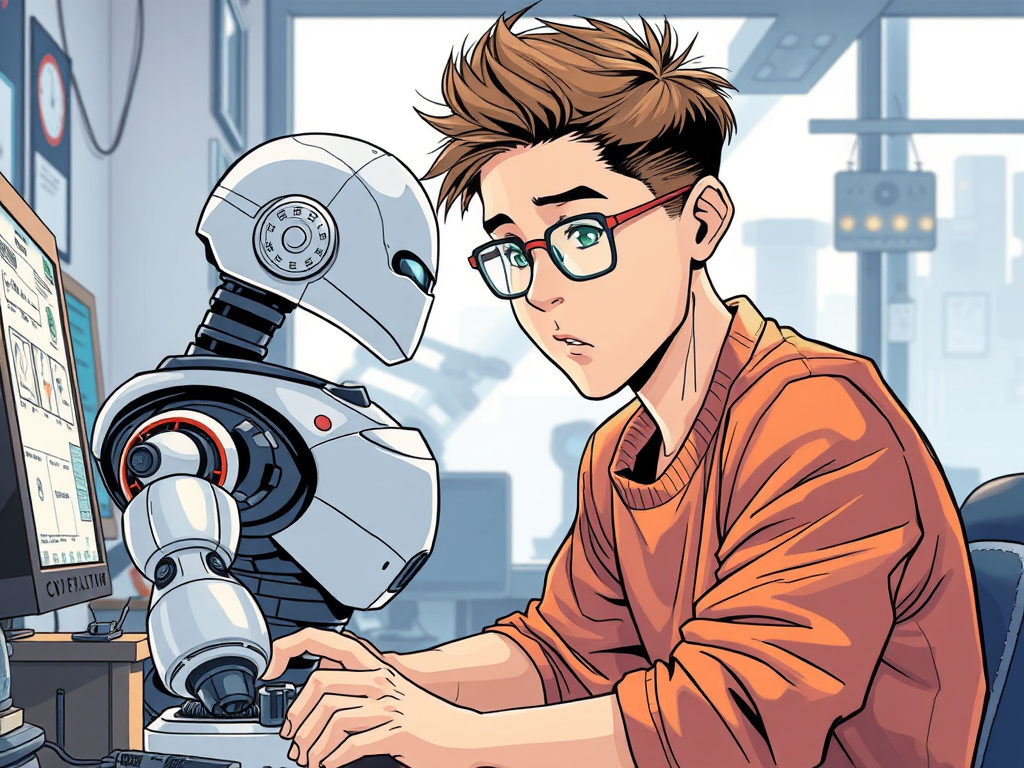
AI-generated image. “Guys, I think we might want to try scrum this go around.”

Come one, come all! Welcome back again to another- ‘read this while you wait either on or in an elevator.’ Again, I don’t know what my reads do while reading these scripts but feel free to me know in the comment section below. We have that there for a reason. Make like someone filled with hopes and dreams and start using them. Start using the comment section is all I’m saying. Okay, moving right along. Have you ever wondered, “Whose your daddy?” In many other fields, everyone has a version of a “work daddy”. They might go by other names such as; foreman, supervisor, manager, pimp, and even house mom. Don’t ask about that last one. Google search at your own risk. However, today we’re going to be talking about the inner workings of what makes our daddy in the information technology world, Scrum daddy. Well, the term is Scrum Master, but Scrum Daddy sounds so much safer.

Diving Deep into Scrum: A Guide for Tech Enthusiasts

So, you’re a tech enthusiast, fascinated by the inner workings of software development? You’ve probably heard whispers of “Agile,” “Scrum,” and “sprints,” but maybe you’re still a bit hazy on what it all means. Fear not, fellow techie! This script will break down Scrum, a popular Agile framework, and how it shapes the world of software development.

The Age of Agile: Why Traditional Methods Cracked

Imagine building a skyscraper without a blueprint, just winging it as you go. Sounds chaotic, right? That’s kind of how traditional software development used to be. Waterfall, the old guard, involved lengthy planning phases followed by rigid execution. But in the fast-paced tech world, things change rapidly. Customer needs evolve, new technologies emerge, and unexpected challenges arise. Waterfall, with its rigid structure, often struggled to keep up.

Enter Agile, a collection of iterative and incremental approaches. Agile emphasizes flexibility, customer collaboration, and continuous improvement. Scrum, a prominent Agile framework, provides a structured approach within this flexible environment.

AI-generated image. “So, scrum is like being on a sports team? I was never good at sports. Just when I thought I could get away.”

Scrum: The Heart of Agile

Think of Scrum as a high-performance team sport. It’s all about:

  • Sprints: Short, time-boxed iterations (usually 2-4 weeks) where the team focuses on delivering a specific set of features.
  • Daily Scrums: Brief daily stand-up meetings where team members share their progress, blockers, and plans for the day.
  • Sprint Reviews: Demonstrations of the completed work to stakeholders at the end of each sprint.
  • Sprint Retrospectives: A dedicated time for the team to reflect on the sprint, identify areas for improvement, and adjust their approach.

Key Roles in the Scrum Game

  • Product Owner: The voice of the customer, responsible for defining the product vision and managing the product backlog (a prioritized list of features).
  • Scrum Master: The facilitator and coach, ensuring the team adheres to Scrum principles and removes any impediments to their progress.
  • Development Team: A self-organizing, cross-functional team responsible for delivering the product increment.

AI-generated image. “Using agile to make this program was way better than waterfall. What were they thinking calling it waterfall anyway? Who uses water to make apps?”

Beyond Software: Scrum’s Wider Impact

While born in the software world, Scrum’s principles have proven valuable in diverse fields:

  • Product Development: From smartphones to self-driving cars, companies use Scrum to navigate the complexities of bringing innovative products to market.
  • Project Management: Whether it’s building a bridge or launching a marketing campaign, Scrum helps teams stay organized, adaptable, and focused on delivering value.
  • Education: Educators are exploring Scrum to enhance student engagement, foster collaboration, and improve learning outcomes.

The Future of Scrum: Continuous Evolution

Scrum is not a static methodology. It’s constantly evolving to meet the challenges of a rapidly changing world. Expect to see further integration with other Agile frameworks, increased emphasis on data-driven decision making, and a stronger focus on individual and team well-being.

Ready to Dive Deeper?

If you’re a tech enthusiast eager to learn more about Scrum and Agile methodologies, there are plenty of resources available:

  • Online Courses: Platforms like Coursera, Udemy, and Pluralsight offer a wealth of courses on Agile and Scrum.
  • Books: Explore classic texts like “The Scrum Guide” and “Agile Estimating and Planning.”
  • Certifications: Consider pursuing certifications like the Professional Scrum Master (PSM) or Certified Scrum Master (CSM).

By understanding the principles of Scrum, you’ll gain valuable insights into the modern software development landscape and develop skills that are highly sought-after in today’s tech-driven world. So, embrace the Agile spirit, embrace the challenge, and get ready to build amazing things! And with all of that being said, stay hopeful, have dreams, and just know, that no matter what framework your Scrum Daddy has your back.


Love learning tech? Join our community of passionate minds! Share your knowledge, ask questions, and grow together. Like, comment, and subscribe to fuel the movement!

Don’t forget to share.

Every Second Counts. Help our website grow and reach more people in need. Donate today to make a difference!

One-Time
Monthly
Yearly

Make a one-time donation

Make a monthly donation

Make a yearly donation

Choose an amount

$5.00
$15.00
$100.00
$5.00
$15.00
$100.00
$5.00
$15.00
$100.00

Or enter a custom amount

$

Your contribution is appreciated.

Your contribution is appreciated.

Your contribution is appreciated.

DonateDonate monthlyDonate yearly
Explore AI, Quantum Tech, and Cybersecurity Trends

Key Takeaways

  • AI is revolutionizing various industries: From personalized recommendations to self-driving cars, AI is rapidly transforming how we live and work.
  • Deep learning is driving AI advancements: Neural networks are enabling AI to perform complex tasks with increasing accuracy and sophistication.
  • Quantum computing holds immense potential: This emerging technology has the potential to solve problems that are currently intractable for classical computers.
  • Cybersecurity is crucial in today’s digital world: Protecting data and systems from cyber threats is essential for individuals, businesses, and governments.
  • Numerous avenues exist for getting involved: There are various ways to learn about and contribute to these fields, including online courses, coding tutorials, open-source projects, and hands-on experience.
  • The future of computing is bright: Continued advancements in AI, quantum computing, and cybersecurity will shape the future of technology and society.

Hot Topics in Computing: AI, Quantum, and Cybersecurity

Come one, come all! Welcome to another exciting script on how technology is constantly improving while the masses are choosing to be left behind. Which, it’s a real shame since our advancements in technology are designed to help make our lives easier, however, we still operate a five-day workweek. This doesn’t make sense, like, come on. Your phone is a powerful mini-computer and you’re still punching the clock.

Getting off my capital soap box. The world of computing is constantly evolving, with new technologies emerging and reshaping our lives at an astonishing pace. Today, we’ll dive into three of the hottest topics in the computer science field: Artificial Intelligence (AI), Quantum Computing, and Cybersecurity. I feel like I cover this every week, but I get no suggestions in the comment section…so, yeah, you’re stuck running this script.

1. Artificial Intelligence (AI)

AI-generated image. “It seems that part of your programming is from the snake game. Who coded you this way?”

Thanks to the creators of our new metal overlords. AI has exploded onto the scene, moving beyond theoretical concepts to become an integral part of our daily lives. From the personalized recommendations we see on streaming platforms to the AI-powered assistants on our smartphones, AI is revolutionizing how we interact with technology. I say this and somehow Netflix still misses the mark for my recommendations.

Deep learning, a subfield of AI, has been a major driver of recent advancements. Neural networks, inspired by the human brain, are now capable of performing complex tasks like image recognition, natural language processing, and even composing music. The potential of AI is vast, with applications ranging from self-driving cars and medical diagnostics to climate modeling and drug discovery.

Getting Involved

If you’re intrigued by AI, there are numerous ways to get involved:

  • Online Courses: Platforms like Coursera, edX, and Udacity offer a wealth of AI-related courses, from introductory concepts to advanced deep learning techniques.
  • Coding Tutorials: Platforms like Kaggle and Google Colaboratory provide hands-on experience with AI through coding challenges and projects.
  • Open-Source Projects: Contributing to open-source AI projects is a fantastic way to gain practical experience and collaborate with other enthusiasts.

2. Quantum Computing

AI-generated image. “I don’t think this is what they meant by quantum computing. It’s a small computer, but the computing is suppose to be smaller.”

Quantum computing leverages the principles of quantum mechanics to perform calculations that are beyond the reach of even the most powerful classical computers. This technology has the potential to revolutionize fields like drug discovery, materials science, and cryptography.

While still in its early stages, quantum computing has made significant strides in recent years. Companies like Google and IBM have achieved quantum supremacy, demonstrating that their quantum computers can solve specific problems faster than any classical supercomputer. And to answer the question that none of you are asking, no. We will not have access to this form of computing because the price tag is too high.

Getting Involved

Delving into quantum computing requires a foundation in quantum mechanics and linear algebra:

  • Online Resources: Numerous online resources, including tutorials and interactive simulations, can help you grasp the fundamental concepts of quantum computing.
  • University Courses: Many universities offer introductory and advanced courses on quantum computing.
  • Research Labs: Internships or research positions at universities and research institutions can provide valuable hands-on experience in this cutting-edge field.

3. Cybersecurity

AI-generated image. “This is America, and you choose a bad day to be a hacker.”

This is one a mixed bag of “We need more people in the field” and “We went with other candidates because you lack experience.” Study it, take part in it, “work your network”, but don’t count on getting in and making six-figures right off the back. But sour ranting aside. In today’s hyper-connected world, cybersecurity is more critical than ever. With the constant evolution of cyber threats, from ransomware attacks to data breaches, robust security measures are essential for individuals, businesses, and governments alike.

Getting Involved

Here are some ways to get started in cybersecurity:

  • Online Courses: Platforms like Cybrary and Udemy offer a wide range of cybersecurity courses, covering topics such as ethical hacking, network security, and threat intelligence.
  • Security Certifications: Obtaining industry-recognized certifications like CompTIA Security+ or Certified Ethical Hacker (CEH) can enhance your career prospects in cybersecurity.
  • Hands-on Experience: Setting up a home lab or participating in capture-the-flag (CTF) competitions can provide valuable hands-on experience with cybersecurity tools and techniques.

The Future of Computing

The future of computing is undoubtedly bright. We can expect further advancements in AI, with more sophisticated and intelligent systems transforming various aspects of our lives. Quantum computing holds the promise of unlocking unprecedented computational power, leading to breakthroughs in fields that were previously considered intractable. And as our reliance on digital systems continues to grow, cybersecurity will remain a critical challenge, requiring innovative solutions to protect against evolving threats.

And with all of that being said, I encourage you to explore these topics further and consider contributing to the advancement of this rapidly evolving field. I mean, just because you’re not getting a paycheck every two weeks doesn’t you can’t take part. Find like-minded people, take part in group activities, and keeping yourself up-to-date are good ways to “feel” involved. Not everything is about making money, right?


Love learning tech? Join our community of passionate minds! Share your knowledge, ask questions, and grow together. Like, comment, and subscribe to fuel the movement!

Don’t forget to share.

Every Second Counts. Help our website grow and reach more people in need. Donate today to make a difference!

One-Time
Monthly
Yearly

Make a one-time donation

Make a monthly donation

Make a yearly donation

Choose an amount

$5.00
$15.00
$100.00
$5.00
$15.00
$100.00
$5.00
$15.00
$100.00

Or enter a custom amount

$

Your contribution is appreciated.

Your contribution is appreciated.

Your contribution is appreciated.

DonateDonate monthlyDonate yearly

How Passwords Evolved and Why They Matter Today

Key Takeaways

  • Passwords have a long history: From ancient watchwords to modern digital security, passwords have evolved significantly.
  • Strong passwords are crucial: They are the first line of defense against cyber threats like data breaches, identity theft, and account hijacking.
  • Hackers use various methods to bypass passwords: Including brute-force attacks, phishing, and malware.
  • Creating strong passwords is essential:
    • Use a mix of uppercase and lowercase letters, numbers, and symbols.
    • Aim for at least 12 characters.
    • Use unique passwords for each account.
    • Avoid using personal information.
    • Consider using a password manager.
  • The future of password security:
    • Multi-factor authentication (MFA) is becoming increasingly important.
    • Passwordless authentication methods are being explored.
    • Advanced technologies like AI and ML are being used to enhance password security.
AI-generated image. “There’s no way that this is the password. WAIT, THEIR PASSWORD WAS “KEY”!?”

The Evolving World of Passwords: From Simple Secrets to Advanced Security

Come one, come all! Welcome back to another exciting script on ways to keep you and your loved one, and maybe not-so-loved ones information safe. Whatever the case is for you it’s important to know that we all have a role in cybersecurity. Yes, even your gam-gam, has a role in cybersecurity. That’s because “cybersecurity” is not just “cyber”. Cyber is an area of focus. And today we’re going to focus on the most basic form of cybersecurity. As you can tell from the title, it’s the one thing we all can agree on being identified as our “digital key”. Look no further than passwords.

Now what’s so special about passwords? We encounter them daily – unlocking our phones, accessing emails, and logging into countless online services. But have you ever stopped to consider the history and evolution of these digital keys? Let’s delve into the fascinating world of passwords, from their humble beginnings to the cutting-edge security measures shaping the future. And, you won’t have to write any of this down and remember it to log back in.

A Brief History of Passwords

Believe it or not, the concept of passwords predates the digital age. Ancient Roman soldiers employed “watchwords” to identify themselves and prevent enemy infiltration. In the early days of computing, passwords were relatively simple, often just a sequence of numbers or a single word.

The rise of the internet, however, brought with it a surge in cyber threats. As online activities became more sophisticated, so too did the need for stronger, more complex passwords.

AI-generated image. “You’ll never guess my password. I’ll make sure of it.”

The Importance of Strong Passwords

In today’s interconnected world, strong passwords are more critical than ever. They act as the first line of defense against cybercriminals seeking to exploit vulnerabilities. Weak passwords can lead to:

  • Data Breaches: Hackers can gain access to sensitive personal information, including financial details, medical records, and confidential communications.
  • Identity Theft: Stolen credentials can be used to impersonate you, leading to fraudulent activities and financial losses.
  • Account Hijacking: Hackers can take control of your online accounts, such as social media, email, and banking platforms, potentially causing significant disruption and harm.

The Evolution of Password Creation

Early passwords were often simplistic, easily guessable words or short number sequences. Today, the emphasis is on complexity and uniqueness.

  • Past: Simple passwords like “password123” or “birthday” were common.
  • Present: Strong passwords are now recommended, incorporating a mix of uppercase and lowercase letters, numbers, and symbols. For instance, a strong password might look like: “P@$$w0rd!23”

This works well for most cases, however, to improve upon this best practice. Creating a password from a phrase tends to be more secure. Example: “the Sun W1ll C0me Up 2morrow.” While one word is easier to remember, this form is takes even longer for hackers to crack as there are a mixture of letters, numbers, and characters.

How Hackers Bypass Passwords

First, let me start by saying; “Not every hacker is a bad hacker or malicious hacker.” Often time the term “hacker” is paired with someone who performs criminal activity and that is not the case….sometimes. However, in this instance we’re talking cybercriminals and they employ various techniques to crack passwords:

  • Brute-force Attacks: Automated attempts to guess passwords by systematically trying every possible combination of characters.
  • Dictionary Attacks: Utilizing lists of common words, phrases, and names to break passwords.
  • Phishing: Deceiving users into revealing their passwords through deceptive emails, messages, or websites.
  • Social Engineering: Manipulating users into divulging their credentials through psychological tactics.
  • Malware: Malicious software that can steal passwords directly from infected devices.

Popular Methods to Obtain Passwords

  • Data Breaches: Large-scale cyberattacks on companies and organizations that expose millions of user credentials.
  • Phishing Attacks: Deceiving users into clicking on malicious links or downloading attachments that steal passwords.
  • Keylogging: Monitoring keystrokes on a victim’s device to capture passwords as they are typed.
  • Shoulder Surfing: Observing users as they enter their passwords, often in public places.

Tips for Creating Strong, Uncrackable Passwords

  • Length is Key: Aim for at least 12 characters.
  • Embrace Complexity: Incorporate a mix of uppercase and lowercase letters, numbers, and symbols.
  • Uniqueness Matters: Use a different password for each online account.
  • Avoid Personal Information: Refrain from using easily guessable information like birthdays, pet names, or common words.
  • Leverage a Password Manager: A secure tool to generate, store, and manage strong passwords.
AI-generated image. “You guys can make all the strong passwords you’d like. You’re just slowing me down for a little bit. “

The Future of Password Security

The future of password security is likely to involve a shift away from traditional password-based authentication:

  • Multi-Factor Authentication (MFA): Requiring multiple forms of authentication, such as biometrics (fingerprint, facial recognition) or one-time codes, in addition to passwords.
  • Passwordless Authentication: Exploring alternative authentication methods like biometric authentication, security keys, and decentralized identity solutions.
  • Enhanced Password Policies: Implementing stricter password requirements and enforcement mechanisms within organizations.
  • Advanced AI and Machine Learning: Utilizing AI and ML to detect and prevent sophisticated password attacks.

Conclusion

Passwords have evolved significantly since their early days. While they remain a crucial layer of security, the landscape is constantly changing. By understanding the importance of strong passwords and adopting best practices, we can significantly enhance our online security and protect ourselves from the ever-evolving threats of the digital world.

And with all of that being said, the world of passwords looks to be a fading one, really. Most people create passwords from personal items, often a spouse, pet, car, or children’s birth date. What’s the reason? It’s easier to remember than a key phrase with numbers and special characters. Keep in mind, that the more layers of security you add, the better protected you’ll be.


Love learning tech? Join our community of passionate minds! Share your knowledge, ask questions, and grow together. Like, comment, and subscribe to fuel the movement!

Don’t forget to share.

Every Second Counts. Help our website grow and reach more people in need. Donate today to make a difference!

One-Time
Monthly
Yearly

Make a one-time donation

Make a monthly donation

Make a yearly donation

Choose an amount

$5.00
$15.00
$100.00
$5.00
$15.00
$100.00
$5.00
$15.00
$100.00

Or enter a custom amount

$

Your contribution is appreciated.

Your contribution is appreciated.

Your contribution is appreciated.

DonateDonate monthlyDonate yearly