

The Importance of Firewalls in Digital Security: Protecting Your Castle

Mark: We have iOS, we don’t need a firewall.
Tanya: You’re wrong, I say we do, and here’s why.
Photo by Jopwell, please support by following @pexel.com

Expanding Your Digital Castle: A Deeper Dive into Firewalls

Understanding the Digital Frontier: A Wilder and More Perilous Place

Let’s be real, the internet is a wild west of ones and zeros. It’s like a sprawling, neon-lit jungle filled with exotic creatures (read: weird websites) and hidden traps (read: malware). Your computer? That’s your castle, a digital fortress where you hoard your precious memes and cat videos. But let’s face it, even the best castles need a moat or two. Enter the firewall: your knight in shining armor, or more accurately, your digital bouncer.

The Firewall: A Closer Inspection

Imagine your firewall as a highly caffeinated, robot bouncer with a serious grudge against intruders. This digital doorman isn’t just checking IDs; it’s scanning for suspicious characters, decoding secret languages (code), and generally being a badass. It’s like having a tiny, tireless bodyguard living inside your computer, ready to pounce on any digital troublemakers.

The Need for a Firewall: A Matter of Digital Survival

The online world is a cutthroat place. Hackers are the digital equivalent of pickpockets with tech degrees, always on the lookout for easy targets. Malware is like a digital flu, spreading faster than you can say “delete, delete, delete!” And let’s not forget the identity thieves, those sneaky cybercriminals who want to steal your life (or at least your bank account). A firewall is your insurance policy, your bodyguard, and your emergency contact all rolled into one.

Correction, firewalls only slow me down. They don’t stop me entirely.
Photo by Ashutosh Sonwani, please support by following @pexel.com

Protection from Hackers: Hackers are the villains of our digital story. They’re like those pesky raccoons that keep raiding your trash. A firewall is your bear trap, electric fence, and motion-activated sprinklers combined. It’s there to scare off those digital critters and keep your precious data safe.

Data Privacy: Your personal information is like your most prized possession. It’s the digital equivalent of your underwear. You wouldn’t want just anyone seeing it, right? A firewall is your digital chastity belt, protecting your sensitive data from prying eyes.

Malware Prevention: Malware is the digital equivalent of a really bad roommate. It crashes your system, steals your stuff, and generally makes your life miserable. A firewall is like a bouncer at a trendy nightclub, keeping those digital party crashers out.

Network Resource Protection: Your network is like your living room. You want to share it with friends and family, but you don’t want strangers coming in and making a mess. A firewall is the digital velvet rope, keeping unwanted guests out and ensuring your network runs smoothly.

How Firewalls Work: The Magic Unveiled

Let’s break down the firewall’s magic tricks.

  • Packet Filtering Firewalls: Think of these as the TSA agents of the digital world. They examine every piece of digital luggage (data packets) and decide if it’s allowed in. Simple but effective, unless you’re dealing with a really good hacker.
  • Stateful Inspection Firewalls: These firewalls are like the bouncers who remember your face. They keep track of who’s coming and going, making it harder for unwanted guests to sneak in.
  • Proxy Firewalls: Picture a super-protective parent who screens all your calls. Proxy firewalls act as intermediaries, shielding your computer from the outside world. But like a helicopter parent, they can be a bit overprotective.
  • Next-Generation Firewalls (NGFWs): These are the James Bonds of the firewall world, equipped with gadgets and gizmos galore. They can do everything from blocking attacks to identifying suspicious behavior. But they also come with a higher price tag, so you might need a license to operate one.

Building a Fort Knox: Fortifying Your Digital Castle

A firewall is a great start, but it’s not a magic bullet. You need to create a layered defense strategy. Think of it like building a castle with multiple walls, a moat, and a dragon.

  • Keep Your Software Updated: This is like replacing the old, creaky drawbridge with a shiny new one.
  • Create Strong, Unique Passwords: Your passwords are the keys to your castle. Don’t use “password123.” It’s like leaving the front door unlocked.
  • Beware of Phishing Attacks: Phishing is like a digital wolf in sheep’s clothing. Don’t click on suspicious links or open attachments from unknown senders.
  • Enable Two-Factor Authentication: This is like adding a second door to your castle. It makes it much harder for intruders to get in.
  • Back-Up Your Data: This is like storing your valuables in a safe deposit box. It’s always a good idea to have a backup plan.
  • Educate Yourself: Knowledge is power. Stay informed about the latest cyber threats and best practices.

Debunking Firewall Myths: Let’s clear up some misconceptions.

  • Myth 1: A firewall is enough to protect me. Think of a firewall as a helmet. It protects your head, but you still need to wear a seatbelt.
  • Myth 2: All firewalls are created equal. Firewalls come in all shapes and sizes, from budget-friendly to top-of-the-line. Choose one that fits your needs.
  • Myth 3: Firewalls slow down my internet. Modern firewalls are like athletes. They’re fast, efficient, and won’t slow you down.
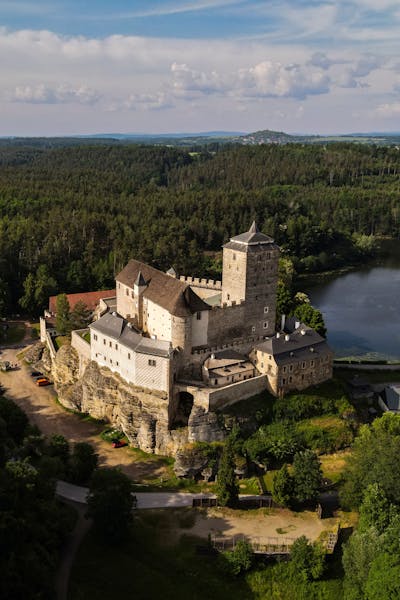
You may need to hire Mario to protect your castle.
Photo by Riedelmax, please support by following @pexel.com

Conclusion: Your Digital Castle’s Cornerstone

A firewall is the foundation of a strong digital defense. It’s like the sturdy walls of your castle, protecting you from the digital wild. But remember, even the best castle needs a vigilant guard. So keep your eyes open, stay informed, and enjoy your digital kingdom.

Want to learn more about the dark side? Let’s talk about ransomware, phishing, or those pesky botnets. Or maybe you’re ready to dive deeper into the world of advanced firewall technologies. Your call!

Love learning tech? Join our community of passionate minds! Share your knowledge, ask questions, and grow together. Like, comment, and subscribe to fuel the movement!

Don’t forget to share.

Every Second Counts. Help our website grow and reach more people in need. Donate today to make a difference!

One-Time
Monthly
Yearly

Make a one-time donation

Make a monthly donation

Make a yearly donation

Choose an amount

$5.00
$15.00
$100.00
$5.00
$15.00
$100.00
$5.00
$15.00
$100.00

Or enter a custom amount

$

Your contribution is appreciated.

Your contribution is appreciated.

Your contribution is appreciated.

DonateDonate monthlyDonate yearly


AI Impact on Job Market: Automation and New Opportunities

Key Takeaways

Humans and AI have distinct strengths: AI excels at processing data and specific tasks, while humans bring creativity, empathy, and critical thinking to the table.

AI isn’t replacing humans, it’s evolving collaboration: The future of work involves humans and AI working together, with AI augmenting human capabilities.

New job opportunities will emerge: While some jobs may be automated, AI creates new possibilities in fields like healthcare and technology.

Focus on human strengths: The skills that will be most valuable in the future are those that leverage uniquely human abilities like complex decision-making and emotional intelligence.

The future is collaborative: Humans and AI are on the same team, working together to achieve new heights.

I’m telling you Google AI is better.
Photo by Vera Arsic, please support by following @pexel.com

Showdown, show up

Ladies and gentlemen, boys and girls, and all the tech enthusiasts out there welcome to the ultimate showdown of the century: Humans vs. Artificial Intelligence! It’s the classic tale of brains versus bytes, and let us tell you, it’s going to be a wild ride.

First off, let’s give a round of applause to humans – the reigning champs of planet Earth. We’ve done some pretty impressive stuff, like sending our own kind to the moon and back without asking for directions. That’s right, no GPS needed when you’ve got a giant rocket and a dream. And let’s not forget, we’re the only species that can enjoy a good Netflix binge or appreciate the fine art of sarcasm.

But wait, there’s a new challenger on the horizon, and it’s got silicon swagger. AI is stepping into the ring with its neural networks flaring and algorithms pumping. It’s learning, it’s adapting, and it’s doing it all without needing a coffee break. What’s the difference between AI and human learning? Well, AI can crunch data faster than a teenager can text, but it still can’t understand why we laugh at cat videos.

Now, onto the million-dollar question: Will AI replace us at work? It’s already happening in some areas, folks. AI is out there making spreadsheets, scheduling meetings, and even writing articles. But before you start worrying about robots stealing your job, remember that AI is also creating new opportunities. It’s like when the microwave was invented, and everyone thought chefs were done for. Spoiler alert: we still love our gourmet meals.

AI plays a role in the most unlikely of places.
Photo by Pixabay, please support by following @pexel.com

Artificial Intelligence (AI) has been a transformative force in various industries, and its impact on the job market is a topic of intense debate. The concern that AI is “taking our jobs” has been a recurring theme as technology advances. However, the reality is more nuanced than a simple binary of AI versus human labor.

Traditional AI, also known as weak AI, is designed to perform specific tasks by following preset algorithms and rules. This type of AI excels in structured environments where tasks are clear-cut and repetitive. For instance, self-checkout kiosks in retail stores are a manifestation of traditional AI, automating the cashier’s role to some extent. These systems are adept at handling transactions but lack the ability to engage in the nuanced interactions that a human cashier might offer.

On the other hand, Generative AI represents a leap forward in the AI landscape. Unlike traditional AI, generative models can create new content, learn from data patterns, and even innovate. This form of AI is not confined to predefined rules; it can generate text, images, and ideas that were previously thought to be the exclusive domain of human creativity.

The impact of AI on jobs is complex. While some roles may be automated, AI also has the potential to create new job opportunities. According to the World Economic Forum, nearly half of the companies surveyed expect AI to be a net job creator in the next five years. This is particularly true in industries like automotive and aerospace, where AI is expected to drive employment gains.

Moreover, AI’s role in the job market is not just about replacement but augmentation. AI can enhance human capabilities, leading to increased productivity and the creation of new roles that did not exist before. For example, AI can assist doctors in diagnosing patients more accurately, but it cannot replace the empathetic care that healthcare professionals provide.

The conversation around AI and employment is also a matter of perspective. While rapid advances in AI threaten to eliminate certain jobs, they also present an opportunity to redefine work. Jobs with routine elements may be at risk, but those that require complex decision-making, emotional intelligence, and creative thinking are likely to see growth.

I just blogged with AI and it was funnier than me.
Photo by Christina Morillo, please support by following @pexel.com

In conclusion, the human vs. AI showdown isn’t a battle; it’s a collaboration. We’re teaming up with our digital buddies to reach new heights. So, let’s embrace the future, keep our wits sharp, and maybe, just maybe, teach our AI friends the joy of a good old-fashioned dad joke.

Remember, whether you’re made of flesh or code, it’s all about working smarter, not harder. Now, if you’ll excuse us, we need to go teach our virtual assistant the difference between ‘there,’ ‘their,’ and ‘they’re.’ Wish us luck!

Enjoy what you read? Why not consider subscribing for more?

Don’t forget to share.

Overcoming Tech Burnout: Practical Tips for Thriving in IT

Key Takeaways

  • The Tech Hustle is Real: Constant innovation and the “always-on” culture can lead to digital burnout.
  • Digital Burnout Symptoms: Information overload, FOMO, blurred work-life boundaries, unrealistic expectations.
  • Combating Burnout: Set boundaries, prioritize deep work, say “no” when needed, prioritize sleep & exercise, practice mindfulness, curate your learning, celebrate small wins, and connect with your tech tribe.
  • Building a Sustainable Tech Career: Find your niche, develop soft skills, embrace lifelong learning, and seek a supportive work environment.
  • Join the Conversation: Share your experiences and tips in the comments below! Let’s build a supportive tech community!
This world is a marathon, not a sprint.
Photo by Nataliya Vaitkevich, please support by following @pexel.com

Conquering the Tech Hustle: How to Avoid Digital Burnout in a Never-Ending IT Boom

The tech industry is a thrilling rollercoaster. New gadgets, software updates, and job titles seem to appear daily. If you’re just starting your IT journey, it can feel overwhelming. IT certifications, cloud computing, cybersecurity – these terms might sound like gibberish, but they’re the buzzwords driving the industry.

The pressure to constantly learn and stay relevant is real. Digital burnout – that fried feeling from information overload – is a common enemy for tech enthusiasts. But fear not, fellow tech adventurer! This post equips you with the knowledge and strategies to navigate the ever-evolving tech landscape without succumbing to burnout.

The Neverending To-Do List: Why We Burn Out

Let’s face it, the tech world thrives on constant innovation. Agile development, a project management methodology emphasizing flexibility, is a perfect example. It’s great for adapting to change, but it can also lead to a never-ending to-do list.

Here are some reasons why digital burnout plagues even the most passionate tech minds:

  • Information Overload: New technologies, frameworks, and coding languages emerge all the time. Feeling pressured to keep up can be exhausting.
  • Fear of Missing Out (FOMO): The tech industry moves fast. It’s easy to feel left behind if you don’t constantly chase the latest trend.
  • Always-On Culture: Smartphones and laptops blur the lines between work and personal life. Disconnecting becomes a challenge.
  • Unrealistic Expectations: We glorify the “hustle” mentality, forgetting that constant workaholic behavior leads to burnout.
Keep you in mind.
Photo by Nataliya Vaitkevich, please support by following @pexel.com

Regaining Control: Strategies to Combat Burnout

So, how do we break free from the burnout cycle and thrive in the dynamic tech world? Here are some practical tips:

  • Set Boundaries: This sounds simple, but it’s crucial. Designate specific work hours and stick to them. Turn off notifications and silence your phone during personal time.
  • Focus on Deep Work: Multitasking is a myth. Schedule dedicated blocks of time (ideally 2-3 hours) for focused work on a single task. Eliminate distractions like social media.
  • Embrace the Power of “No”: Don’t be afraid to decline to take on more work if you’re already overloaded.
  • Prioritize Sleep and Exercise: These pillars of well-being can’t be overstated. Getting enough sleep improves focus and mental clarity. Exercise reduces stress and boosts energy.
  • Practice Mindfulness: Meditation, deep breathing exercises, or spending time in nature can help you de-stress and disconnect from the digital world.
  • Curate Your Learning: Don’t try to learn everything at once. Focus on acquiring skills directly relevant to your current goals. There’s a vast amount of free and paid online courses available.
  • Celebrate Small Wins: Acknowledge your progress, no matter how small. This keeps your motivation high.
  • Connect with Your Tribe: Build a network of like-minded individuals. Online forums, meetups, or joining a professional organization are great ways to connect and share experiences.

Remember: Your well-being is paramount. A burnt-out tech professional is an unproductive tech professional. Taking care of yourself doesn’t make you less dedicated; it makes you a smarter, more effective contributor to the field.

Burnout isn’t for everyone.
Photo by Cup of Couple, please support by following @pexel.com

Beyond Burnout: Embracing a Sustainable Tech Career

Now that you have some tools to combat burnout, let’s explore how to build a sustainable and fulfilling career in the ever-evolving world of IT. Here are some key strategies:

  • Find Your Niche: The tech industry offers a vast array of specializations. Explore different areas like software development, cybersecurity, network administration, data science, and the list goes on! Discovering your niche lets you focus your learning and develop expertise in a specific area.
  • Develop Soft Skills: Technical skills are essential, but don’t underestimate the importance of soft skills like communication, collaboration, and problem-solving.
  • Lifelong Learning: Embrace the fact that continuous learning is the norm in tech. View it as an exciting adventure, not a chore.
  • Find a Supportive Work Environment: Look for companies that promote a healthy work-life balance and invest in the professional development of their employees.

What are your experiences?

Have you ever experienced digital burnout? What strategies have helped you manage the pressure to constantly learn and stay relevant? Share your experiences and tips in the comments below! Let’s build a supportive community of tech enthusiasts who thrive, not just survive, in this exciting field.

Love learning tech? Join our community of passionate minds! Share your knowledge, ask questions, and grow together. Like, comment, and subscribe to fuel the movement!

Don’t forget to share.

Every Second Counts. Help our website grow and reach more people in need. Donate today to make a difference!

One-Time
Monthly
Yearly

Make a one-time donation

Make a monthly donation

Make a yearly donation

Choose an amount

$5.00
$15.00
$100.00
$5.00
$15.00
$100.00
$5.00
$15.00
$100.00

Or enter a custom amount

$

Your contribution is appreciated.

Your contribution is appreciated.

Your contribution is appreciated.

DonateDonate monthlyDonate yearly