
Intellectualism vs. Virality: Navigating the Digital Age

AI-generated image. “IT’S RAINING CATS AND DOG, LIVING IN PERFECT HARMONY!”

Decoding the Digital Wild West: Virality, Intellectualism, and the Allure of Low-Brow

Ever find yourself wondering what’s happening in this digital age? One moment you’re just an ordinary individual sharing random thoughts, and the next—boom! You’re an overnight sensation because you stumbled upon that magical “right combination of words.” Welcome to the viral phenomenon, where anything from hilarious cat videos to absurdly lowbrow humor captivates the masses.

The randomness of it all raises a thought-provoking question: what makes something go viral? And why is it so irresistibly engaging? Let’s dive into the wild world of viral content, explore the quirks that drive its success, and ask ourselves—can intelligence make a comeback and reclaim its cool factor?

Going Viral: The Alchemy of Attention

Ever wonder what makes a cat video or a meme explode across the internet? It’s a fascinating cocktail of ingredients. We’re talking about relatability – that “OMG, that’s so me!” moment – mixed with a shot of raw emotion. Whether it’s shock, awe, or pure, unadulterated laughter, content that tugs at our heartstrings (or tickles our funny bone) gets shared.

The viral landscape has morphed dramatically. Remember the simple, easily replicated memes of yesteryear? Now, we’re dealing with meticulously crafted narratives, high-production videos, and those blink-and-you’ll-miss-them micro-trends. Algorithms, those mysterious gatekeepers of the internet, definitely play a huge role, but don’t underestimate the power of good old-fashioned audience engagement. Without those shares, likes, and comments, even the most algorithmically favored content dies a quiet death.

Is virality a calculated science or a happy accident? It’s a bit of both. You can optimize for platforms and trends, but the true magic lies in that perfect storm of timing and cultural relevance. However, we can’t ignore the ethical elephant in the room. Creating content solely for virality can lead to sensationalism, the spread of misinformation, and the exploitation of our emotional vulnerabilities. Tread carefully, digital creators.

AI-generated image. “Who invited the nerd to the party!?”

The Intellectualism Paradox: Are We Getting Dumber?

Now, let’s tackle the elephant in the room: the supposed decline of intellectualism. Is it a real thing, or just a digital myth? It’s a complex issue. The constant barrage of bite-sized content and the echo chambers of social media can certainly make it feel like we’re drowning in a sea of superficiality.

Social media has undeniably shifted our attitudes towards knowledge, often prioritizing entertainment and instant gratification over deep dives into complex topics. Mainstream media often focuses on entertainment, further contributing to this perception. But intellectualism isn’t dead. It’s just… evolving. Institutions and governments still play a role in fostering intellectual growth, and there are pockets of brilliance everywhere – academic conferences, niche online communities, and even the resurgence of long-form content creators who value depth over brevity.

The Universal Language of Low-Brow Humor

Finally, let’s talk about the guilty pleasure we all secretly indulge in: low-brow humor. Why is it so universally relatable? It taps into our most basic human experiences and emotions. Think physical comedy, shock value, and simple, often silly, wordplay. It bypasses complex thought, triggering instinctive reactions – a quick laugh, a shared cringe.

Cultural context definitely shapes its appeal, as what’s considered “low-brow” varies across societies. And yes, there’s a correlation between cognitive effort and humor enjoyment. Sometimes, the simplest jokes are the most immediately gratifying.

Low-brow humor can act as a bridge, connecting diverse audiences through shared, often base, human experiences. It’s a reminder that even in an increasingly complex world, we all share a common ground of silly, relatable, sometimes absurd moments.

Navigating the Digital Frontier

“The viral machine is a fascinating and unpredictable force, shaping our interactions, laughter, and shared experiences. It highlights the power of connection, yet also forces us to confront our societal values.

We’re told to follow the well-worn path: excel in school, attend a respectable college, and secure a stable job. But in a world where someone with a camera can earn your annual salary in an hour, who could have predicted this paradigm shift? As we navigate this landscape of clicks and shares, perhaps it’s time to redefine what goes viral.

Let’s redirect the spotlight towards intelligence and creativity. Who says being smart can’t trend? Let’s aim for a future where ‘going viral’ signifies something meaningful, inspiring, and yes, still a bit of fun. Here’s to making wisdom go viral, and challenging the notion that traditional paths are the only route to success.”

AI-generated image. “I might as well stream. I mean everybody else is doing it.”

Key Takeaways

  1. Virality is a Complex Formula: It’s a blend of relatable content, emotional resonance, and shareability, amplified by algorithms, but ultimately driven by audience engagement. It’s partially engineered and partially luck.
  2. The Digital Age Impacts Intellectualism: While there’s a perception of declining intellectualism due to the focus on entertainment and bite-sized content, intellectual pursuits still exist in niche communities and through dedicated creators.
  3. Low-Brow Humor’s Universal Appeal: It taps into basic human emotions and experiences, bypassing complex thought and offering immediate gratification, acting as a bridge between diverse audiences.
  4. Algorithms are Powerful Amplifiers: They significantly influence what content gains traction, but audience engagement is still the essential fuel for virality.
  5. Ethical Considerations of Virality: Creating content solely for virality raises concerns about sensationalism, misinformation, and the exploitation of emotions.
  6. Social Media’s Influence on Knowledge: Social media often prioritizes entertainment and instant gratification over in-depth knowledge and expertise.
  7. The Digital Landscape is Ever-Evolving: Understanding these trends is crucial for navigating the complexities of online culture and content creation.

Love learning tech? Join our community of passionate minds! Share your knowledge, ask questions, and grow together. Like, comment, and subscribe to fuel the movement!

Don’t forget to share.

Every Second Counts. Help our website grow and reach more people in need. Donate today to make a difference!

One-Time
Monthly
Yearly

Make a one-time donation

Make a monthly donation

Make a yearly donation

Choose an amount

$5.00
$15.00
$100.00
$5.00
$15.00
$100.00
$5.00
$15.00
$100.00

Or enter a custom amount

$

Your contribution is appreciated.

Your contribution is appreciated.

Your contribution is appreciated.

DonateDonate monthlyDonate yearly


IP Addresses vs Cookies: What You Need to Know

Key Takeaways

Key Takeaways:

  • IP Addresses:
    • Unique identifiers for devices on the internet.
    • Enable communication and data exchange between devices.
    • Transition from IPv4 to IPv6 to accommodate the growing number of connected devices.
  • Cookies:
    • Small text files stored on your device by websites.
    • Enhance user experience by personalizing browsing and remembering preferences.
    • Raise privacy concerns due to tracking capabilities.
  • Privacy Considerations:
    • Browser settings allow you to control cookie usage.
    • Tracking protection features limit website tracking.
    • VPNs can enhance privacy by masking your IP address.
  • Future Trends:
    • Continued adoption of IPv6.
    • Development of privacy-preserving technologies like the Privacy Sandbox.
  • Importance of Awareness:
    • Understanding IP addresses and cookies is crucial for navigating the digital world with greater privacy and security.
AI-generated image. “Why do I always have this feeling that someone is watching me?”

Come one, come all! Welcome back to another exciting, PC booting hot topic on the internet for the internet. Here’s a question for you. Do you ever get the feeling that somewhere, at some time, someone…is watching you? Stalking you around every corner, documenting your every move? If you said ‘no’, then you never had a manager. If you said ‘yes’ to however, then welcome. You are not alone in the “Rockwell” experience. Today, we are going over IP addresses and the delicious item grandma use to make, those sweet, tasty, moist…cookies.

Unmasking the Invisible Web: Understanding IP Addresses and Cookies

The internet, in case you didn’t know and have been living underneath a boulder, is a vast network connecting billions of devices worldwide, relies on a complex system to function. Two key players in this intricate web are IP addresses and cookies. While seemingly invisible, they play a crucial role in how we interact with the digital world.

IP Addresses: Your Digital Passport

Imagine every device connected to the internet—your phone, laptop, smart home devices—as having a unique address. That’s essentially what an IP address is. It’s a numerical label assigned to each device, allowing it to communicate and exchange data with other devices across the network.

Think of it like your physical address. Your home address allows mail carriers to deliver mail to your specific location. Similarly, an IP address guides data packets to the correct destination on the internet.

  • IPv4 and IPv6: Historically, we’ve been using IPv4, a system with a limited number of addresses (approximately 4.3 billion). As the internet exploded in popularity, we faced a shortage. This led to the development of IPv6, offering a significantly larger address space (340 undecillion addresses) to accommodate the ever-growing number of connected devices.
AI-generated image. “Wait, so I can track what she’s doing on the internet?”

Cookies: Tiny Trackers with a Purpose

Now, let’s talk about cookies. No, these aren’t what I had mentioned earlier, your grandmother didn’t lay down the law to make these cookies. And, you can’t eat them. These are small text files stored on your device by websites you visit. They might seem insignificant, but cookies play a vital role in how you interact with websites.

Types of Cookies:

  • Session Cookies: These are temporary and deleted once you close your browser. They help with site navigation and remember user inputs temporarily.
  • Persistent Cookies: These remain on your device until they expire or you delete them. They store your preferences and login details for a smoother browsing experience.

Functions:

  • Personalization: Cookies remember your preferences, such as language settings, login information, and even items in your shopping cart. This allows websites to tailor your experience and provide a more personalized browsing experience.
  • Tracking: While helpful, cookies also enable websites to track your browsing behavior. They can monitor which pages you visit, how long you spend on each page, and even which ads you click on.

The Privacy Implications

The ability to track user behavior through cookies raises significant privacy concerns. This data can be used to create detailed profiles of your interests and online habits, which can then be used for targeted advertising.

Steps to Protect Your Privacy:

  • Browser Settings: Most modern browsers offer privacy settings that allow you to control how websites can use cookies. You can block cookies entirely, or choose to only accept cookies from websites you trust.
  • Tracking Protection: Many browsers also include features like enhanced tracking protection, which aim to limit the ability of websites to track your online activity.
  • Use of VPNs: Virtual Private Networks (VPNs) can mask your IP address, providing an additional layer of privacy and security.

The Future of IP Addresses and Cookies

The internet is constantly evolving, and so are the technologies that underpin it.

  • IPv6 Adoption: As the demand for IP addresses continues to grow, IPv6 will gradually become the dominant standard.
  • Privacy-Focused Technologies: Recognizing the growing importance of user privacy, there’s a shift towards more privacy-preserving technologies, such as the Privacy Sandbox initiative by Google. These technologies aim to provide a balance between personalized experiences and user privacy.
AI-generated image. “So, one day, these cookies are going to be edible?”

In Conclusion

IP addresses and cookies are fundamental to the functioning of the internet. Understanding how they work and their implications for your privacy is crucial in today’s digital age. By taking control of your browser settings and being mindful of your online activity, you can navigate the digital landscape with greater awareness and control.

This script aims to provide a basic understanding of IP addresses and cookies. If you’re interested in delving deeper into these topics, I encourage you to explore further resources and stay informed about the latest developments in internet technology. And with all of that being said, mind what sites you visit, mind what you click, and always mind cookies leave crumbs.

Disclaimer: This script is for informational purposes only and should not be considered as cybersecurity advice.


Love learning tech? Join our community of passionate minds! Share your knowledge, ask questions, and grow together. Like, comment, and subscribe to fuel the movement!

Don’t forget to share.

Every Second Counts. Help our website grow and reach more people in need. Donate today to make a difference!

One-Time
Monthly
Yearly

Make a one-time donation

Make a monthly donation

Make a yearly donation

Choose an amount

$5.00
$15.00
$100.00
$5.00
$15.00
$100.00
$5.00
$15.00
$100.00

Or enter a custom amount

$

Your contribution is appreciated.

Your contribution is appreciated.

Your contribution is appreciated.

DonateDonate monthlyDonate yearly

Exploring VR and AR: Redefining Reality and Connection

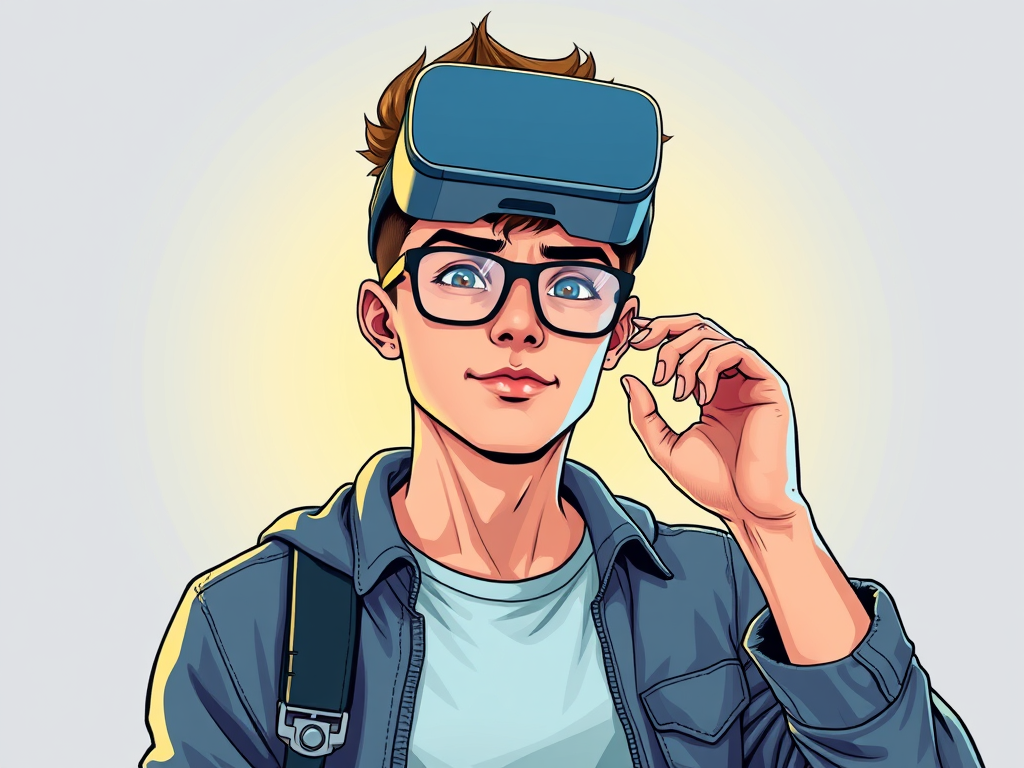
AI generated image. “Projects, projects, and more projects with tight deadlines! How is this my life!?”

The Thinking Minute

Imagine this: you’re sitting down, staring at the screen, and I’m about to throw you into an existential whirlpool—but stay with me. One day, hopefully far from now, you won’t be here. No more sunsets, no more memes, no more you. Now that the gravity of that thought has anchored itself, let’s ask the big question: what makes anything we do in this fleeting existence matter? We grind through our daily lives, often driven by the hamster wheel of work and bills, sacrificing self-growth on the altar of employment. Yet, life is finite—and doesn’t that truth compel us to ask, “What is this all for?”

Here’s where this gets even more fascinating. Picture this: after you’ve shuffled off this mortal coil, someone dons a VR headset. In an instant, there you are—fully rendered, fully interactive, almost as if you never left. How would it feel to live on in this digital eternity? Would the knowledge of this virtual persistence change how we live our physical lives? These questions touch the edge of both philosophy and technology, and today, we’ll dive headfirst into the deep end of this thought-provoking fusion. Buckle up; it’s going to get weird—in the best way.

Exploring the Wonders of VR/AR and AI Technology

Virtual Reality (VR) and Augmented Reality (AR) are transforming the way we interact with the digital and physical worlds. These groundbreaking innovations extend far beyond novelty—they have applications that enrich education, entertainment, healthcare, and so much more.

The Purpose of VR and AR

The primary goal of VR and AR is to reshape how we engage with both our surroundings and the digital realm. VR immerses users entirely in a computer-generated environment, enabling experiences like gaming, virtual training, therapy, or even simulated travel to far-off places. In contrast, AR overlays digital information on the real world, augmenting daily tasks such as navigation, surgical procedures, or even retail through virtual try-ons. Together, these technologies bridge the gap between the physical and digital, redefining the way we live, learn, work, and play.

The Progress of VR/AR Technology

Over the years, VR/AR has seen remarkable advancements. Early models were bulky and functionally limited, but modern devices like the Meta Quest, Microsoft HoloLens, and AR-enabled smartphones offer highly interactive and immersive experiences. These technologies have found widespread use in fields such as healthcare, education, and industrial design, enabling high-fidelity simulations and training environments. However, challenges remain, such as reducing costs, improving user comfort (e.g., mitigating motion sickness), and creating even more natural interfaces. Exciting developments like lightweight headsets, enhanced resolution, and seamless AR glasses are paving the way for even broader adoption.

AI: Can It Replicate Loved Ones?

AI holds the potential to replicate certain aspects of a loved one by using data such as photos, videos, voice recordings, and written communication. Advanced machine learning algorithms enable the creation of digital avatars or chatbots that mimic a person’s appearance, speech, and even emotional expressions. While these representations can evoke familiarity, they lack the depth of consciousness, personality, and the unique dynamism of human beings. As fascinating as this prospect is, it raises important ethical questions about consent, privacy, and the psychological impact on users.

The Cost of Digital Connections

Maintaining a digital likeness of a loved one would likely involve a subscription model for data storage, regular updates, and ongoing AI refinement. The price of such services would vary depending on the level of detail and functionality desired. For many, the decision would be highly personal, influenced by financial circumstances and emotional priorities.

Current Technologies That Simulate Reanimation

While true reanimation remains impossible, today’s technology can replicate certain facets of a loved one’s presence. For example, holographic displays can visually project lifelike representations, and AI-driven voice interfaces allow simulated conversations. Deepfake technology adds another layer of realism by animating visuals in convincing ways. However, these tools, while powerful, remain limited to imitation and lack the genuine emotional connection and consciousness of a loved one.

Ethical Considerations and the Road Ahead

As these technologies continue to evolve, they open extraordinary possibilities while raising complex ethical dilemmas. Questions around data privacy, the psychological effects of engaging with digital replications, and societal implications need careful consideration. At the same time, innovations in VR, AR, and AI offer immense potential to enrich lives, preserve memories, and transform industries.

These breakthroughs underscore humanity’s drive to push the boundaries of innovation. As we navigate their development and adoption, it’s vital to balance technological possibilities with ethical responsibilities. What does the future hold for these advancements? Only time will tell, but their impact is already reshaping our world.

Key Takeaways

  1. Purpose of VR/AR: VR creates immersive digital environments, while AR overlays digital elements onto the real world. Both aim to bridge physical and digital spaces, redefining experiences in various sectors like gaming, healthcare, and education.
  2. Advancements in VR/AR: Modern devices, such as the Meta Quest and Microsoft HoloLens, provide sophisticated and interactive experiences. Progress includes lighter headsets, enhanced resolution, and seamless AR glasses, though challenges like cost and user comfort remain.
  3. AI and Loved Ones’ Replication: AI can replicate aspects of a loved one using data inputs (e.g., photos, messages, videos). Machine learning enables simulations of speech and behaviors, but these replications lack the depth, consciousness, and dynamic essence of human beings.
  4. Costs of Digital Maintenance: Maintaining a digital likeness of a loved one may involve subscription fees for data storage, updates, and model refinement, making it a personal and emotional financial decision.
  5. Technologies for Reanimation: While true reanimation is unattainable, technologies like holographic displays, deepfake creations, and AI-driven digital avatars simulate some aspects of a loved one’s presence, albeit in an imitative way.
  6. Ethical Considerations: The use of AI for replicating loved ones raises important ethical concerns, including privacy, consent, and emotional impacts on users.
  7. Broader Impact: These advancements reflect humanity’s innovative drive, offering opportunities to enrich lives while demanding thoughtful consideration of their societal and emotional implications.

Love learning tech? Join our community of passionate minds! Share your knowledge, ask questions, and grow together. Like, comment, and subscribe to fuel the movement!

Don’t forget to share.

Every Second Counts. Help our website grow and reach more people in need. Donate today to make a difference!

One-Time
Monthly
Yearly

Make a one-time donation

Make a monthly donation

Make a yearly donation

Choose an amount

$5.00
$15.00
$100.00
$5.00
$15.00
$100.00
$5.00
$15.00
$100.00

Or enter a custom amount

$

Your contribution is appreciated.

Your contribution is appreciated.

Your contribution is appreciated.

DonateDonate monthlyDonate yearly