The Evolution of Augmented Reality: Past, Present, Future

Key Takeaways

  • AR has evolved significantly from its early beginnings: It has transitioned from marker-based systems to more sophisticated technologies like markerless AR and superimposition.
  • The future of AR is intertwined with other cutting-edge technologies: AI and 5G will play crucial roles in enhancing AR experiences by enabling personalization, faster processing, and more seamless interactions.
  • A variety of devices power AR experiences: From smartphones and tablets to head-mounted displays and smart glasses, there are numerous ways to engage with augmented reality.
  • AR has the potential to revolutionize various sectors: Its applications extend beyond gaming and entertainment, with significant potential in education, healthcare, and other industries.
AI-generated image. “These headsets allow me to smell the future.”

Diving Deep into Augmented Reality: From Origins to the Future

Come one, come all, welcome to yet another exciting topic that is taking the internet by storm. Have you ever seen the movie “Ready Player One”? You should check it out if you haven’t. It’s a really good movie if you leave your brain at the door. Just know that if you don’t check your brain at the door, you will get depressed because you begin to see the similarities. In any case, if you haven’t seen “Ready Player One” but you may have seen clips or memes of someone with a strange device covering the upper half of their face.

You may have thought to yourself; “Huh, that’s an interesting device. I wonder what they’re doing in there.” Just know they’re there with you, but they’re somewhere and someone else at the same time. How does this technology work you ask? Well Augmented Reality (AR), the technology that overlays digital information onto the real world, is no longer a futuristic fantasy. It’s rapidly becoming a part of our everyday lives. But how did we get here? Let’s take a look into the history, evolution, and exciting future of this transformative technology.

And before we continue, yes, we know what everyone is secretly thinking about the strange-looking guy wearing the AR device. He’s using it to view adult material. Man, the lizard part of our brain is strong.

AI-generated image. “Before we start to progress, it’s important to learn how we progressed.”

The Genesis of AR: While the concept of enhancing reality with technology has been explored in science fiction for decades, the seeds of modern AR were sown in the 1960s with Ivan Sutherland’s groundbreaking head-mounted display, the “Sword of Damocles.” This cumbersome device, though primitive by today’s standards, demonstrated the potential of overlaying computer-generated imagery onto a user’s field of vision. The term “Augmented Reality” itself wasn’t coined until 1990 by Boeing researcher Tom Caudell, highlighting its initial focus on industrial applications.

From Markers to Magic: Early AR relied heavily on markers, like QR codes, to trigger augmented content. Today, markerless AR, powered by GPS, digital compasses, and accelerometers, offers a more seamless and immersive experience. We’ve seen this in action with location-based games like Pokémon Go. Projection-based AR projects virtual images onto real-world surfaces, while superimposition-based AR overlays digital information directly onto the user’s view, often through head-mounted displays. These advancements have significantly enhanced the realism and user experience of AR applications. Although, everyone has to admit…Pokémon made everyone playing dangerous. People found bodies where Pokémon were located, crashing into parked cop cars, and the craziest event of them all. People running out in traffic trying to capture these beloved digital monsters.

AI-generated image. Staring into the sun will not make your frame rate more tolerable.

The Future of AR: A Glimpse Beyond the Horizon: The future of AR is brimming with exciting possibilities. We can expect to see a convergence of AR with other cutting-edge technologies like artificial intelligence (AI) and 5G. AI will play a crucial role in personalizing AR experiences, adapting to user preferences and context. 5G’s high bandwidth and low latency will enable faster processing and more seamless data transmission, leading to smoother and more responsive AR interactions.

The Devices Shaping the AR Landscape: The devices that power AR are constantly evolving. Smartphones and tablets have become ubiquitous AR platforms, offering accessible entry points for millions of users. Head-mounted displays, such as Google Glass and Microsoft HoloLens, provide more immersive and hands-free experiences. Smart glasses are poised to become the next frontier, offering a more discreet and stylish way to interact with the digital world.

Conclusion: AR has come a long way since its humble beginnings. From its early roots in industrial applications, it has evolved into a technology with the potential to revolutionize numerous aspects of our lives. As hardware and software continue to advance, and as AI and 5G become more integrated, we can expect to see even more innovative and impactful applications of AR in the years to come. And with all of that being said, AR is pretty awesome, but at this junction it’s not for everyone. It’s still in the earlier developing phase but I can see this being the new and improved way we cope with reality. Because let’s be frank, it’s getting hard to live. Bye, back in the Matrix you go.

What are your thoughts on the future of AR? Share your predictions and insights in the comments below!

Love learning tech? Join our community of passionate minds! Share your knowledge, ask questions, and grow together. Like, comment, and subscribe to fuel the movement!

Don’t forget to share.

Every Second Counts. Help our website grow and reach more people in need. Donate today to make a difference!

One-Time
Monthly
Yearly

Make a one-time donation

Make a monthly donation

Make a yearly donation

Choose an amount

$5.00
$15.00
$100.00
$5.00
$15.00
$100.00
$5.00
$15.00
$100.00

Or enter a custom amount

$

Your contribution is appreciated.

Your contribution is appreciated.

Your contribution is appreciated.

DonateDonate monthlyDonate yearly


Evolution of Gaming: From Beep-Boop to Tap-Tap

Key Takeaways

Gaming has evolved from primitive graphics and sounds to incredibly realistic mobile games.

The technology behind gaming has shrunk in size while growing in power.

Gaming has expanded beyond entertainment to include esports and social connections.

The future of gaming may offer AAA titles readily available on mobile devices.

Gamers will have access to high-quality gaming experiences anytime, anywhere.

These are the graphics of yesteryear.
Photo by Francesco Ungaro, please support by following @pexel.com

Unplug & Blow

Ah, the good old days of gaming, when the graphics were so pixelated you could count each square on the screen, and the most immersive sound was a repetitive ‘beep-boop’. Yes, we’re talking about the era of Atari, where a stick figure shooting at blocky asteroids was the height of technological advancement. Fast forward a bit, and you’ve got the Sega and Nintendo NES – where the ritual of blowing into the cartridge was a sacred act that somehow (by pure magic, we assume) made the games work again.

But let’s not forget the countless hours spent wiggling the cords, smacking the side of the TV, and performing a rain dance in hopes of getting that darn game to load. And who could ignore the classic ‘screen freeze’ followed by the universal gamer’s shriek of despair? Ah, memories.

From rectangle to whatever this shape is.
Photo by JESHOOTS, please support by following @pexel.com

Now, hold onto your joysticks, because we’ve catapulted from those Stone Age antics to having sleek, shiny games on our mobile devices that look so real you might try to swipe a health potion off the screen. The computing power of these tiny chips is mind-boggling – they’re getting larger in capacity but shrinking in size like a digital Ant-Man.

And the impact? It’s gone way beyond just entertainment. Games have become training grounds for lightning-fast reflexes and strategic thinking, even landing some folks college scholarships for their esports skills. Online worlds have fostered friendships and rivalries that bridge continents, proving that a good game can break down all sorts of barriers.

The future? Oh, it’s looking as bright as the neon lights in a retro arcade. Imagine this: AAA titles, those big-budget, high-quality games that usually require a console the size of a small car, will be available at the tap of a screen. That’s right, no more discs, no more downloads that take longer than a trip to Mars, just pure, unadulterated gaming bliss at your fingertips.

VR headsets are in the market to become smaller.
Photo by cottonbro studio, please support by following @pexel.com

So, what does this mean for us, the noble gamers? It means our thumbs are about to become the most powerful tools in the universe. It means we’ll be gaming on the bus, in line at the grocery store, and – let’s be honest – probably during that boring meeting at work (not that we endorse such behavior, of course).

In conclusion, from the beep-boop to the tap-tap, the gaming world has evolved in ways that would make Darwin drop his monocle. So, here’s to the gamers who’ve survived the pixel wars, the cartridge blowers, the cord wigglers, and the screen freezers. The future is yours, and it’s just a tap away. Game on, world, game on!

Enjoy what you read? Why not consider subscribing for more?

Don’t forget to share.

From Card Catalogues to VHS Tapes: Recalling Life Before the Internet

Daily writing prompt
Do you remember life before the internet?

Key Takeaways

Life was less convenient but more active: Entertainment and information gathering involved physical activity and social interaction.

Resourcefulness and ingenuity were essential: People had to rely on their knowledge and physical resources to complete tasks, like using libraries and manual copying.

Social interaction may have been more prevalent: Without the internet, people may have interacted more face-to-face within their communities.

The charm of a simpler time: The passage emphasizes the sense of nostalgia and fondness for a less technologically dependent era.

The days when there were villages to help raise children.
Photo by Caleb Oquendo, please support by following @pexel.com

Ah, the pre-internet era, a time when ‘surfing’ meant catching waves at the beach, not browsing the web. Let’s take a whimsical look back at the good ol’ days before the digital takeover.

Remember when ‘running around’ was our cardio? We didn’t need fancy fitness trackers; our sweat-soaked shirts were proof enough of our exertion. And those doorbells weren’t going to ring themselves! We were the original ‘notification alerts’ for our friends, and the only ‘ghosting’ was when someone pretended not to be home.

Libraries were our Google, and boy was the search function different. You’d pull out a drawer full of cards (the ‘Card Catalogue’) and embark on a treasure hunt for knowledge. Dewey Decimal System? More like Dewey Deci-‘thrill’ System! And let’s not forget the photocopying machine, which was basically the ‘screenshot’ of its time.

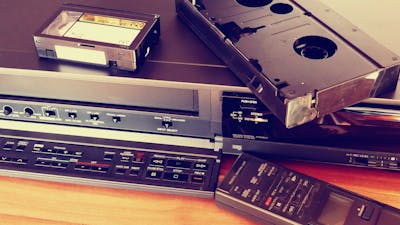
Technology of yesteryear.
Photo by Anthony, please support by following @pexel.com

Homework was an adventure in itself. You couldn’t just copy-paste from Wikipedia; you had to actually understand the material (shocking, I know). And if you needed help? You’d consult the wise old ‘Encyclopedia’—the only ‘Wiki’ we knew.

So, here’s to the days of innocence and simplicity, where the biggest worry was returning a VHS tape to Blockbuster on time. Life before the internet may have been less convenient, but it sure had its charming quirks. Now, excuse us while we go ‘rewind’ our memories a bit more. Be kind, rewind!