
House Squatters and Typosquatters: Unwanted Intruders and Cyber Deception Unveiled

Key Takeaways

House Squatters
  • House squatting involves the unauthorized occupation of a property.
  • Evicting squatters can be a legal challenge for homeowners.
  • Property owners must often prove ownership and the squatter’s lack of legal claim.
Typosquatting
  • Typosquatting is the creation of websites with misspelled domain names to deceive users.
  • Cybercriminals use typosquatting to steal personal information or infect devices with malware.
  • The impact of typosquatting extends beyond individual victims, affecting businesses and online communities.
Protection
  • Both physical and digital security measures are essential.
  • Homeowners should invest in strong locks and security systems.
  • Online users should be cautious of typos, verify website URLs, and use strong passwords.
  • Staying informed about squatting tactics helps individuals and communities protect themselves.

The first bed in this house was trash, but this one is just right.
Photo by Ron Lach, please support by following @pexel.com

The Unwanted Guests of Our Digital and Physical Worlds: House Squatters and Typosquatters

The term “squatter” often conjures images of unwanted individuals occupying an abandoned building. But did you know there’s a digital equivalent to this real-world nuisance? Buckle up, because we’re diving into the world of squatters, both physical and digital, and how they can disrupt our lives.

House Squatters: Uninvited Guests in the Brick-and-Mortar Realm

Let’s address the elephant in the room (or rather, the unwanted squatter in your house). House squatting, thankfully, doesn’t involve fitness fanatics breaking into your home to pump some iron. It refers to the unlawful occupation of a property by someone who has no legal right to be there. While some might picture dramatic scenes of forced entry, squatters often gain access through more subtle means, like exploiting security vulnerabilities or taking advantage of vacant properties during periods of owner absence.

Now, here’s where things get a little interesting (and frustrating for homeowners). The legal process of evicting squatters can be surprisingly complex. The burden of proof often falls on the rightful owner, who needs to demonstrate their ownership, and the squatter’s lack of legal claim. This means providing documentation and potentially navigating lengthy court proceedings. So, while you might be the rightful owner gazing upon an uninvited guest in your living room, the law demands a more structured approach to reclaiming your property.
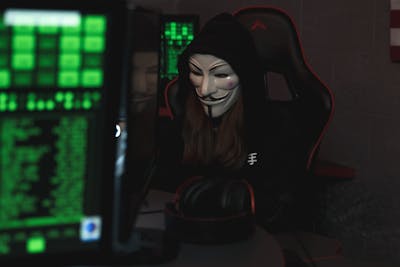
There’s google.com already, so I’ll make gooogle.com. Clever, me thinks.
Photo by Tima Miroshnichenko, please support by following @pexel.com

The Digital Squatters: Typosquatting and the Web of Deception

The digital world isn’t immune to squatters either. Enter typosquatting, a cunning trick employed by cybercriminals. These digital squatters register domain names that are deliberate misspellings of popular websites. Imagine searching for “paypaal.com” instead of “paypal.com.” A typosquatter might own the former domain, creating a website that looks eerily similar to the real PayPal. Unsuspecting users, after a quick typo, could land on this fake website and unwittingly enter their login credentials. This is a classic phishing scam, where the goal is to steal personal information or infect your device with malware (malicious software).

Malware itself is a broad term, encompassing a variety of malicious programs. While Trojans might be one type you’ve heard of, there are many others. Viruses can replicate themselves and spread throughout your system, while spyware gathers your data without your knowledge. Keyloggers capture your keystrokes, potentially revealing passwords and other sensitive information. The type of malware a typosquatter might unleash depends on their specific aim, but the result is always disruptive and potentially damaging.

Beyond Malware: The Broader Impact of Typosquatting

The impact of typosquatting goes beyond individual victims. Imagine a company struggling to maintain its online reputation because a typosquatted website is spreading misinformation or tarnishing its brand image. This can damage customer trust and lead to financial losses. Even worse, a typosquatted website could be used for illegal activities, further harming the legitimate website and its users.

Protecting Yourself from Squatters: Real and Digital

Whether you’re a homeowner or a web user, vigilance is key. Here are some tips to safeguard yourself from both physical and digital squatters:

  • Physical Security: Invest in strong locks and security systems for your home. Keep an eye out for suspicious activity and report it to the authorities promptly.
  • Digital Security: Be mindful of typos when entering website addresses. Double-check the URL before hitting “enter.” Look for security certificates on websites when making online transactions. Utilize strong passwords and regularly update your software and antivirus programs.

You gonna learn to stay out of my house!
Photo by Ketut Subiyanto, please support by following @pexel.com

The Importance of Awareness: Fighting Back Against Squatters

By understanding the tactics of both house squatters and typosquatters, we can be better equipped to protect ourselves. Sharing this information with friends and family can create a ripple effect of digital and physical security awareness. Additionally, supporting organizations that advocate for stronger anti-squatting legislation and cybersecurity measures plays a crucial role in combating these malicious practices.

Remember: Squatters, whether physical or digital, thrive on our vulnerabilities. With a little knowledge and preventative action, we can reclaim control of our homes and online experiences, keeping these unwanted guests at bay.

Love learning tech? Join our community of passionate minds! Share your knowledge, ask questions, and grow together. Like, comment, and subscribe to fuel the movement!

Don’t forget to share.

Every Second Counts. Help our website grow and reach more people in need. Donate today to make a difference!

One-Time
Monthly
Yearly

Make a one-time donation

Make a monthly donation

Make a yearly donation

Choose an amount

$5.00
$15.00
$100.00
$5.00
$15.00
$100.00
$5.00
$15.00
$100.00

Or enter a custom amount

$

Your contribution is appreciated.

Your contribution is appreciated.

Your contribution is appreciated.

DonateDonate monthlyDonate yearly


Credit Resulting in Crisis

Consider following on social media!

Quick note: if you’re viewing this via email, come to the site for better viewing. Enjoy!

How am I supposed to read the latest script out here?
Photo by Spencer Davis, please support by following @pexel.com

Throughout the history of technology, as technology evolves with every iteration so do we…well, at least we try to. From shaping wheels out of stone to aid in our transporting heavy items, creating boats to sail across seas, and creating the internet to provide the world with endless reels of cat videos.

Our progress has been quite amazing, another thing that is quite amazing is how quickly we look to not only exploit the vulnerabilities in our creations but in each other through nefarious means.

When a good invention involves a secure transaction between a business owner and the customer, the risk of a man in the middle, a bad actor, or a member of the “Wet Bandits” is sure to frequently come into play. Let me script to you what I mean.

Thank you for choosing this fuel pump. Pick a card, any card.
Photo by Miggy Rivera, please support by following @pexel.com

Fueling Your Identity Crisis

So, what is this nefarious act? Brace yourself, you’re going to be amazed at how clever this name is. The act is called “credit card skimming”.

Credit card skimming or what is often referred to as “card skimming or skimming”, is the act of illegally using a device mounted onto a point-of-sale (POS) to capture a victim’s credit card information for identity theft.

This form of cyberattack isn’t anything new and has been in the news many times before but as prices for simply living have gone up and the pay for the common man and common woman has either gone down or remained the same, incidents have gone on the rise.

This is one of two variations, the other is e-commerce skimming or also known as digital skimming which is the act of intercepting credit card information from the form field of a website. And before you fix to say anything, yes, I know. While you are reading this, there is a lot of skimming going on.   

What the!? First rent, now gas is going up. And no one is subscribing to my OnlyFans!
Photo by Lucho Castro Barrantes, please support by following @pexel.com

Over-priced Fueling

You might have the thought, “this only happens at certain places, I should be good where I’m at.” Well, I have some not so good news for you. This form of cyberattack can happen anywhere that requires you to swipe your card. For example, if you were to make the unfortunate mistake of today called “needing gas”.

Let’s say you pull up to a fuel pump, swipe your card in the faintly loose card reader and receive your “This gasoline makes your car ride on water, that’s why you’re paying this god-awful inconsistent price” and drive off into the sunset with depressing thoughts of you working into your golden years and beyond.

You may have failed to pay attention to the small detail in which the card reader was a little loose. This in turn led to your information being collected from the magnetic strip of your credit card for later use at the thief’s discretion.

But this doesn’t only happen at fuel stations, the art of getting skimmed can happen in restaurants, ATMs, retail stores, and pretty much anywhere that has a point-of-sale service or terminal.

In a nutshell, if you have to swipe card double check your account to ensure everything is right. Just when you thought you were getting screwed over enough when getting gas.  

Small Detour:

A guy discovered a card skimmer in an ATM during his interaction, click here to check it out.

Enjoy the read so far? Why don’t you consider subscribing so you can keep up to date?

Ok, this is my last cart from Amazon…although I did see else that I want and he does still have five dollars to his name.
Photo by Mikhail Nilov, please support by following @pexel.com

More than Your Bank Account

So you might be asking yourself, why would someone want to pretend to be me? You might also have the train of thought if they steal my information, they’re just practicing because I don’t have anything for them to steal.

Well, I can tell you why someone would want to be you because you’re special and you’re a somebody. Yup, that’s right. You’re a somebody with a pulse, a car, and a credit card. Which means you have the means to get a lot of nice things, things you didn’t even know you wanted until they show up on your credit card statement.

This act is committed with the intent of creating fake cards in your name to either purchase desired items that could range from gift cards, cars, multiple loans, or simply some play time at Top Golf.

Aside from taking money right out of your account and mucking up your finances, another and more terrifying purpose of collecting your information is to sell it on the dark web.

Whatever the use case may be, your information is a currency far better than money. And you thought they were just practicing because you’re living from paycheck to paycheck. Silly you, you are the paycheck.

I saw something on sale and I just had to buy it in your name. You’re cool with that right?
Photo by Max Fischer, please support by following @pexel.com

Facing the Zeros

You may be wondering what are some of the ways you can protect yourself from having your information copied and pasted into oblivion. Since most of these attacks happen at fuel pumps, making use of the pump nearest facing the store clerk could provide some security because it is less likely they were tampered with.

If you don’t have access to the pump nearest the clerk, check the card reader for any slack as it may offer some sign of being compromised, and try to cover up the keypad as much as possible when entering your PIN (Personal Identification Number) this will prevent and micro-camera from knowing what you entered. Another and if all else fails in providing comfortability, going in and completing your transaction with the store clerk could be advised as this is a face-to-face interaction.

Other places might not be so obvious since technology is advancing but by being vigilant and tracking your spending, you can catch any alarming activity. Double checking with people like a spouse who may have access to your accounts to confirm if they were the ones to make purchases.

Making use of email alerts from your financial institution and multi-factor authentication (MFA) or two-multi-factor authentication (2FA) combined with any biometric verification could help bolster the security of your account. Sometimes what seems alarming could very well be a false-positive…which in this case could be a very good thing.

Tina: Z-Daddy said we should double check our account to make sure everything is safe. Shaw…who is Katrina and why the payment label “desert storm”?
Shaw: that was for plumbing, she was a plumber.
Photo by Kindel Media, please support by following @pexel.com

Made it this far and found this to be entertaining? Then a big thanks to you and please show your support by cracking a like, scripting a comment, or plug-in to follow.

Would like to give sincere thanks to current followers and subscribers, your support and actions mean a lot and has a play in the creation of each script.

Do you feel like there’s something I may have missed about stolen identity? Script a comment below.