How Gaming Skills Enhance Programming Abilities

Key Takeaways

  • Gaming and Programming Parallels: Video games and programming both have structured rules that you need to understand to succeed.
  • Understanding Basics: Just like learning a game’s mechanics, understanding computer basics like binary is crucial in programming.
  • Problem-Solving Skills: Video games, especially complex ones like “Zelda: Ocarina of Time,” develop problem-solving skills useful in debugging code.
  • Importance of Breaks: Taking breaks can help solve coding issues, similar to stepping away from a challenging game level.
  • Experimentation: Treat programming like a game; experiment with code to learn more effectively.
  • Python as a Starting Point: Python is an excellent language for beginners due to its simplicity and quick results.
  • Prototyping: Using Python to prototype ideas before moving to more complex development is a smart strategy.
  • Project Management: Managing projects well is crucial to avoid being overwhelmed, much like saving progress in a game.
AI-generated image. Reading books helps, yes, but playing video games can actually make you sharper.

How Playing Video Games Can Help You Learn Programming

Hey there, fellow tech enthusiasts! Today, I want to dive into an interesting topic: how playing video games can actually help you learn programming. As someone who’s really into computers, I find this connection fascinating. Let’s explore how these two seemingly different worlds intersect.

The Gaming-Programming Connection

So, if you’ve ever played a video game, you know there is a set of rules you follow to win. Interestingly, the same goes for learning programming. The first thing you learn in programming is how the computer processes what you tell it, starting with the basics of binary code. This foundational knowledge in computer science is akin to understanding the rules of a game. However, if you get lost, just remember; that computers understand ones and zeros, and humans understand words and numbers…sometimes.

Once you grasp these basics, you can dive into learning a programming language. The goal is to understand what you can and can’t do, much like figuring out strategies in a video game. One game that perfectly illustrates this is “Zelda: Ocarina of Time”. If you look forward to tackling the Water Temple in this game, you might have what it takes to be a programmer, that and you’re weird

AI-generated image. Play Zelda and go the water temple they said, it’ll be fun, they said! THE FUN PART ELUDES ME!!

Debugging: The Water Temple of Programming

Here’s where the Water Temple comes into play—pun intended. Just like in the Water Temple, debugging involves a lot of doubling back, searching for that missing item, or discovering a new path. This is a real reflection of programming, especially when you’re working on a complex project. When things are going smoothly, it’s like playing around in the water. But when you get stuck, it can feel like a drowning nightmare.

Tips for Debugging

So, how do you keep from drowning? The common remedy is to take a break. Often, stepping away from the problem helps you passively solve it in your head. I remember a time when I was working on some JavaScript code that wasn’t rendering in the browser. After spending almost an hour trying to fix it, I took a break. When I came back, I realized I had a typo and had misplaced some code. It was a small mistake, but it caused a lot of headaches.

Treat Programming Like a Game

So, you want to start programming but you don’t have the temperament for it? Here’s my advice: approach programming as if you’re playing a game. Once you understand the basic rules, start experimenting to see what happens. I often write code that works and then intentionally break it to see what errors I get. This opens up another path for learning because I have to figure out why it doesn’t work. Sounds crazy, I know, but this is where the leveling-up really happens.

AI-generated image. If you gotta start somewhere, it might as well be here.

Why Python is a Great Starting Point

You want a language to start grinding out some xp(experience)? If you’re looking for a fun and accessible way to start programming, I highly recommend Python. With just a few lines of code, you can create a random number guessing game. It’s no sweat and a great way to get instant feedback. Of course, this isn’t a triple A game, however, it’s a starting point that will put you ahead of your friends.

Prototyping with Python

Personally, I use Python to test out new ideas. If I can get a small piece of code working, I then move on to developing a web application. It’s like building a rough draft before creating the final masterpiece.

Managing Projects

One thing to keep in mind is to manage your projects well. As a software engineer, you might find yourself drowning in projects if you don’t. It’s almost like I never left the Water Temple! Always remember to save your progress, whether you’re gaming or coding. There’s no worse feeling than creating something that you feel is going do wonders only for something to go wrong and find worst, that you didn’t save.

So, there you have it—a glimpse into how playing video games can actually help you learn programming. Happy coding, and may your debug sessions be as thrilling as your gaming adventures!


What do you think? Ready to start treating programming like your favorite game? 🎮💻

Love learning tech? Join our community of passionate minds! Share your knowledge, ask questions, and grow together. Like, comment, and subscribe to fuel the movement!

Don’t forget to share.

Every Second Counts. Help our website grow and reach more people in need. Donate today to make a difference!

One-Time
Monthly
Yearly

Make a one-time donation

Make a monthly donation

Make a yearly donation

Choose an amount

$5.00
$15.00
$100.00
$5.00
$15.00
$100.00
$5.00
$15.00
$100.00

Or enter a custom amount

$

Your contribution is appreciated.

Your contribution is appreciated.

Your contribution is appreciated.

DonateDonate monthlyDonate yearly

The Future of Gaming: AR, VR, and Beyond | Gaming Industry Evolution

Daily writing prompt
What are you most excited about for the future?

Level Up! A Deep Dive into the Exhilarating Future of Gaming

The world of gaming has undergone a metamorphosis that would make even the most fantastical RPG character envious. From the humble beginnings of blocky sprites traversing pixelated landscapes, gaming has morphed into a vibrant, multifaceted industry that pushes the boundaries of technology and storytelling. Today, we’re not just passive observers in a digital world; we’re active participants, shaping narratives, conquering challenges, and forging meaningful connections with fellow players across the globe.

But the journey is far from over. As we stand at the precipice of a new era fueled by groundbreaking advancements like Augmented Reality (AR) and Virtual Reality (VR), the future of gaming promises experiences so immersive, and so interactive, that it feels like we’re stepping straight into the pages of a sci-fi novel. It’s a future that ignites the imagination, one where the lines between the digital and physical realms blur, and the potential for innovation seems limitless.

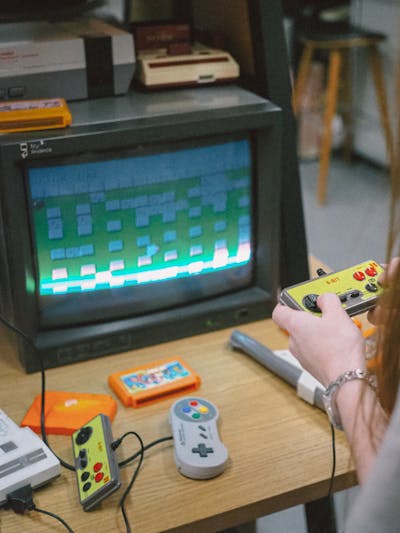
Back in the days when controllers could fit in everyone’s hand.
Photo by Viktorya Sergeeva, please support by following @pexel.com

A Retrospective: From Pixels to Playgrounds

For those of us who grew up with the bleeps and bloops of 8-bit consoles, the evolution of gaming has been nothing short of astounding. We fondly remember the days of mastering classic titles like Pac-Man and Super Mario Bros., where simple mechanics and catchy tunes kept us glued to the screen for hours on end. These early games laid the foundation for the narrative-driven, visually stunning experiences we enjoy today.

The transition from arcade cabinets to home consoles marked a pivotal shift. Gaming became more accessible, fostering a sense of community as friends gathered around the living room TV to battle it out in head-to-head competition. Titles like Street Fighter II and GoldenEye 007 pushed the boundaries of what was possible with home consoles, introducing complex fighting mechanics and immersive storylines that captivated players.

With the advent of online gaming, the world truly became our playground. We connected with players from across the globe, forging bonds through shared experiences in sprawling online worlds like World of Warcraft and EverQuest. Genres like first-person shooters (FPS) and Massively Multiplayer Online Role-Playing Games (MMORPGs) thrived, offering unparalleled levels of collaboration and competition.

Let me win this match or I’m going through your cell phone.
Photo by cottonbro studio, please support by following @pexel.com

The Rise of Motion: Gaming Beyond the Couch

Gaming has transcended the limitations of the traditional living room setup. Motion-controlled consoles like the Nintendo Wii ushered in a new era of active gaming, encouraging players to get up and move. Titles like Wii Sports and Dance Dance Revolution demonstrated the potential for games to be a fun and engaging form of exercise, attracting a new demographic of casual gamers who may not have previously considered themselves “gamers.”

This trend has continued to blossom with the rise of fitness-focused games like Ring Fit Adventure and VR experiences that incorporate physical movement into the gameplay. The lines between gaming and exercise are blurring, offering exciting possibilities for a future where staying active becomes an even more enjoyable and interactive experience.

The Dawn of a New Era: AR and VR Blur the Lines

Perhaps the most transformative development in the gaming landscape is the emergence of Augmented Reality (AR) and Virtual Reality (VR). These technologies promise to completely redefine the way we interact with virtual worlds.

AR overlays digital elements onto the real world, creating a seamless blend of the two. Imagine exploring your city streets while battling virtual creatures, or decorating your home with holographic furniture. AR has the potential to revolutionize mobile gaming, offering innovative experiences that seamlessly integrate with our everyday lives.

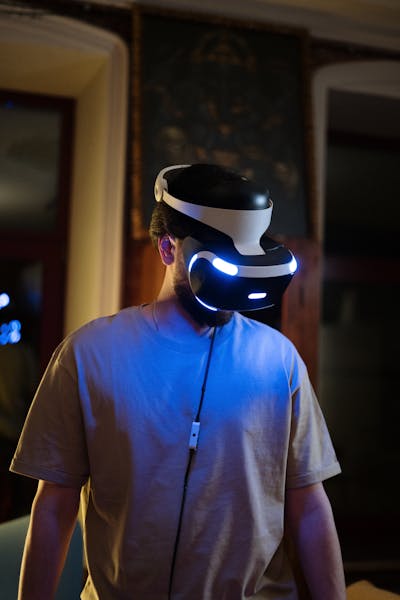
VR, on the other hand, immerses us completely in a simulated environment. Don a VR headset, pick up your controllers, and you’re transported to a fantastical world, an alien landscape, or even the heart of a historical event. VR offers unparalleled levels of immersion, allowing us to truly inhabit a digital world and interact with it in ways never before possible.

Why is this Real Life Simulator better than real-life? I don’t have to pay taxes.
Photo by cottonbro studio, please support by following @pexel.com

A World of Possibilities: What Does the Future Hold?

The convergence of these technologies promises an exciting future for gaming. Here are just a few possibilities that have us eagerly anticipating the next generation of gaming experiences:

  • Hyper-realistic storytelling: Imagine exploring the ruins of ancient civilizations or walking alongside historical figures, all rendered in breathtaking detail thanks to advancements in graphics and AI. VR could revolutionize educational experiences, allowing us to learn about history and science in a completely immersive way.
  • Enhanced social interaction: VR and AR have the potential to foster even deeper connections between players. Imagine attending virtual concerts with friends from across the globe, or collaborating on creative projects in shared virtual spaces. These technologies could break down geographical barriers and foster a more connected gaming community.
  • Evolving mechanics: We can expect to see game developers leverage AR and VR functionalities to create innovative mechanics that push the boundaries of gameplay. Imagine solving puzzles by manipulating real-world objects in an AR environment, or using your body movements to control your character’s actions in VR.
  • Accessibility for all: AR and VR could make gaming more accessible for