
Swapping Phones and Trading Places

Quick note: if you’re viewing this via email, come to the site for better viewing. Enjoy!

Jesus Saves but Scriptingthewhy saved my bank account baby! Read this script!
Photo by Brett Sayles, please support by following @pexel.com

Hey you, yes you, you the reader. Do you want to know a secret? I know something special about you. The fact that you’re reading this means that you are in the market for getting robbed.

I’m sure there hasn’t been a point in time, where you haven’t had the thought to give some stranger on the internet your hard-earned cash. Please keep in mind that hard-earned was said depending on your work ethic, we all know that results may vary. You say “no”? None of this sounds appealing to you. Don’t worry, that wasn’t my angle.

Humans, it has long been known that we are creatures of habit. We don’t like change much, so we often don’t like it when our plans have hiccups. This could range from something small like having to pick up a tube of toothpaste because you just squeezed your last bit this morning and now you have to add another item to stop for on your shopping list or, to something big like having your phone no longer working because it’s not in your name despite the fact it was fully functional the day before.

You don’t quite understand that last one? Don’t worry, I’m going to script it for you.
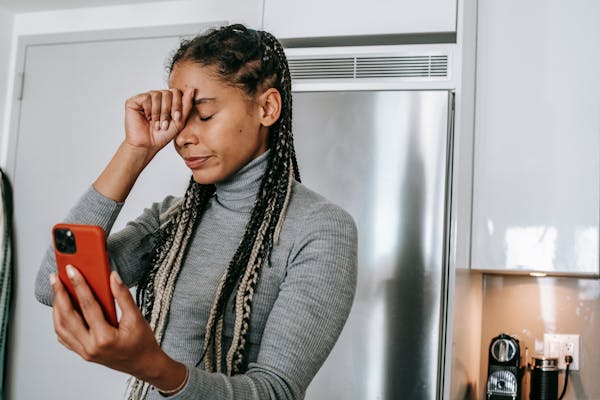
Lord, I think this is what Z-Daddy was talking about. This phone was working a minute ago.
Photo by Alex Green, please support by following @pexel.com

A Change in Signal

If you can, picture you’re using your phone for one minute and you put it down only to come back moments later to find that it no longer operates the same. You try making some calls, double check to see if you have any “bars” (“signal”, if you wanted to be technical).

You turn on and off the airplane mode, restart your phone, and still nothing. It’s obvious that something is off and this clearly isn’t normal, you shouldn’t try putting it off to deal with it later.

There is a super high chance that you could be experiencing SIM Swapping. SIM (Subscriber Identity Module) swapping which may go by other names like SIM hijacking, SIM splitting, or sim jacking (not sure how much I like that last one, sounds like a trip to HR), is the art of an attacker/hacker gaining control of your phone number.

Once your number is obtained, life for you is going to go from Netflix and Chill to Bodies by Drowning Pool pretty quickly.

Another globe crisis and cyberattacks on the rise…I’m good with this.
Photo by Ashutosh Sonwani, please support by following @pexel.com

Changing Faces

If you’re an advent reader of mine then you’ll already know or have a good sense of who would commit this act and why, but if you’re not, ask yourself the following. How could you have committed this heinous crime of not subscribing? Why haven’t you subscribed to keep up to date on when I post? And are you going to be missing out if you don’t subscribe? To that last one, I can honestly say “yes”.

Subscription shaming aside, this act is committed with the intent of the attacker becoming you. Why would someone choose you as a target you may be asking? As mentioned before, imposing as you can grant them access to everything you have and more.

They can intercept incoming messages meant for you. Some events have involved credit cards being charged and financial institutions trying to confirm if the purchase was legit only for the attacker to confirm in your place.

Sometimes there’s just no other way to say it.
Photo by Saksham Choudhary, please support by following @pexel.com

Ways to Phone Jack

So you may be wondering, how is something like this executed. I mean, clearly, there has to be some telltale signs before it even happens, right? Well…in most and by most meaning all, you’ll never know that your information is being collected.

This could be done by using keyloggers malware, phishing emails, or which happens in most cases social engineering. The attacker will be someone who has been in the same vicinity as you and has listened close and long enough to obtain enough information to pose themselves as you.

Enough to fool your cellphone provider into giving them more information that they may be missing to commit further attacks. Once that happens, the fun of trying to get everything back in order begins, depending on your response time when you find out your phone no longer has service.

I watched out for social engineering, and I’m didn’t crazy.
Photo by Kindel Media, please support by following @pexel.com

Becoming Socially Unacceptable

At this junction, which is normal, you might be wondering how to prevent this from happening. Social engineering is tricky to catch, so you have to pay attention to everyone you’re within earshot of. Trying to do this constantly will drive you insane and pretty much overload your senses…well and at some point, you’re going to lock eyes with someone for a little longer than what’s considered to be normal, and you may end up weirding them out. The point is, you’re going to end up like Jim Carrey from the movie 23 and be uber-paranoid.

An easier and more sane solution is to be mindful of your volume in places where you’re required to verbally give your information as talking to the person as if you two are in a rave could end poorly since eavesdropping is an easy skill perk that we all have. If writing it down, make sure you are aware of people who may walk by as this could lead to them being able to perform “shoulder surfing”, this is a clever name I know. I didn’t coin it but still somehow, I can feel your judgment.

Some other countermeasures you can take instead of opting for text-based confirmations are, your cellphone provider will let you add a PIN (Personal Identification Number) to your account for an extra layer of protection. When making use of 2FAs (two-factor authentications) verification methods, opt for biometrics which relies on either facial recognition or fingerprint scanning as this involves confirmation of your physical being.

Another method is having a security key that looks like a flash drive but a simple tap or insert into the phone could be more secure if you didn’t want the hassle of trying to get your phone to recognize your face. It is highly advised to contact your provider as soon as possible if you get a “Number changed” or your phone stops operating normally, the effects and fallout could run into years of working to get everything fixed.

Within 5 hours a credit card statement of $7,845.35 could be in your name and that could be the prelude to what’s to come.    

Small Detour:

Check out this person’s experience with SIM swapping because their story is wild, click here.
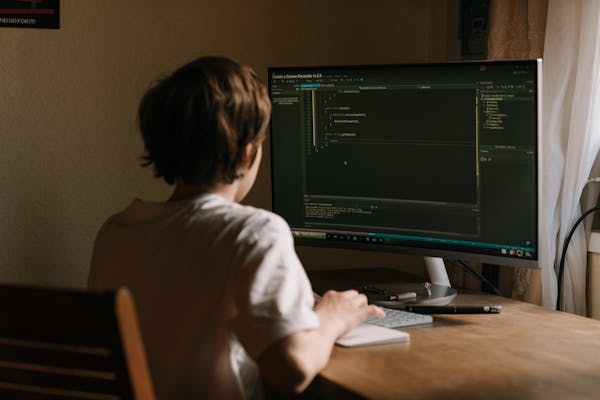
Sean: I want to be a hacker like Z-Daddy when I grow up.
Z-Daddy: I’m not a hacker kid, you know what, forget it.
Photo by cottonbro studio, please support by following @pexel.com

Made it this far and found this to be entertaining? Then a big thanks to you and please show your support by cracking a like, scripting a comment, or plug-in to follow.

Would like to give sincere thanks to current followers and subscribers, your support and actions mean a lot and has a play in the creation of each script.

Is there something I may have missed about SIM swapping? Script a comment below.

Deepfakes: Unveiling the Controversy and Opportunities

Key Takeaways

  • Deepfakes are AI-generated manipulated images, videos, or audio. They can be used to impersonate individuals or create entirely new content.
  • Deepfakes have a dark history. They first gained notoriety in 2017 when a Reddit user used them to create deepfake pornographic videos.
  • Deepfakes are created using deep learning models. These models require large amounts of data to learn a person’s features and patterns.
  • Deepfakes can be used for both malicious and beneficial purposes. They can be used to spread misinformation, harass individuals, and create fake news. However, they can also be used for training simulations, marketing, and creative expression.
  • Spotting deepfakes can be challenging but not impossible. Look for inconsistencies in facial movements, lighting, shadows, and audio. Trust your gut feeling.
  • Legal frameworks surrounding deepfakes are still evolving. While there are some state-level laws, a comprehensive federal law is still needed.
  • It’s important to be aware of the risks and benefits of deepfakes. As technology continues to advance, we need to develop effective detection methods and legal frameworks to mitigate their potential harms.
Bro, they have a video of you throwing something out of your window.
Photo by Mikhail Nilov, please support by following @pexel.com

Understanding Deepfakes: The Good, the Bad, and that’s not your Mom.

Over the years, the internet has been… well, the internet made with all interesting and mentally concerning individuals. Many of which may be right next door to you. As terms online pop-up, one is becoming more and more of a growing concern.

This growing issue deals with, yet again people, (we can’t seem to have anything nice) some of which you may know personally and others…not so much.

Give me that beautiful face!

It’s another day at the office, you’re online, your best work buddy called out, and you’re to fend for yourself. All great things when at work, we love this. While online, browsing through all the wonderful garbage the algorithm has to offer. (Let’s be honest doom-scrolling cute cat videos aren’t a thing anymore, we know) you find some photos and videos of your work buddy.

You think,” Is that? Nah, this can’t be them. They wouldn’t do something as crazy as hurling a basket of cute kittens out of a window.” In disbelief, you call your work buddy to verify if it’s indeed them. Countering disbelief with confusion and uttering that lovely phrase “What in the Sam Cooks hell are you talking about?”

You provide them with what you saw only to discover both surprises are mutual. Both of you wondering the what, when, and how could someone find the time and resources to impersonate anyone to perform such a sickening act. Welcome to the rise of the Deep Fakes.

AI is beginning to look like me more and more.
Photo by Irina Kaminskaya, please support by following @pexel.com

What are Deepfakes?

You may be asking yourself, “What are deep fakes? What makes them fake?” Deep fakes are images, videos, and even audio manipulated using artificial intelligence to appear real. Deep fake is a portmanteau- a combination of two words to make a new word- of “deep learning” and “fake”. Deep fakes can be created by replacing a person with another person or by creating new content altogether.

Backstory of Deepfakes

The idea showed up back in 2017 when a Reddit user named “deepfakes” began sharing altered pornographic videos (it’s always porn) using face-swapping technology. If you’re not familiar with face-swapping, this was the craze that led to users being able to swap faces with their pets, friends, and eventually led to being able to put themselves into movie moments.

You know it’s amazing to see how far one species can come in advanced technology and quickly resort to using it for primitive ends. It really shows where our heads are at.

Faking in the Making

How are deep fakes made? And are they all created equal? To answer that last question is ‘no’. Clearly, there’s a different process since everyone’s face tends to have additional features to make them look unique. The process for creating a deep fake consists of collecting large amounts of data containing images or videos of a person.

This could involve having images of every angle, expression, and feature to ensure the AI captures them properly. The “data” or better known in the data science community as the “dataset” is fed into a deep learning model, this could be either variational autoencoder (VAE) or generative adversarial network (GAN), from there the model learns how to create images mimicking the person the dataset is based on.

Just a side note, hundreds of images on an individual are required to generate new images. This means you can’t supply the model with four or five images of someone and expect it to create a video. Models work best when more information is available to them. A key thing to remember when dealing with AI is “the more in, the better out.”

They’re Faking it

You’re on a date, things are going well, and the connection “feels” real. However, this is done in an effort to conserve your feelings. After finding out your date was putting in a playtime shift and more likely wants to see other people, you venture to embarrass them by posting some “not so covered” photos of them online. This scenario is just an example of the use cases for deepfakes.

They can be something small as creating a funny picture for a good laugh, new meme, or it can be vicious as recreating their image in comprising positions. Positions that could lead to some hard times if reputations are tarnished and careers are lost. So, use it with caution.

AI may have everyone else fooled, but not me. Something looks a little off here.
Photo by Andrea Piacquadio, please support by following @pexel.com

Exercising caution, Spotting the Fakes

We humans have an eye for spotting something that- to us just doesn’t look right. Trying to spot a deepfake can be challenging depending on how well the image was generated. The obvious telltale signs are an extra limb, appendage, eyeball, or extra anything that typically wouldn’t be on a human.

A reason for this to happen is the model was fed information on a person but not fed the limitations that would make the image of a person normal. Confusing, we know but understand computers don’t think the same way humans do. We speak in a way we can understand what we “mean” or what we “meant” to say. Computers cannot compute abstract meanings.

Other signs include but are not limited to, awkward facial movements, displaced lighting and shadows, and audio that could appear mismatched or just off to how the person would sound. In short, go with your gut feeling. Most often you’ll be right.

Laws Against Deepfakes

The legal landscape surrounding deepfakes is still evolving. In the United States, there is no comprehensive federal legislation specifically addressing deepfakes, but several states have enacted laws to combat their misuse.

For example, Texas has banned deepfakes intended to influence elections, while California prohibits the creation of deepfake videos of politicians within 60 days of an election. At the federal level, the proposed DEFIANCE Act aims to allow victims to sue creators of non-consensual deepfake pornography.

The Benefits of Deepfakes

Despite their potential for harm, deepfakes also offer several benefits. In the healthcare industry, they can be used to create realistic training simulations for medical professionals.

In marketing, deepfakes can lower the cost of video campaigns and provide hyper-personalized experiences for customers. Additionally, deepfakes have creative applications in the arts, allowing for innovative storytelling and the preservation of cultural heritage.

Conclusion

Deepfakes represent a powerful and controversial technology with far-reaching implications. While they offer exciting possibilities for entertainment, education, and marketing, they also pose significant risks to privacy, security, and trust.

As deepfake technology continues to evolve, it is crucial to develop robust detection methods and legal frameworks to mitigate its potential harms while harnessing its benefits for positive use.

Again, it never ceases to surprise us how quickly people resort back to primitive needs when it comes to technology. We’re not shaming, the lizard brain is strong but as technology evolves, the idea is we evolve with it.

Love learning tech? Join our community of passionate minds! Share your knowledge, ask questions, and grow together. Like, comment, and subscribe to fuel the movement!

Don’t forget to share.

Every Second Counts. Help our website grow and reach more people in need. Donate today to make a difference!

One-Time
Monthly
Yearly

Make a one-time donation

Make a monthly donation

Make a yearly donation

Choose an amount

$5.00
$15.00
$100.00
$5.00
$15.00
$100.00
$5.00
$15.00
$100.00

Or enter a custom amount

$

Your contribution is appreciated.

Your contribution is appreciated.

Your contribution is appreciated.

DonateDonate monthlyDonate yearly

The Evolution of Privacy: From Physical Locks to Digital Encryption

Key Takeaways

The Importance of Privacy

  • Privacy is crucial in both the physical and digital worlds.
  • Protecting personal information is paramount in today’s digital age.

The Evolution of Privacy

  • Privacy has been a concern throughout history.
  • Methods of protecting privacy have advanced from physical locks to digital encryption.

Password Security

  • Strong passwords are essential for digital security.
  • Keyboard walk passwords are weak and easily guessable.
  • Using strong, complex passwords is crucial to prevent unauthorized access.

The Consequences of Weak Passwords

  • Weak passwords can lead to significant consequences, including identity theft and financial loss.
  • Cybercriminals often target weak passwords in their attacks.

Best Practices for Password Security

  • Create strong, unique passwords for each account.
  • Use a combination of uppercase and lowercase letters, numbers, and special characters.
  • Avoid common patterns and easily guessable information.
  • Utilize a password manager for secure storage.
  • Regularly update passwords.

Organizational Responsibility

  • Organizations have a role in promoting strong password practices.
  • Employee education and robust security policies are essential.
  • Continuous monitoring and threat response are crucial.
We know you’re home. We just want to talk to you about your extending your computer’s warranty.
Photo by Noelle Otto, please support by following @pexel.com

The Importance of Privacy in the Digital Age

Privacy is a critical aspect of our lives, and its importance cannot be overstated. In today’s digital age, where information is easily accessible and shared, maintaining privacy has become more challenging yet more crucial than ever. Whether it’s locking the doors of our homes, securing our cars, or protecting our online accounts, keeping our personal information safe is paramount. Although, some would argue that if hackers get into their accounts, they’re just practicing. To those people, we say, “Keep reading to find out just how wrong you are.”

The Evolution of Privacy

Historically, privacy has always been valued. From ancient times when people used physical locks and secret codes to protect their belongings, to the modern era where digital encryption and cybersecurity measures are employed, the methods of safeguarding privacy have evolved significantly. However, the fundamental principle remains the same: keeping secrets secret.

The Digital Lock and Key

In the digital world, the concept of a lock and key translates to passwords and encryption. Just as we wouldn’t use a flimsy lock for our homes, we shouldn’t use weak passwords for our online accounts. The strength of a password is akin to the strength of a lock – the stronger it is, the harder it is for intruders to break in.

Understanding Keyboard Walk Passwords

What is a Keyboard Walk Password?

A keyboard walk password is created by moving sequentially over the keyboard keys in a pattern that resembles walking. These passwords are formed by keys that are next to each other on the keyboard, such as “qwerty” or “asdfgh.” This pattern can be in a straight line across, vertically down, or in a zigzag pattern. In a sense, this is hitting the easy button for creating passwords. Never hit the easy button when it comes to your security.

Why Do People Use Keyboard Walk Passwords?

End users often create keyboard walk passwords because they are easy to remember. When given the choice of prioritizing speed and ease of memorization over security, many people opt for these simple patterns. However, this convenience comes at a cost. And the cost could run steep.

The Risks of Keyboard Walk Passwords

Keyboard walk passwords are highly predictable and easily guessable. Cybercriminals are well aware of these patterns and often use them in their brute-force attacks. A brute force attack involves trying every possible combination of characters until the correct password is found. Since keyboard walk passwords follow a predictable pattern, they are among the first combinations that attackers try. So, in the sense of the hacker, let’s try every key.

How was I to know hitting the spacebar three times was going to be a weak password!?
Photo by Andrea Piacquadio, please support by following @pexel.com

The Consequences of Weak Passwords

Loss of Privilege

One of the most significant risks of using weak passwords is the potential loss of privilege. If an attacker gains access to an account with administrative privileges, they can cause significant damage. This can include stealing sensitive information, installing malware, or even taking control of entire systems.

Real-World Examples

According to a study by Specops Software, keyboard walk patterns are widespread in compromised passwords. For example, the pattern ‘qwerty’ was found over 1 million times in an analyzed set of 800 million compromised passwords. This statistic highlights the prevalence and risk associated with using such weak passwords.

Best Practices for Creating Strong Passwords

The Importance of Strong Passwords

Creating strong, lengthy passwords is one of the most effective ways to protect your online accounts. A strong password is difficult for attackers to guess and can significantly reduce the risk of a successful brute-force attack.

How to Create Strong Passwords

  1. Use Passphrases: Instead of a single word, use a passphrase. A passphrase is a sequence of words or a sentence that is easy for you to remember but difficult for others to guess. For example, “The Sun will come out Tomorrow” is a strong passphrase.
  2. Include a Mix of Characters: Use a combination of uppercase and lowercase letters, numbers, and special characters. This increases the complexity of the password.
  3. Avoid Common Patterns: Steer clear of keyboard walk patterns, repeated characters, and easily guessable information like birthdays or names.
  4. Use a Password Manager: A password manager can generate and store complex passwords for you, so you don’t have to remember them all.

Regularly Update Your Passwords

It’s also essential to update your passwords regularly. Even the strongest passwords can become compromised over time, so changing them periodically adds an extra layer of security.

Having a strong password is like having a strongman for a bouncer. People are less likely to try.
Photo by Alexa Popovich, please support by following @pexel.com

The Role of Organizations in Promoting Strong Password Practices

Educating Employees

Organizations play a crucial role in promoting strong password practices. By educating employees about the risks of weak passwords and the importance of creating strong ones, organizations can significantly reduce the risk of cyberattacks.

Implementing Security Policies

Implementing robust security policies, such as requiring employees to use strong passwords and change them regularly, can further enhance security. Additionally, organizations can use multi-factor authentication (MFA) to add an extra layer of protection.

Monitoring and Responding to Threats

Organizations should also monitor for potential security threats and respond promptly to any incidents. This includes regularly reviewing and updating security measures to stay ahead of emerging threats.

Conclusion

In conclusion, while keyboard walk passwords may be convenient, they pose a significant security risk. By understanding the importance of strong passwords and implementing best practices, both individuals and organizations can protect their sensitive information and reduce the risk of cyberattacks. Remember, the strength of your password is the first line of defense in keeping your digital life secure. And a better line of defense is staying informed.


Love learning tech? Join our community of passionate minds! Share your knowledge, ask questions, and grow together. Like, comment, and subscribe to fuel the movement!

Don’t forget to share.

Every Second Counts. Help our website grow and reach more people in need. Donate today to make a difference!

One-Time
Monthly
Yearly

Make a one-time donation

Make a monthly donation

Make a yearly donation

Choose an amount

$5.00
$15.00
$100.00
$5.00
$15.00
$100.00
$5.00
$15.00
$100.00

Or enter a custom amount

$

Your contribution is appreciated.

Your contribution is appreciated.

Your contribution is appreciated.

DonateDonate monthlyDonate yearly