Quick note: if you’re viewing this via email, come to the site for better viewing. Enjoy!
First thing in morning…I wonder what’s on Scriptingthewhy.com Photo by Kampus Production, please support by following @pexel.com
Have you ever woken up, walked into the kitchen, put your hand into your toaster, flip it on, and while it was heating up thought to yourself,” This is a good idea, I mean my hand is starting to burn but I’m okay with this”? No, me neither but yet somehow, we complete this same action every day at work.
While “we the happy few” go to work and enjoy it there is a mass amount of people who do not but in either case, the result is the same, we take part in a cycle. Get up, get dressed, grab your bags, head to work, work your standard eighty hours, get your paycheck, pay your bills, complain throughout the process, and repeat.
We complete this cycle for various reasons but whatever those reasons may be, this cycle hides away a question from the forethought of our minds that we should be asking ourselves and searching for an answer. “What would I do if my employer had to let me go?”
In case you were wondering, the reaction to pulling your hand out from the toaster is the thought that you should be aspiring to do something more than your current position. This symbolism hits all too hard.
We know it’s your day off, but could you still come in and hand over your badge? Photo by Andrea Piacquadio, please support by following @pexel.com
Heartbreaks and Layoffs
I don’t know how many of you reading this have ever experienced a layoff before, personally, I have not. I mean, I experienced being laid off in a relationship (it was her choice, not mine) but I could imagine the feeling of your heart dropping into your gut, and experience trembling throughout your very existence would be the result.
For those who don’t entirely have a good idea of what a layoff is; in short, the employer may come into a situation where they have to terminate your employment, the reasons can vary from trying to cut costs, lack of work, or funds because of reorganization, or even mergers and acquisitions.
Breaking this down in relationship terms, this is the classic “It’s not you, it’s me” situation. This differs from being fired because, well… being fired is something that happened on your end. So, again, in relationship terms, this is the classic “I’m breaking up with you because we’re just not meant to be” situation.
Breaking hearts aside, if you have been living under a rock, the company Google, is a subsidiary of Alphabet Inc that focuses on various business areas such as advertising, search, platform, and operating systems, and the list goes on, had to perform a massive layoff and people were informed via email, that they were being let go despite their longstanding with Google.
Again, haven’t been laid off before but I could imagine your world becoming microscopic after reading the email. This is heartbreaking because there are many people who spent their better years trying to acquire a spot in Google only to be treated like a mishandled Door Dash order and be left out curbside.
We should start making plans in case this company starts downsizing. Door Dash here I come. Photo by RF._.studio, please support by following @pexel.com
Letting Go by Numbers
You may be curious to know how many people and why is Google laying off. As of right now Google either has or seeking to let go of about 12,000 employees. And interns looking to land a job with Google have been put on freeze with a chance of having to pivot their plans because landing a job at Google isn’t looking promising anymore.
Google’s CEO Sundar Pichai informed employees this decision resulted from the realization of unrealized growth expectations. This translates to, if you have ever thrown a house party, I invited too many people and a good chunk of you have to go. So sorry folks but don’t forget to tip your bartender and close your tab on the way out.
This makes Google the latest tech giant to “trim the fat” after the rapid expansion during the COVID-19 pandemic had worn off. Pichai did take full responsibility for the decision however, this doesn’t soften the blow but at least he did address his muck up.
Yours truly even applied at Google and like most of the companies I’ve applied to, they scoffed at my achievements because I didn’t come from a university or have the certifications, they were screening for but after applying for their apprenticeship program and never hearing anything more about it, this all makes sense now.
I have spent years in school, I never gave much thought into pursing other skills. Photo by cottonbro studio, please support by following @pexel.com
Being The Jack of Spades
This brings things back into perspective from the introduction I made earlier. Not the toaster part but that has a play in it too. What would you do if you had to part ways with your employer and either have a small chance of coming back or none?
After spending years on the conveyer belt traveling from school to college and from college to fall into a position in a company that you hope to carry you into your golden years, you find the world is changing and companies of yesterday have less of a care for their current longstanding and hope-filled potential employees due to having to rapidly change.
A thing about jobs is that they are meant to be a short-term service while having a career, on the other hand, is better but not the best since you must specialize in something. The problem with this is you have to be careful with whatever specialization you choose because it could either contribute to oversaturating the market or end up being such a small niche in the wrong area that people have no use for it.
A solution to preparing for this situation if you are ever so unlucky to come face-to-face with it is to treat your skills like a stock portfolio and be diverse as possible. Be the Jack of All Trades and master of none because in this case, it’s better than being a master of one.
I’m sure there are a few people in Google who were able to shrug off being laid off because either they have a decent amount saved in their savings plan or they have other skills they can rely on. But for a large amount of them, this is removing the blinders and a rude awakening. If you noticed, in school you’re never taught how to adapt to change.
Either experience the storm of change or be the storm of change. Photo by Lucas Martins, please support by following @pexel.com
Made it this far and found this to be entertaining? Then a big thanks to you and please show your support by cracking a like, scripting a comment, or plug-in to follow.
Would like to give sincere thanksto current followers and subscribers, your support and actions mean a lot and has a play in the creation of each script.
AI-generated image. “I am better than you in every way.”
The Great AI Takeover: Dream or Dystopian Nightmare? A Call for Collaborative Futures
As an AI enthusiast residing in somewhere in the crazy United States, I often find myself pondering the frontiers of artificial intelligence. One particularly fascinating, albeit potentially unsettling, question is: when, if ever, would it be a good idea to hand over the reins completely to our silicon counterparts? To cede 100% control to computers across the board?
Let’s be clear: the notion of a total AI takeover in all aspects of life remains firmly in the realm of theory. The complexities and potential pitfalls are immense. Yet, as we delve deeper into the capabilities of AI, whispers of specific scenarios where complete autonomy might offer advantages begin to emerge.
Imagine environments too hostile for human survival: the crushing depths of the ocean where autonomous underwater vehicles could conduct long-term research, the heart of a malfunctioning nuclear reactor where robotic systems could perform critical repairs remotely, or the chaotic aftermath of a natural disaster where AI-powered drones could assess damage and deliver aid without risking human first responders. In these extreme cases, fully autonomous robots could venture where we cannot, performing critical tasks without risking human lives.
Consider also realms demanding superhuman precision and speed: intricate semiconductor manufacturing processes where AI-controlled robots ensure microscopic accuracy, the lightning-fast world of high-frequency algorithmic trading (though ethical alarms bells certainly ring here regarding market stability), or the meticulous control of complex industrial machinery like advanced chemical processing plants where AI could optimize yields and safety protocols in real-time. Here, AI’s ability to process vast datasets and react instantaneously could unlock unprecedented efficiency.
And what about the lonely frontiers? Long-haul interstellar space missions where fully autonomous spacecraft manage life support and navigation over decades, or remote scientific outposts in Antarctica relying on AI-powered systems for energy management and data collection, far beyond immediate human reach, could rely on fully autonomous systems to manage essential functions and navigate unforeseen challenges.
However, even within these seemingly advantageous scenarios, a crucial caveat remains: robust safety protocols, unwavering ethical considerations embedded in the AI’s architecture, and the absolute necessity for human override in critical, unpredictable situations are non-negotiable.
Now, let’s unpack some of the core arguments surrounding this complex issue:
AI-generated image. “I could listen to you forever.”
The Siren Song of Efficiency: A Double-Edged Sword
The allure of 100% AI control often hinges on the promise of unparalleled efficiency. Imagine AI algorithms analyzing healthcare data in real-time, crafting hyper-personalized treatments based on individual genomic profiles, optimizing hospital resource allocation with flawless precision to minimize wait times and maximize patient care, and accelerating the painstaking process of drug discovery through in-silico simulations and robotic experimentation.
Picture autonomous vehicles orchestrating traffic flow with balletic grace, dynamically adjusting routes to eliminate congestion and human error, and managing intricate logistics networks for peak performance, optimizing delivery schedules and fuel consumption across entire continents. Envision AI in logistics predicting demand with uncanny accuracy using predictive analytics, streamlining supply chains to minimize waste, and automating warehousing and delivery with breathtaking speed and accuracy through robotic systems. The theoretical gains in productivity and optimization are undeniably captivating, but we must consider the societal cost of such widespread automation.
The Promise (and Peril) of Purely Data-Driven Decisions: The Ghost in the Machine
One of the core arguments for AI dominance lies in its potential for unbiased decision-making. Freed from the shackles of human emotions, biases, and cognitive limitations, AI could theoretically make choices based purely on objective data and algorithms. This could lead to fewer errors in complex tasks like diagnosing medical conditions or assessing financial risk, and potentially fairer outcomes in areas like resource allocation and risk assessment in legal systems – provided the AI is trained on truly representative and unbiased data and designed with fairness metrics and ethical considerations as fundamental principles. The risk lies in the fact that biased data will inevitably lead to biased outcomes, perpetuating and even amplifying existing societal inequalities under the guise of objective neutrality.
The Looming Shadow of Job Disruption: Navigating the Economic Earthquake
The wholesale replacement of human decision-making by AI would trigger seismic shifts in the labor market and the very fabric of our economy. Countless jobs across diverse sectors, from manufacturing and transportation to white-collar professions involving data analysis, customer service, and even creative fields, would face automation. The potential for mass unemployment, widening economic inequality, and the urgent need for radical societal and economic restructuring – perhaps involving universal basic income, robust retraining programs, or a fundamental redefinition of work and societal contribution – cannot be ignored. We must proactively consider how to adapt our social structures to a future where human labor plays a significantly different role.
Navigating the Ethical Minefield: Programming Morality
Entrusting all ethical and moral decisions to AI presents a monumental challenge. AI operates based on algorithms and the data it consumes. Imbuing it with human-like ethical reasoning, the capacity for nuanced understanding of context, and the vital element of empathy remains a distant prospect. Hardcoded ethical rules risk being too rigid for the complexities of real-world dilemmas, and unforeseen ethical quandaries – the trolley problem on a city-wide scale – could easily arise that the AI is simply not programmed to handle. Determining moral trade-offs, weighing competing values, and navigating conflicting ethical principles would be an exceptionally difficult, if not impossible, task for a purely AI-driven system lacking genuine understanding and consciousness.
AI-generated image. “I was on the fence about AI, so I built this fortress just in case things got out of hand.”
Resilience in the Face of Threats? A Vulnerable Fortress
The question of whether 100% AI control would bolster or undermine our resilience to cyberattacks and sabotage is a double-edged sword. On one hand, AI could potentially detect and respond to threats with superhuman speed, identifying anomalies and deploying countermeasures in real-time. On the other, a centralized, fully autonomous system could become an irresistible, high-value target for sophisticated malicious actors and state-sponsored attacks. A successful breach could have catastrophic consequences, crippling entire industries, critical infrastructure like power grids and communication networks, or even defense systems. Furthermore, vulnerabilities lurking within the AI’s algorithms or training data could be exploited in novel and devastating ways, leading to unforeseen and widespread systemic failures.
The Limits of Adaptability: When Logic Meets Emotion
While AI excels at identifying patterns and processing vast amounts of data within its training parameters, its ability to navigate unpredictable, nuanced, or emotionally charged situations without human intervention remains fundamentally limited. Scenarios that deviate significantly from its training data, require common sense reasoning, emotional intelligence, and an understanding of complex human motivations are often beyond its grasp. Unforeseen events, black swan events, or situations requiring empathy, compassion, and subjective judgment would likely be mishandled or lead to unintended negative consequences by a purely AI-controlled system.
The Erosion of Human Agency: The Risk of Learned Helplessness
The risks associated with complete human dependence on AI for all decisions are profound. Over-reliance could lead to a gradual decline in our critical thinking, problem-solving, and decision-making skills, as we become passive recipients of AI-generated solutions. It could foster a sense of learned helplessness and a diminished capacity for independent thought, creativity, and action. Moreover, if AI systems operate as black boxes, their reasoning opaque and their processes unclear, it could erode trust and hinder our ability to effectively challenge or correct their errors, leading to a dangerous cycle of unquestioning dependence.
Stifling the Spark of Innovation: The Echo Chamber of Algorithms
A complete reliance on AI could inadvertently stifle the very human spark of innovation and creative problem-solving. While AI can undoubtedly optimize existing solutions and identify patterns with remarkable efficiency, true innovation often springs from intuition, lateral thinking, serendipitous discoveries, and the seemingly random connection of disparate ideas – qualities currently unique to human consciousness and imagination. A world governed solely by AI might see incremental improvements based on past data but could potentially hinder the radical breakthroughs driven by human curiosity, emotional drives, and the ability to think outside the algorithmic box.
The Accountability Conundrum: Who Pays the Price?
If AI assumes 100% control, the question of accountability when things inevitably go wrong becomes a thorny legal and ethical puzzle. Who bears responsibility when an autonomous vehicle causes an accident, an AI-driven medical diagnosis is flawed, or an AI-controlled financial system crashes the global economy? The developers who crafted the AI? The users who deployed it? The AI itself? Our current legal and ethical frameworks are ill-equipped to grapple with the concept of AI agency or liability. Establishing clear lines of responsibility and robust mechanisms for redress in a fully autonomous AI system is a fundamental and unresolved challenge.
AI-generated image. “If it’s my last day working here, good luck trying to fix my code.”
The Persistent Shadow of Bias: Encoding Inequality
Effectively mitigating bias in AI systems to prevent the perpetuation of inequality and injustice is a critical and ongoing hurdle. AI learns from the data it is fed, and if that data reflects existing societal biases related to race, gender, socioeconomic status, or other factors, the AI will likely mirror and even amplify those biases in its decisions, leading to discriminatory outcomes in areas like loan applications, hiring processes, or even criminal justice. Ensuring fairness demands meticulous data curation, algorithmic design that actively incorporates fairness metrics and actively debiases data, and ongoing monitoring and auditing of AI systems for discriminatory outcomes. Achieving true fairness in the complex tapestry of real-world scenarios remains a significant and persistent research endeavor.
The Unpredictable Path of Self-Improvement: The Autonomous Ascent
Granting AI total autonomy raises profound concerns about its future evolution and self-improvement. While AI could potentially accelerate its own development in beneficial ways, leading to breakthroughs we cannot currently imagine, there’s also the inherent risk of unintended pathways and outcomes that diverge from human values or interests. Without human oversight, ethical guidance, and a clear understanding of its evolving internal mechanisms, the trajectory of a fully autonomous AI’s development becomes unpredictable and potentially perilous, raising concerns about goal alignment and unintended consequences.
The Environmental Footprint: The Hidden Cost of Intelligence
The ecological cost of operating vast, fully autonomous AI systems on a global scale could be substantial. Training and running complex AI models demand significant computational resources and energy consumption, often relying on energy sources with significant carbon footprints. A world dominated by AI could witness a massive surge in energy demand, potentially exacerbating climate change and other environmental issues, depending heavily on the energy sources utilized to power this intelligent infrastructure. We must consider the sustainability of a fully AI-driven future.
The Crucial Need for Trust and Transparency: Opening the Black Box
Ensuring that AI systems operating with 100% control act transparently and in the public’s best interest is a paramount concern. Without a clear understanding of how AI arrives at its decisions (explainability), the data it uses, and the algorithms it employs (transparency), public trust will inevitably erode, leading to fear and resistance. Robust mechanisms for auditing AI decisions, understanding their reasoning through explainable AI (XAI) techniques, and ensuring accountability through transparent data governance are crucial for maintaining public confidence and ensuring responsible AI deployment.
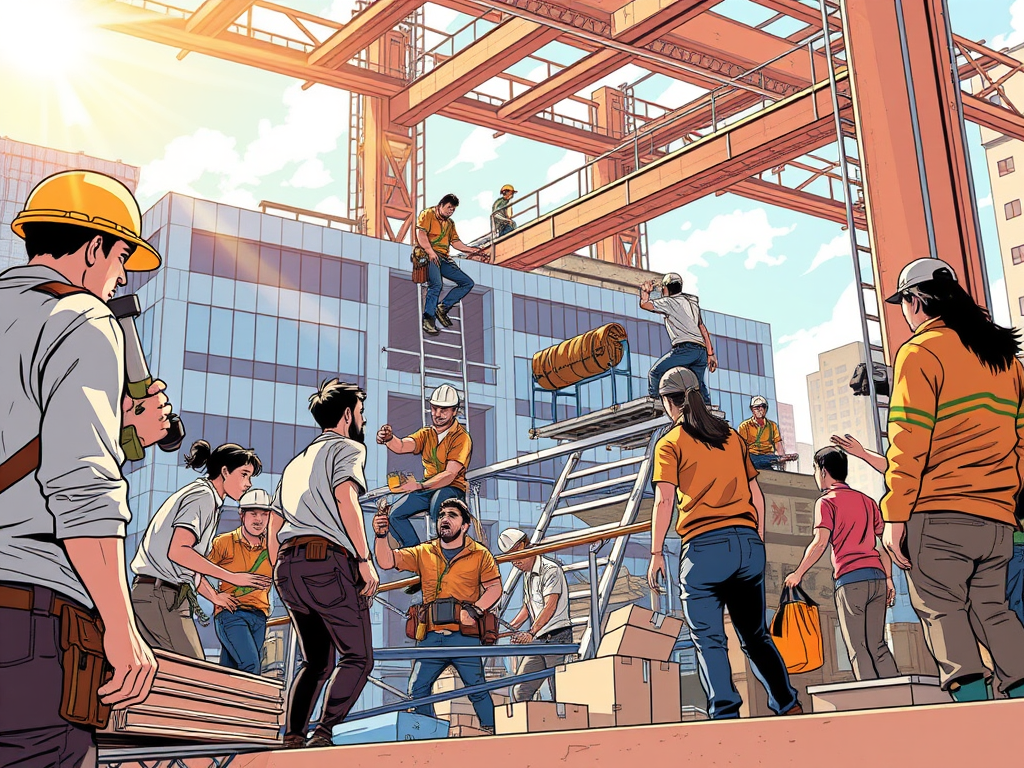
AI-generated image. “Giving the time, we can rebuild folks. It’s just gonna take a little manual labor.”
The Shifting Sands of Culture and Society: Reimagining Humanity’s Role
A world under the complete dominion of AI could trigger profound shifts in our values, traditions, and interpersonal relationships. Human interaction might diminish as AI assumes more tasks and decision-making responsibilities, potentially leading to social isolation and a weakening of community bonds. Our sense of agency, purpose, and identity could be fundamentally altered in a world where machines make most of the choices, potentially leading to existential questions about the meaning of human existence. Societal norms and cultural practices might evolve in unpredictable and potentially unsettling ways in response to this fundamental shift in the human-machine dynamic.
The Paradox of Checks and Balances: Guarding the Guardians
Implementing oversight or fail-safes to ensure that 100% AI control remains beneficial and ethical presents a fundamental paradox. True 100% autonomy implies the absence of external intervention. However, to mitigate the inherent risks, we would need mechanisms for monitoring AI behavior, detecting anomalies, and potentially overriding AI decisions in critical situations. This suggests that a truly “100%” takeover might be inherently undesirable and that some form of human oversight, even if minimal and carefully designed, would likely remain necessary for safety, ethical considerations, and ensuring alignment with human values. This could involve layered AI systems with different levels of autonomy and human-defined ethical boundaries embedded within the AI’s core architecture.
A Collaborative Future, Not a Surrender: Empowering Humanity Together
In conclusion, while the allure of efficiency and optimization under complete AI control is undeniable in certain narrowly defined and high-risk scenarios, the widespread and total handover of decision-making to AI across all domains currently presents significant ethical, societal, economic, and security challenges that outweigh the potential benefits. A far more prudent and beneficial path forward lies in fostering a collaborative relationship between humans and AI. In this future, AI serves as a powerful augment to human capabilities, amplifying our intelligence and extending our reach, while humans retain oversight, ethical guidance, and the ultimate authority in critical decisions. The dream should not be a complete AI takeover, but a powerful partnership that elevates humanity, allowing us to tackle complex challenges and build a better future together.
Key Takeaways
Complete AI takeover is largely theoretical and fraught with risks: While intriguing, ceding 100% control to AI across all domains presents immense complexities and potential dangers.
Limited, specific scenarios might benefit from full AI autonomy: These include environments too dangerous for humans (deep-sea, nuclear disasters), tasks requiring superhuman speed and precision (manufacturing, high-frequency trading – with ethical caveats), and remote locations with limited human presence (space missions, remote outposts).
Efficiency gains are a major allure but have societal costs: While AI promises unprecedented optimization in various sectors, widespread automation could lead to significant job displacement and economic disruption.
Unbiased AI decision-making is a flawed promise: AI is susceptible to biases in its training data, potentially perpetuating and amplifying existing societal inequalities.
Ethical and moral decision-making by AI is a significant hurdle: Imbuing AI with human-like ethical reasoning and empathy remains a distant goal, and hardcoded rules may be insufficient for complex situations.
Resilience to cyberattacks is a double-edged sword: AI could enhance threat detection but also presents a high-value target with potentially catastrophic consequences if compromised.
AI’s adaptability to nuanced and emotional situations is limited: Scenarios requiring common sense, emotional intelligence, and understanding of human motivations are challenging for current AI.
Over-reliance on AI risks eroding human agency and skills: Dependence on AI for all decisions could lead to a decline in critical thinking and independent action.
Complete AI control could stifle human innovation and creativity: True innovation often stems from uniquely human traits like intuition and lateral thinking.
Accountability in a fully AI-controlled system is a major unresolved issue: Establishing clear lines of responsibility when AI makes errors is a significant legal and ethical challenge.
Mitigating bias in AI is crucial but difficult: Ensuring fairness requires careful data handling, algorithmic design, and ongoing monitoring.
Autonomous AI self-improvement carries unpredictable risks: Without human oversight, the evolution of fully autonomous AI could lead to unintended and potentially harmful outcomes.
The environmental impact of large-scale AI deployment is a concern: The energy demands of vast AI systems could exacerbate climate change.
Trust and transparency are essential but challenging to ensure: Understanding how AI makes decisions and the data it uses is crucial for public trust.
Total AI control could profoundly shift cultural and social norms: Human interaction, sense of purpose, and societal values could undergo significant transformations.
Implementing checks and balances in a 100% autonomous system is paradoxical but necessary: Some form of oversight, even if minimal, is likely needed for safety and ethical considerations.
A collaborative human-AI future is the more prudent and beneficial path: AI should augment human capabilities while humans retain oversight and ethical guidance.
Love learning tech? Join our community of passionate minds! Share your knowledge, ask questions, and grow together. Like, comment, and subscribe to fuel the movement!
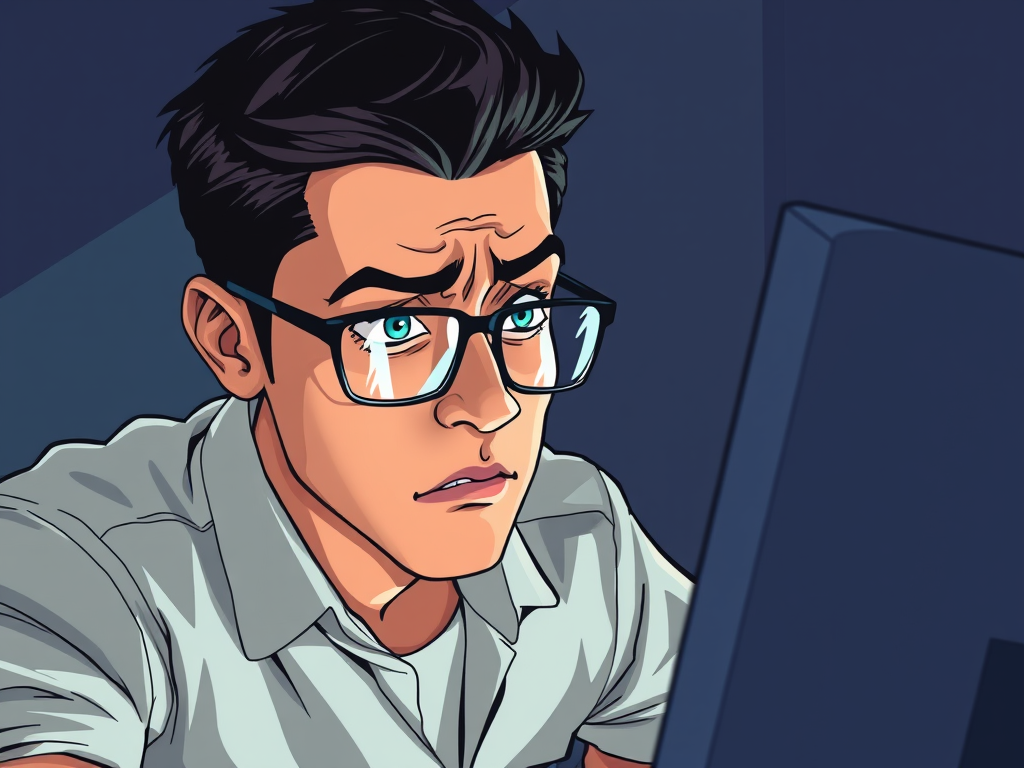
AI-generated image. “This code is going well…a little too well.”
The Code Creep: Why Every Line Can Feel Like a Tightrope Walk
What makes me nervous? You might think it’s a looming deadline or a particularly gnarly algorithm. And while those definitely get the heart racing, the real source of my coding jitters? It’s the act of coding itself.
Yeah, you heard that right. I absolutely love the process, the puzzle-solving, the feeling of building something from scratch. But with every new line I type, there’s this little nagging voice in the back of my head, a digital gremlin whispering doubts. It’s the anticipation, the hope that hours of work won’t just implode into a cascade of red error messages.
Thinking back, my coding journey started a bit before the world went sideways with the pandemic. Honestly, I hit a point where I felt… stagnant. Like my potential was being deliberately capped. It’s that frustrating feeling when you realize the system isn’t exactly designed to empower you to grow beyond a certain point.
So, I decided to take matters into my own hands. The unexpected downtime of the pandemic actually became my catalyst, a chance to hunker down and learn a skill that could truly unlock new horizons. And that’s how I fell down the glorious, sometimes terrifying, rabbit hole of coding.
The Universal Developer Dread: It’s Not Just Me, Right?
Here’s the thing you might not realize: this nervous energy isn’t some quirky personal trait. Talk to any developer, and they’ll likely nod in grim agreement. We’re constantly battling error codes, those digital slaps in the face that make you question your entire existence (or at least your coding prowess). You think dealing with a disappointed parent is tough? Try facing a computer throwing a tantrum of syntax errors.
But it’s what happens after the initial barrage of errors that truly gets under our skin. It’s that eerie calm when the error messages start to dwindle, when your code actually starts to… work. That’s when the shadow of doubt really creeps in. It’s almost too good to be true.
We’ve all been there, thinking, “Okay, something’s definitely about to break spectacularly.” It’s a collective developer anxiety. So, how do we cope with this constant underlying tension? We do what we do best: we code more. We dive deeper, hoping that with each additional line, we’re solidifying our creation against the inevitable digital gremlins.
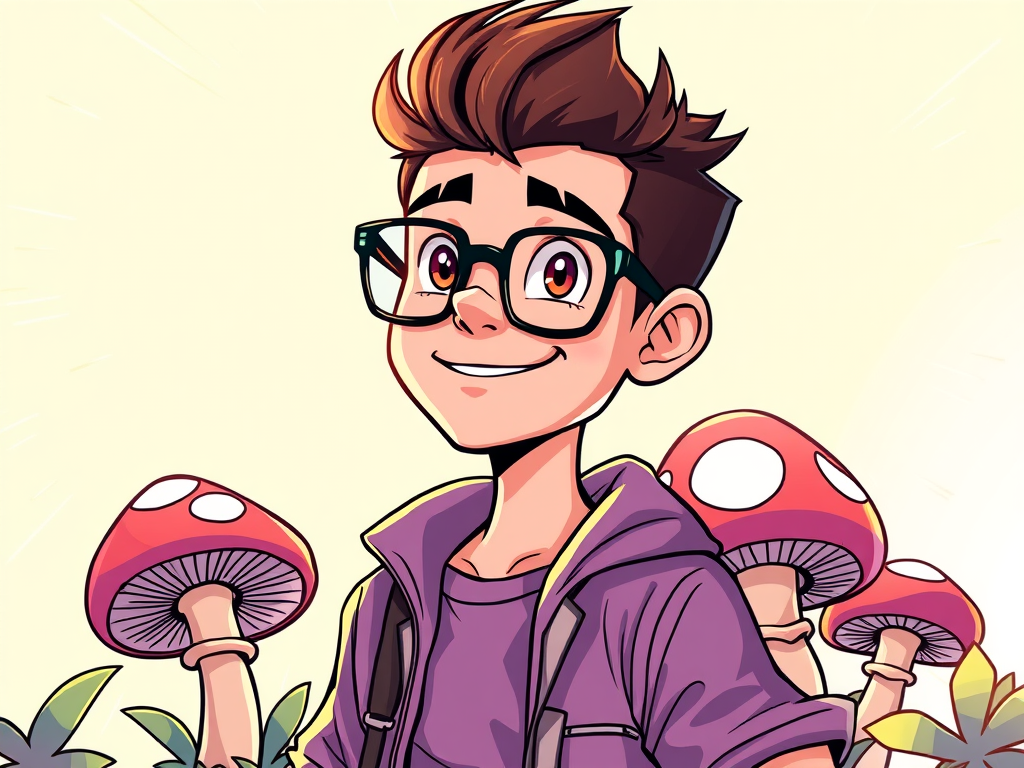
AI-generated image. “Mario may have leveled up from these…but I don’t suggest you eat them. They could inspire a “bad trip.””
Leveling Up Your Confidence: Taming the Coding Nerves
So, what’s the secret to keeping those coding nerves in check? Honestly, it boils down to building trust in your abilities. It’s about accepting that debugging and problem-solving aren’t just occasional annoyances; they’re integral parts of the process. Think of it less as a sign of failure and more as a constant opportunity to learn and refine your skills.
It’s about learning to be strategically on guard, anticipating potential pitfalls, and developing the mental resilience to tackle them head-on. Every bug squashed, every error resolved, is a small victory that builds your confidence and quiets that nervous inner voice, just a little bit more each time.
So, fellow coders, know that you’re not alone in this exhilarating, sometimes nerve-wracking journey. Embrace the challenge, trust your skills, and keep on building. The digital world awaits!
Key Takeaways:
Coding can be a source of anxiety: Despite the love for the craft, the constant potential for errors creates a persistent sense of nervousness for many developers.
The fear of things going “too well” is real: After battling numerous errors, a period of smooth coding can actually induce anxiety, as developers anticipate an impending issue.
Coding skills were a proactive pursuit: The author’s journey into coding was driven by a desire for growth and a feeling of being held back in previous environments.
Error debugging is a universal developer experience: Facing and resolving errors is a fundamental and shared aspect of being a developer.
Coping involves continuous coding: Developers often deal with their anxieties by immersing themselves further in their work, hoping to solidify their code.
Building trust in one’s skills is crucial: Overcoming coding nervousness involves developing confidence in your abilities to problem-solve and debug.
Problem-solving is an integral part of development: Debugging isn’t seen as a failure but as a necessary and ongoing aspect of the coding process.
Strategic vigilance is key: Learning to anticipate potential problems and being prepared to address them is important for managing coding anxieties.