Embracing AI: Opportunities Over Automation Fears

Key Takeaways

  • AI is a tool, not a threat: It’s a technology that can be used to augment human capabilities, not replace them.
  • Automation creates new opportunities: While AI may automate some tasks, it also creates new jobs and industries.
  • Human skills remain essential: Skills like creativity, critical thinking, and emotional intelligence are still highly valued in the age of AI.
  • AI needs human guidance: AI systems require human input to function effectively and ethically.
  • Embrace the future: By adapting to technological advancements and acquiring new skills, we can thrive in the AI era.

AI-generated image. I’m not going to lie, this my face when looking at my stats for WordPress. People don’t enjoy reading anymore.

AI: The Not-So-Scary Job Stealer

So, you’ve heard the rumors, right? I feel like this has been mentioned many of time before, but hey, we’ll mention it again. AI is coming to steal your job, your lunch, and maybe even your favorite pair of socks. Fear not, dear reader, for I am here to dispel these myths and shed some light on this not-so-menacing technology. Or I’m going to at least try to. AI is still evolving after all, and some of us are not. Sad face.

The Panic Button

Let’s talk about the panic. When generative AI burst onto the scene, it was like a kid in a candy store, spitting out text and images faster than you can say “robot uprising.” Well, you had enough time to say that depending on how good your internet connection was, but you get the point. People freaked out, thinking their jobs were doomed. To anyone who has watched South Park, you could hear echo that famous line. “THEY TOOK OUR JOBS!” But let’s be for real here, folks. AI is more like a helpful coworker than a job-stealing nemesis. And for most people in America, a helpful co-worker is a tall order.

AI-generated image. I’m not going to say it’s the ultimate tool, but it’s close enough.

AI: The Ultimate Tool

Think of it this way: AI is a tool, like a hammer or a screwdriver. A hammer doesn’t build a house on its own; it needs a skilled carpenter to wield it. Similarly, AI needs a human touch to guide it and make it truly useful. This is what you would call a “human-in-the-loop”. Yeah, AI can do the heavy lifting for you, but like the promising new guy, keep an eye on him. He can still get a few things wrong.

Automation: Friend or Foe?

Sure, there are instances where AI can automate tasks and streamline processes. But this isn’t necessarily a bad thing. It frees up our time to focus on more creative and strategic work. Instead of getting bogged down in mundane tasks, we can spend our time innovating, problem-solving, and coming up with brilliant ideas. However, this is a dual edge sword. Why? There are some places, i.e work, that require you to “work” aka “look busy”, if AI cuts down the work, you’re likely to be rewarded with more work.

The Human Touch

As mentioned earlier, the same way you need to keep an eye on the new guy, the same goes for AI. AI is not here to replace us but to augment our abilities. It can handle repetitive tasks, analyze vast amounts of data, and even generate creative content. But it still needs human oversight to ensure accuracy, relevance, and ethical considerations. And trust me, there are going to be times where you tell AI, “You’re fired”.

AI-generated image. One day my paycheck will give me a piece of mind.

Real-World Applications

So, what are some places AI is running its ones and zeros at? Let’s dive into some real-world applications of AI that showcase its potential to enhance, rather than replace, human jobs:

  1. Healthcare: AI can analyze medical images, predict patient outcomes, and even assist in surgeries. However, it still requires the expertise of doctors and nurses to interpret results and make critical decisions.
  2. Education: AI can personalize learning experiences, grade assignments, and provide feedback. Yet, teachers are essential for fostering critical thinking, creativity, and emotional intelligence in students.
  3. Customer Service: AI-powered chatbots can handle routine inquiries, freeing up human agents to tackle more complex issues and provide personalized support.
  4. Finance: AI can detect fraudulent transactions, analyze market trends, and manage portfolios. Financial advisors, however, are crucial for offering personalized advice and building client relationships.

Embracing the Future

So, the next time you hear someone panicking about AI taking over the world, remind them to take a deep breath and embrace the future. AI is here to help us, not hurt us. Although the boomer generation who saw Judgment Day may still rush to the underground bunkers. It was just a movie, Skynet isn’t real. Wait, Google bought Skynet, right?

The Importance of Adaptation

As with any technological advancement, adaptation is key. By learning how to work alongside AI, we can harness its potential to improve our lives and careers. This means developing new skills, staying curious, and being open to change.

The Role of Education

Education plays a crucial role in preparing us for an AI-driven future. By incorporating AI literacy into our curricula, we can equip the next generation with the knowledge and skills needed to thrive in a world where AI is ubiquitous.

Ethical Considerations

While AI offers numerous benefits, it’s essential to address ethical considerations. This includes ensuring transparency, fairness, and accountability in AI systems. By doing so, we can build trust and ensure that AI serves the greater good.

Conclusion

In conclusion, AI is not the job-stealing monster it’s often made out to be. Instead, it’s a powerful tool that, when used responsibly, can enhance our lives and careers. By embracing AI and adapting to the changes it brings, we can unlock new opportunities and create a brighter future for all.

So, let’s put those fears to rest and welcome our new AI coworkers with open arms. Boomers, everything is fine. You can emerge from your bunkers, a new emergency day is on the rise.

Love learning tech? Join our community of passionate minds! Share your knowledge, ask questions, and grow together. Like, comment, and subscribe to fuel the movement!

Don’t forget to share.

Every Second Counts. Help our website grow and reach more people in need. Donate today to make a difference!

One-Time
Monthly
Yearly

Make a one-time donation

Make a monthly donation

Make a yearly donation

Choose an amount

$5.00
$15.00
$100.00
$5.00
$15.00
$100.00
$5.00
$15.00
$100.00

Or enter a custom amount

$

Your contribution is appreciated.

Your contribution is appreciated.

Your contribution is appreciated.

DonateDonate monthlyDonate yearly

Is AI Revolutionizing Our Future?

AI-generated image. “Maybe…maybe I’m overthinking again.”

The AI Revolution: Are We Living in the Future We Imagined?

Whoa, buckle up, tech enthusiasts! The pace of innovation these days is absolutely breakneck. Blink and you might just find yourself stuck in the digital dark ages. For ages, we’ve known the mantra: adapt to tech or get left behind. And let’s be real, technology has undeniably made our lives smoother. Remember the agony of typos before autocorrect? The suspense of not knowing who was calling? The manual calculations on a basic calculator? We’ve come light-years, experiencing advancements that genuinely simplify our daily routines.

Now, all eyes are on Artificial Intelligence. We hope it will follow this trend of making life easier. But lately, I’ve been pondering something deeper. It feels like AI is shifting from being a tool we use to get things done, to becoming an integral part of who we are. Are we leaning on AI as instinctively as flipping a light switch? Let’s dive into why this might be the case.

AI-generated image. “Are we truly blurring reality?”

The Content Creation Explosion (and the Blurring Lines of Reality)

One of the most significant impacts of AI has been in the realm of content creation. Suddenly, the age-old adage of “fake it ’til you make it” has taken on a whole new dimension. Generative AI can now churn out images, text, and more at an astonishing rate. It’s like everyone suddenly has access to a ghostwriter, a digital artist on demand.

And honestly, if the content is engaging and enjoyable, do we really care if it was crafted by a human or an algorithm? Maybe not. But with this democratization of content creation, a crucial question arises: Can there be too much of a good thing? What happens when the digital landscape becomes saturated with AI-generated content, making it harder to discern authenticity?

AI-generated image. “Do you think we’ll lose our ability to create?”

The Achilles’ Heel: Data Dependency and the Human Element

As many of us deep in the trenches of machine learning and neural networks know, the dazzling capabilities of AI come with a significant caveat: it’s not infallible. Not even close to 100%, and certainly not consistently. The truth is, AI’s performance is intrinsically linked to the data it’s trained on and the humans who program the models.

The idea of AI programming AI might sound like sci-fi becoming reality, and yes, it’s happening. But is it practical or entirely safe? Not really. There’s no guarantee that an AI tasked with creating more AI won’t simply regurgitate existing patterns and biases. In short, I’m starting to feel like AI is becoming the new Google – a vast repository of information, but one that might lack the nuance, originality, and critical thinking that comes with human insight. And frankly, that’s a little unsettling.

So, where do we go from here? Are we destined to become increasingly reliant on AI, even at the risk of losing a bit of our own ingenuity and critical thinking? Let’s keep this conversation going. I’m eager to hear your thoughts in the comments below!

Key Takeaways

  • Rapid Technological Change: The world is evolving incredibly fast, and keeping up with technology, especially AI, is crucial to avoid being left behind.
  • AI’s Growing Presence: AI is transitioning from being a tool to becoming a more integrated part of our lives, potentially influencing us as much as basic utilities.
  • AI in Content Creation: Generative AI has democratized content creation, allowing for easy generation of images, text, etc., but this raises questions about authenticity and potential oversaturation.
  • Data and Human Influence on AI: AI’s accuracy and reliability are heavily dependent on the data it’s trained on and the humans programming it, meaning it’s not always perfect and can reflect existing biases.
  • Concerns about Over-Reliance: There’s a worry that we might become overly reliant on AI, potentially at the expense of human ingenuity and critical thinking.
  • AI as the “New Google”: The author expresses concern that AI is becoming a primary source of information, similar to Google, but potentially lacking in nuance and originality.
  • Call for Discussion: The post encourages readers to engage in a conversation about the implications of AI’s increasing role in our lives.

Love learning tech? Join our community of passionate minds! Share your knowledge, ask questions, and grow together. Like, comment, and subscribe to fuel the movement!

Don’t forget to share.

Every Second Counts. Help our website grow and reach more people in need. Donate today to make a difference!

One-Time
Monthly
Yearly

Make a one-time donation

Make a monthly donation

Make a yearly donation

Choose an amount

$5.00
$15.00
$100.00
$5.00
$15.00
$100.00
$5.00
$15.00
$100.00

Or enter a custom amount

$

Your contribution is appreciated.

Your contribution is appreciated.

Your contribution is appreciated.

DonateDonate monthlyDonate yearly

AI’s Impact on Job Displacement: What to Know

Key Takeaways

  • AI and automation are significantly impacting the job market, posing a threat of job displacement.
  • Automation, enhanced by machine learning and deep learning, can perform tasks previously handled by humans.
  • Developing AI systems involves data preparation, computational resources, and a skilled workforce.
  • AI systems offer cost-effectiveness, efficiency, consistent quality, and 24/7 operation for businesses.
  • Combating job displacement requires upskilling and reskilling, social safety nets, policy interventions, and fostering innovation.
  • The future of work lies in human-AI collaboration, creating opportunities in AI development, data science, and AI ethics.
  • Proactively addressing challenges can ensure the AI revolution benefits humanity as a whole.
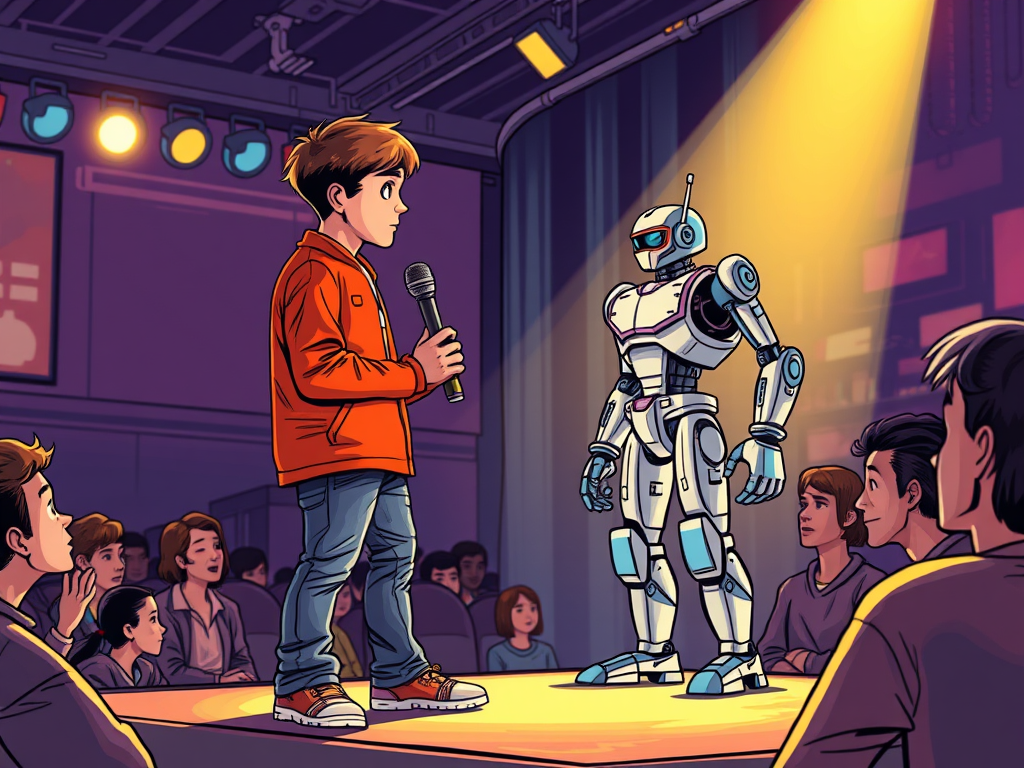
AI-generated image. “I got tired of scrolling TikTok so I built this bot to do it for me. It also tweets for me.” Audience member: “DESTROY IT! IT’S GOING TO TAKE ALL OUR JOBS!”

The AI Job Displacement Threat: A Deep Dive

Come one, come all! I’d like to welcome all back to another exciting read on our new overlords to be Oh, you don’t know who they could be? Well, you see, the rise of Artificial Intelligence (AI) is undeniably transforming our world, but its impact on the job market is a topic of growing concern. While AI offers incredible potential for innovation and progress, it also poses a significant threat of job displacement. And if they’re displacing you out a job, soon…very soon it’ll be your home, friendships, and eventually…your marriage. All hail our metal overseers!

The Culprit: Automation

So, what seems to be holding us back from moving forward. Well, at the heart of this concern lies automation, the use of technology to perform tasks previously handled by humans. Automation, from the Industrial Revolution to the present, has constantly evolved, with the advent of AI, particularly machine learning and deep learning, exponentially enhancing its capabilities.

Building the AI Workforce: It’s Not Just About Code

Let’s say you have a company, and you want to hire some bots instead of people. People can cost too much, and every company knows the pain of hiring just one person. But with on-boarding a bot, did you know? Creating sophisticated AI systems driving automation requires a multi-pronged effort:

  • Data is King: AI models thrive on data. Acquiring, cleaning, and preparing massive datasets is a critical and often time-consuming step.
  • Computational Muscle: Training and running these models demand significant computational resources, from powerful processors to specialized hardware like GPUs.
  • The Human Element: Building and deploying AI systems requires a skilled workforce, including data scientists, machine learning engineers, and AI researchers.
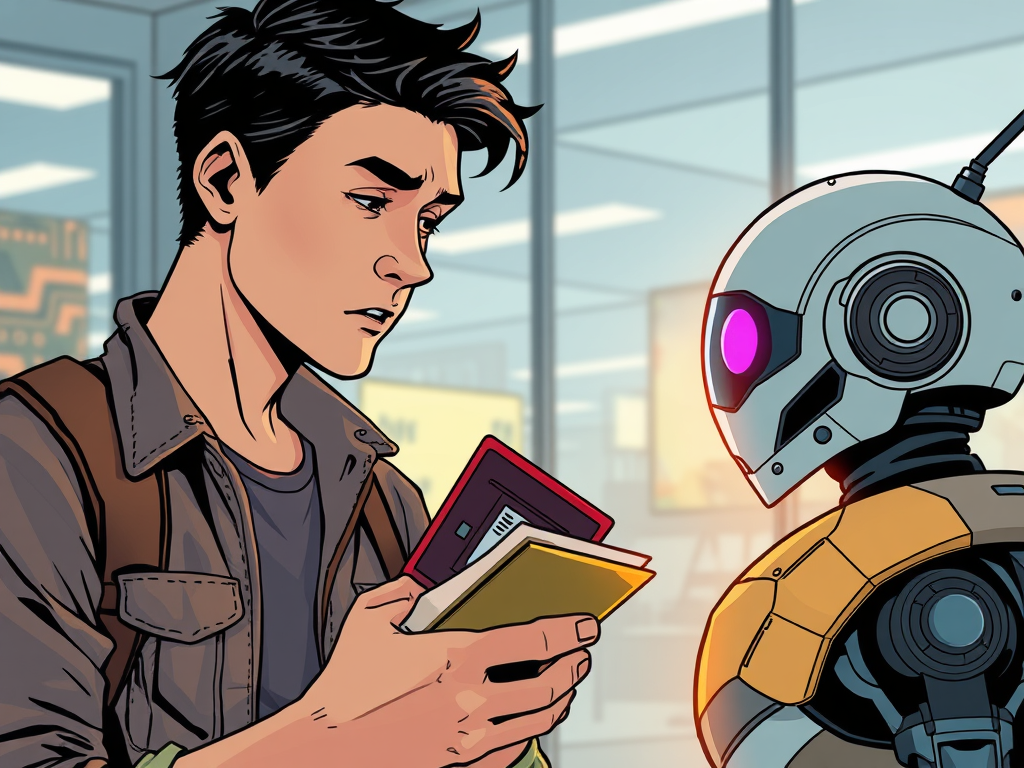
AI-generated image. “Are you sure you’re going to cost less than a human? It was pretty expensive to get your programming done.”

The Cost of Innovation

While the initial development costs can be substantial, the long-term operational costs of AI systems can often be lower than maintaining a human workforce. This cost-effectiveness drives companies to adopt automation.

The Benefits for Businesses

Okay, so it looks like you couldn’t escape the need to hire an actual person. However, and most important thing to consider is the cost of operating a business on automation. If you haven’t noticed it in the wild already companies are embracing AI-powered automation and reap numerous benefits like:

  • Efficiency Boost: AI can significantly accelerate tasks, leading to higher productivity and fewer errors.
  • Cost Reduction: Automating tasks directly translates to lower labor costs, reduced benefits, and minimized human error expenses.
  • Consistent Quality: Automated systems ensure uniform quality and reduce the variability inherent in human performance.
  • 24/7 Operation: AI systems can work tirelessly, maximizing output and responsiveness.

Combating Job Displacement: A Multi-faceted Approach

Now, now, now before you go out and start replacing your current workers with AI-powered bots, there are a few things to consider. I mean, you don’t want your current workers forming an anti-AI union to picket outside your warehouse office, do you? The threat of job displacement demands a proactive and multifaceted response:

  • Upskilling and Reskilling: Investing heavily in education and training programs to equip the workforce with the skills needed for the AI-powered future.
  • Social Safety Nets: Providing robust support systems for displaced workers, including unemployment benefits, retraining programs, and income support initiatives.
  • Policy Interventions: Implementing policies that promote responsible AI development and deployment, such as regulations on algorithmic bias and data privacy.
  • Fostering Innovation: Encouraging innovation in areas that complement AI, such as human-centric design, critical thinking, and creative endeavors.
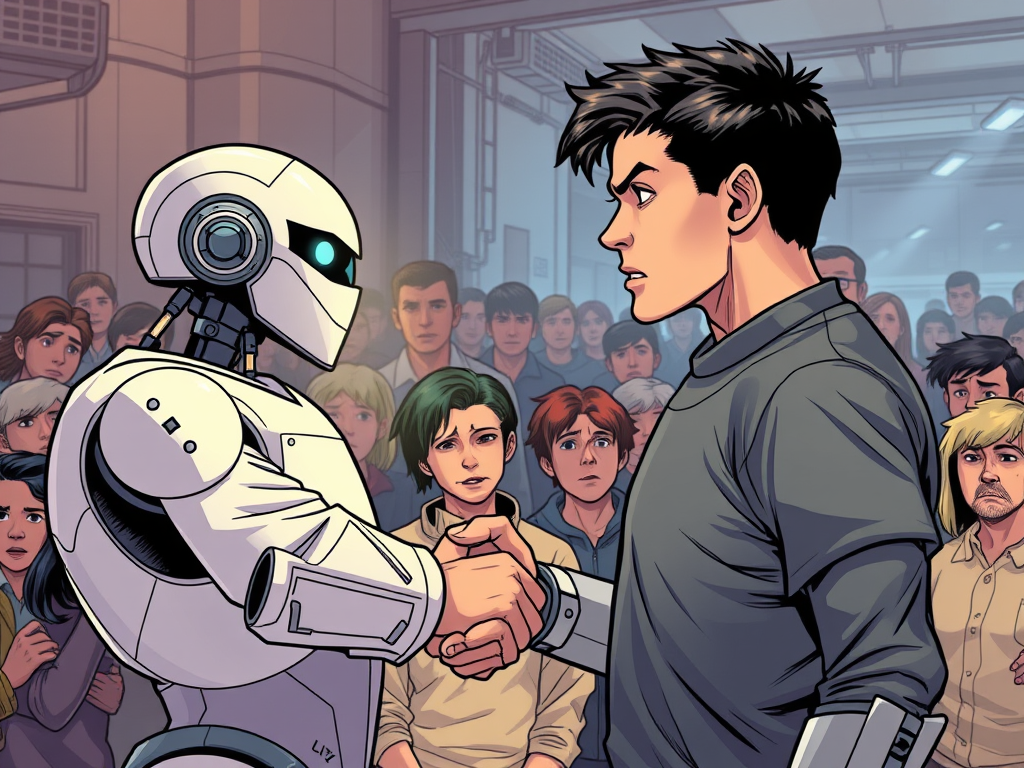
AI-generated image. “Are you sure we can trust that you’re not here to replace us?” Bot: “To err is to human, correct?”

The Future of Work: Collaboration, Not Replacement

The future of work likely lies in human-AI collaboration. While automation will undoubtedly displace some jobs, it will also create new opportunities in fields like AI development, data science, and AI ethics. The key is to adapt and evolve, embracing new skills and leveraging AI to augment human capabilities rather than replace them entirely.

This is a critical moment in history. By understanding the challenges and proactively addressing them, we can ensure that the AI revolution benefits humanity as a whole. And with that being said, the future for the working class is looking meh if you’re willing to learn and step outside your comfort zone. We as humans were made to adapt to situations. It doesn’t benefit us as a society to come this far with technology only to willingly be left behind because we have to learn things we’re unfamiliar with. Also remember; “If you choose not to learn, you will always suffer a slow burn.”

Disclaimer: This blog post is for informational purposes only and does not constitute financial, investment, or other professional advice.


Love learning tech? Join our community of passionate minds! Share your knowledge, ask questions, and grow together. Like, comment, and subscribe to fuel the movement!

Don’t forget to share.

Every Second Counts. Help our website grow and reach more people in need. Donate today to make a difference!

One-Time
Monthly
Yearly

Make a one-time donation

Make a monthly donation

Make a yearly donation

Choose an amount

$5.00
$15.00
$100.00
$5.00
$15.00
$100.00
$5.00
$15.00
$100.00

Or enter a custom amount

$

Your contribution is appreciated.

Your contribution is appreciated.

Your contribution is appreciated.

DonateDonate monthlyDonate yearly