Quick note: if you’re viewing this via email, come to the site for better viewing. Enjoy!

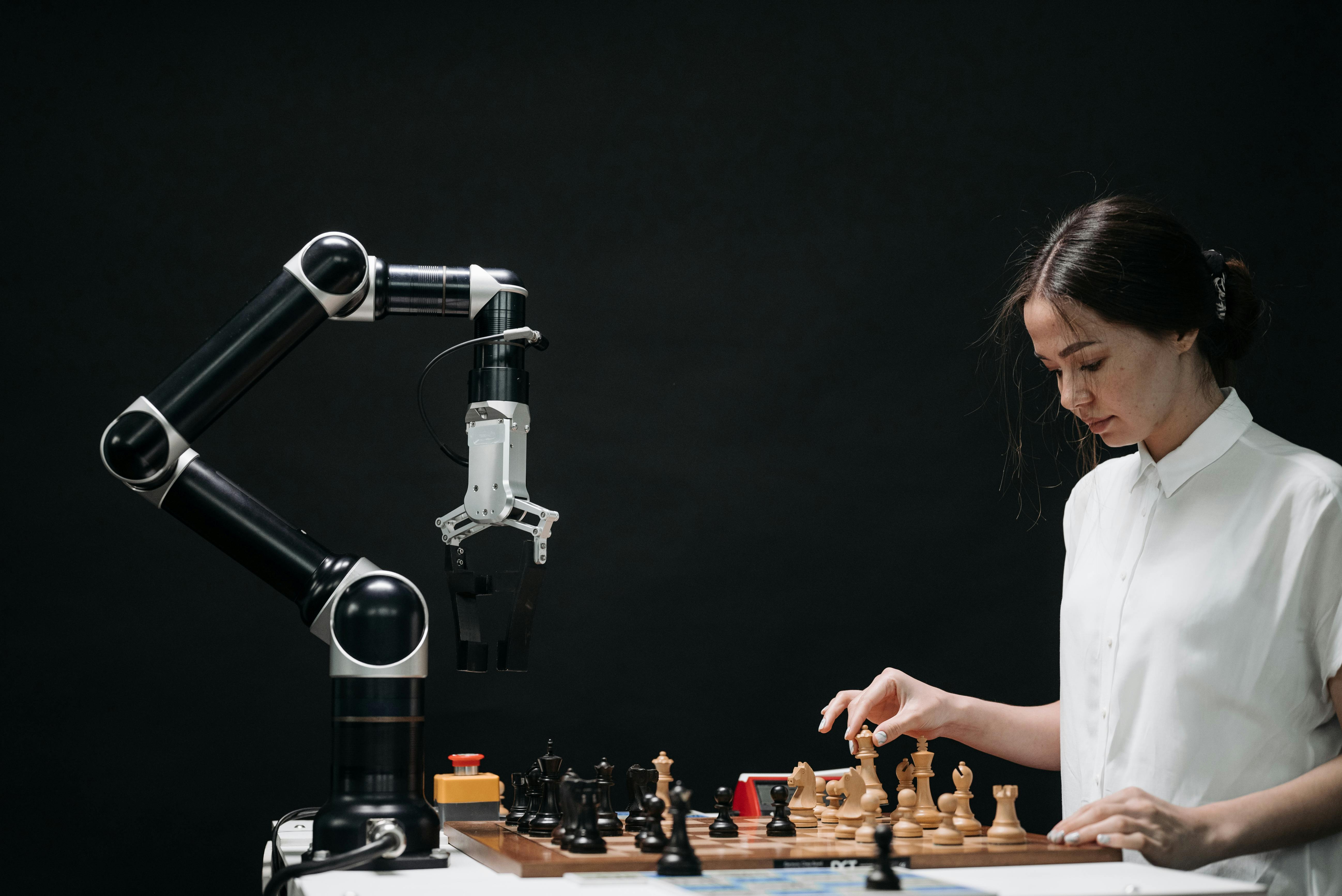
Photo by Andrea Piacquadio, please support by following @pexel.com
Have you ever sat on the couch vegging out to your favorite episode of My 600 lb. life and while sitting on your fart box, mindlessly snacking on your way to the ER, have the thought;” I wonder if it would be possible to make a computer think more like a human”? If your answer is no, then you’re not alone in that sentiment as a large amount of us don’t typically have thoughts present themselves in such a matter.
However, if you are a part of the unlucky few that have pondered this question then I’m glad to inform you that even though you are in a niche group you too are not alone. Although, some of the people who have a thought like that pop-up may either be passionate about computers or stoners.
Stoners are a more probable cause because, well, after ascending to a certain level of cloud technology you’re prone to think about anything and certain topics become easier to understand for some reason. Anyway, being half-baked aside, let’s take a deeper look at just how we find ways for computers to learn and how you, whether you are aware or not, are helping in the learning process. And yes, this might be done against your will.

Photo by Andrea Piacquadio, please support by following @pexel.com
AI and Wrecking Bots
Whether you are into tech or just developing an interest, as of late, there is a chance that you’ve heard about the AI (Artificial Intelligence) chatbot craze which has led to every big tech company coming out with its own “better version” than the others. But in case you haven’t, here’s a brief overview. Weeks back ChatGPT (a chatbot belonging to OpenAI) was released making like Miley Cyrus and “Came in like a wrecking ball” to the industry, taking the internet by storm.
Not only could ChatGPT provide interactions and responses close to that of a human, but it could also aid in coding and in some cases, do college students’ essays for them. This is something I could have used back when I was in college, could’ve had someone to chat with, and probably wouldn’t have dropped out but whatever. Google following this release, released its own clap back in the form of Bard.
Again, they offer the same purpose, it’s just a “my stick is bigger than yours” situation. But the thing these bots have in common is how they process and develop information. This is done by using a subset of machine learning called “Deep Learning”. Deep learning is, in a nutshell, the creation of a neural network with three or more layers.
This is done in an attempt to simulate the neural networks of the behavior in the human brain. Notice, this is an “attempt” as the human brain can be quite complex, and some humans just don’t brain well.

Photo by ArtHouse Studio, please support by following @pexel.com
A High View Over Deep
So, what is meant by the term “Deep”? This term refers to functions with higher complexity in the number of layers and units in a single layer. In English, this breaks down to, for example using the chewing gum Trident Layers. Within the gum is three layers, each layer holds a color, and within each color is a flavor, and within that are ingredients to create said flavor. All these items come together to form a well-known chewing gum whose flavor only lasts for about one minute and thirty seconds.
Disappointment in chewing gum aside, this idea of the data layers and data within them has a play into the concept of Deep Neural Networks (DNN) which were inspired by how the human brain functions. How this differs from machine learning or ML? ML uses algorithms to parse data, withdraw insight from said data, and conclude informed decisions.
Deep learning, on the other hand, structures a neural network similar to the brain that can learn and make decisions on its own. In another nutshell, you’re pretty much putting a ghost in the machine…just hope and pray it doesn’t find out it’s not a real boy.

Photo by Vanessa Garcia, please support by following @pexel.com
Computer Brain Assisted
Now, what is your part in the creation and improvement of the developing AI? The use of virtual assistants, voice activation, automatic facial recognition, and completing the mundane task of filling out surveys are direct ways in contributing to the brain of the computer.
Accessing websites such as E-commerce and interacting with the chatbot, which most if not all are utilized nowadays, can swiftly aid you based on the information provided. Although, this isn’t foolproof as sometimes chatbots will churn out prerecorded responses.
A thing to note, and this isn’t new or shocking because, like after a few months of forceful fun hugging with a new cellmate it’s something we all are numb to by now; all your interactions either online or off, are being collected and fed through a deep learning model.
Does this violate your privacy…maybe but that’s another topic. The data gathered could then be utilized for metrics that could either be used to recommend, advise, or sell on the dark web. Side note: despite your information may be classified as private for company use, an insider/bad actor could obtain your data and put it up for sale. And before you ask, yes all sales are final.

Photo by Samson Katt, please support by following @pexel.com
Made it this far and found this to be entertaining? Then a big thanks to you and please show your support by cracking a like, scripting a comment, or plug-in to follow.
Would like to give sincere thanks to current followers and subscribers, your support and actions mean a lot and has a play in the creation of each script.
Do you feel like there is something that I may have missed? Script a comment below.