
Deepfakes: Unveiling the Controversy and Opportunities

Key Takeaways

  • Deepfakes are AI-generated manipulated images, videos, or audio. They can be used to impersonate individuals or create entirely new content.
  • Deepfakes have a dark history. They first gained notoriety in 2017 when a Reddit user used them to create deepfake pornographic videos.
  • Deepfakes are created using deep learning models. These models require large amounts of data to learn a person’s features and patterns.
  • Deepfakes can be used for both malicious and beneficial purposes. They can be used to spread misinformation, harass individuals, and create fake news. However, they can also be used for training simulations, marketing, and creative expression.
  • Spotting deepfakes can be challenging but not impossible. Look for inconsistencies in facial movements, lighting, shadows, and audio. Trust your gut feeling.
  • Legal frameworks surrounding deepfakes are still evolving. While there are some state-level laws, a comprehensive federal law is still needed.
  • It’s important to be aware of the risks and benefits of deepfakes. As technology continues to advance, we need to develop effective detection methods and legal frameworks to mitigate their potential harms.

Bro, they have a video of you throwing something out of your window.
Photo by Mikhail Nilov, please support by following @pexel.com

Understanding Deepfakes: The Good, the Bad, and that’s not your Mom.

Over the years, the internet has been… well, the internet made with all interesting and mentally concerning individuals. Many of which may be right next door to you. As terms online pop-up, one is becoming more and more of a growing concern.

This growing issue deals with, yet again people, (we can’t seem to have anything nice) some of which you may know personally and others…not so much.

Give me that beautiful face!

It’s another day at the office, you’re online, your best work buddy called out, and you’re to fend for yourself. All great things when at work, we love this. While online, browsing through all the wonderful garbage the algorithm has to offer. (Let’s be honest doom-scrolling cute cat videos aren’t a thing anymore, we know) you find some photos and videos of your work buddy.

You think,” Is that? Nah, this can’t be them. They wouldn’t do something as crazy as hurling a basket of cute kittens out of a window.” In disbelief, you call your work buddy to verify if it’s indeed them. Countering disbelief with confusion and uttering that lovely phrase “What in the Sam Cooks hell are you talking about?”

You provide them with what you saw only to discover both surprises are mutual. Both of you wondering the what, when, and how could someone find the time and resources to impersonate anyone to perform such a sickening act. Welcome to the rise of the Deep Fakes.

AI is beginning to look like me more and more.
Photo by Irina Kaminskaya, please support by following @pexel.com

What are Deepfakes?

You may be asking yourself, “What are deep fakes? What makes them fake?” Deep fakes are images, videos, and even audio manipulated using artificial intelligence to appear real. Deep fake is a portmanteau- a combination of two words to make a new word- of “deep learning” and “fake”. Deep fakes can be created by replacing a person with another person or by creating new content altogether.

Backstory of Deepfakes

The idea showed up back in 2017 when a Reddit user named “deepfakes” began sharing altered pornographic videos (it’s always porn) using face-swapping technology. If you’re not familiar with face-swapping, this was the craze that led to users being able to swap faces with their pets, friends, and eventually led to being able to put themselves into movie moments.

You know it’s amazing to see how far one species can come in advanced technology and quickly resort to using it for primitive ends. It really shows where our heads are at.

Faking in the Making

How are deep fakes made? And are they all created equal? To answer that last question is ‘no’. Clearly, there’s a different process since everyone’s face tends to have additional features to make them look unique. The process for creating a deep fake consists of collecting large amounts of data containing images or videos of a person.

This could involve having images of every angle, expression, and feature to ensure the AI captures them properly. The “data” or better known in the data science community as the “dataset” is fed into a deep learning model, this could be either variational autoencoder (VAE) or generative adversarial network (GAN), from there the model learns how to create images mimicking the person the dataset is based on.

Just a side note, hundreds of images on an individual are required to generate new images. This means you can’t supply the model with four or five images of someone and expect it to create a video. Models work best when more information is available to them. A key thing to remember when dealing with AI is “the more in, the better out.”

They’re Faking it

You’re on a date, things are going well, and the connection “feels” real. However, this is done in an effort to conserve your feelings. After finding out your date was putting in a playtime shift and more likely wants to see other people, you venture to embarrass them by posting some “not so covered” photos of them online. This scenario is just an example of the use cases for deepfakes.

They can be something small as creating a funny picture for a good laugh, new meme, or it can be vicious as recreating their image in comprising positions. Positions that could lead to some hard times if reputations are tarnished and careers are lost. So, use it with caution.

AI may have everyone else fooled, but not me. Something looks a little off here.
Photo by Andrea Piacquadio, please support by following @pexel.com

Exercising caution, Spotting the Fakes

We humans have an eye for spotting something that- to us just doesn’t look right. Trying to spot a deepfake can be challenging depending on how well the image was generated. The obvious telltale signs are an extra limb, appendage, eyeball, or extra anything that typically wouldn’t be on a human.

A reason for this to happen is the model was fed information on a person but not fed the limitations that would make the image of a person normal. Confusing, we know but understand computers don’t think the same way humans do. We speak in a way we can understand what we “mean” or what we “meant” to say. Computers cannot compute abstract meanings.

Other signs include but are not limited to, awkward facial movements, displaced lighting and shadows, and audio that could appear mismatched or just off to how the person would sound. In short, go with your gut feeling. Most often you’ll be right.

Laws Against Deepfakes

The legal landscape surrounding deepfakes is still evolving. In the United States, there is no comprehensive federal legislation specifically addressing deepfakes, but several states have enacted laws to combat their misuse.

For example, Texas has banned deepfakes intended to influence elections, while California prohibits the creation of deepfake videos of politicians within 60 days of an election. At the federal level, the proposed DEFIANCE Act aims to allow victims to sue creators of non-consensual deepfake pornography.

The Benefits of Deepfakes

Despite their potential for harm, deepfakes also offer several benefits. In the healthcare industry, they can be used to create realistic training simulations for medical professionals.

In marketing, deepfakes can lower the cost of video campaigns and provide hyper-personalized experiences for customers. Additionally, deepfakes have creative applications in the arts, allowing for innovative storytelling and the preservation of cultural heritage.

Conclusion

Deepfakes represent a powerful and controversial technology with far-reaching implications. While they offer exciting possibilities for entertainment, education, and marketing, they also pose significant risks to privacy, security, and trust.

As deepfake technology continues to evolve, it is crucial to develop robust detection methods and legal frameworks to mitigate its potential harms while harnessing its benefits for positive use.

Again, it never ceases to surprise us how quickly people resort back to primitive needs when it comes to technology. We’re not shaming, the lizard brain is strong but as technology evolves, the idea is we evolve with it.

Love learning tech? Join our community of passionate minds! Share your knowledge, ask questions, and grow together. Like, comment, and subscribe to fuel the movement!

Don’t forget to share.

Every Second Counts. Help our website grow and reach more people in need. Donate today to make a difference!

One-Time
Monthly
Yearly

Make a one-time donation

Make a monthly donation

Make a yearly donation

Choose an amount

$5.00
$15.00
$100.00
$5.00
$15.00
$100.00
$5.00
$15.00
$100.00

Or enter a custom amount

$

Your contribution is appreciated.

Your contribution is appreciated.

Your contribution is appreciated.

DonateDonate monthlyDonate yearly

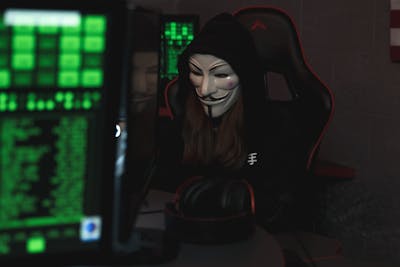
House Squatters and Typosquatters: Unwanted Intruders and Cyber Deception Unveiled

Key Takeaways

House Squatters
  • House squatting involves the unauthorized occupation of a property.
  • Evicting squatters can be a legal challenge for homeowners.
  • Property owners must often prove ownership and the squatter’s lack of legal claim.
Typosquatting
  • Typosquatting is the creation of websites with misspelled domain names to deceive users.
  • Cybercriminals use typosquatting to steal personal information or infect devices with malware.
  • The impact of typosquatting extends beyond individual victims, affecting businesses and online communities.
Protection
  • Both physical and digital security measures are essential.
  • Homeowners should invest in strong locks and security systems.
  • Online users should be cautious of typos, verify website URLs, and use strong passwords.
  • Staying informed about squatting tactics helps individuals and communities protect themselves.
The first bed in this house was trash, but this one is just right.
Photo by Ron Lach, please support by following @pexel.com

The Unwanted Guests of Our Digital and Physical Worlds: House Squatters and Typosquatters

The term “squatter” often conjures images of unwanted individuals occupying an abandoned building. But did you know there’s a digital equivalent to this real-world nuisance? Buckle up, because we’re diving into the world of squatters, both physical and digital, and how they can disrupt our lives.

House Squatters: Uninvited Guests in the Brick-and-Mortar Realm

Let’s address the elephant in the room (or rather, the unwanted squatter in your house). House squatting, thankfully, doesn’t involve fitness fanatics breaking into your home to pump some iron. It refers to the unlawful occupation of a property by someone who has no legal right to be there. While some might picture dramatic scenes of forced entry, squatters often gain access through more subtle means, like exploiting security vulnerabilities or taking advantage of vacant properties during periods of owner absence.

Now, here’s where things get a little interesting (and frustrating for homeowners). The legal process of evicting squatters can be surprisingly complex. The burden of proof often falls on the rightful owner, who needs to demonstrate their ownership, and the squatter’s lack of legal claim. This means providing documentation and potentially navigating lengthy court proceedings. So, while you might be the rightful owner gazing upon an uninvited guest in your living room, the law demands a more structured approach to reclaiming your property.

There’s google.com already, so I’ll make gooogle.com. Clever, me thinks.
Photo by Tima Miroshnichenko, please support by following @pexel.com

The Digital Squatters: Typosquatting and the Web of Deception

The digital world isn’t immune to squatters either. Enter typosquatting, a cunning trick employed by cybercriminals. These digital squatters register domain names that are deliberate misspellings of popular websites. Imagine searching for “paypaal.com” instead of “paypal.com.” A typosquatter might own the former domain, creating a website that looks eerily similar to the real PayPal. Unsuspecting users, after a quick typo, could land on this fake website and unwittingly enter their login credentials. This is a classic phishing scam, where the goal is to steal personal information or infect your device with malware (malicious software).

Malware itself is a broad term, encompassing a variety of malicious programs. While Trojans might be one type you’ve heard of, there are many others. Viruses can replicate themselves and spread throughout your system, while spyware gathers your data without your knowledge. Keyloggers capture your keystrokes, potentially revealing passwords and other sensitive information. The type of malware a typosquatter might unleash depends on their specific aim, but the result is always disruptive and potentially damaging.

Beyond Malware: The Broader Impact of Typosquatting

The impact of typosquatting goes beyond individual victims. Imagine a company struggling to maintain its online reputation because a typosquatted website is spreading misinformation or tarnishing its brand image. This can damage customer trust and lead to financial losses. Even worse, a typosquatted website could be used for illegal activities, further harming the legitimate website and its users.

Protecting Yourself from Squatters: Real and Digital

Whether you’re a homeowner or a web user, vigilance is key. Here are some tips to safeguard yourself from both physical and digital squatters:

  • Physical Security: Invest in strong locks and security systems for your home. Keep an eye out for suspicious activity and report it to the authorities promptly.
  • Digital Security: Be mindful of typos when entering website addresses. Double-check the URL before hitting “enter.” Look for security certificates on websites when making online transactions. Utilize strong passwords and regularly update your software and antivirus programs.
You gonna learn to stay out of my house!
Photo by Ketut Subiyanto, please support by following @pexel.com

The Importance of Awareness: Fighting Back Against Squatters

By understanding the tactics of both house squatters and typosquatters, we can be better equipped to protect ourselves. Sharing this information with friends and family can create a ripple effect of digital and physical security awareness. Additionally, supporting organizations that advocate for stronger anti-squatting legislation and cybersecurity measures plays a crucial role in combating these malicious practices.

Remember: Squatters, whether physical or digital, thrive on our vulnerabilities. With a little knowledge and preventative action, we can reclaim control of our homes and online experiences, keeping these unwanted guests at bay.

Love learning tech? Join our community of passionate minds! Share your knowledge, ask questions, and grow together. Like, comment, and subscribe to fuel the movement!

Don’t forget to share.

Every Second Counts. Help our website grow and reach more people in need. Donate today to make a difference!

One-Time
Monthly
Yearly

Make a one-time donation

Make a monthly donation

Make a yearly donation

Choose an amount

$5.00
$15.00
$100.00
$5.00
$15.00
$100.00
$5.00
$15.00
$100.00

Or enter a custom amount

$

Your contribution is appreciated.

Your contribution is appreciated.

Your contribution is appreciated.

DonateDonate monthlyDonate yearly

Ransomware Threat: Proactive Defense and Collaborative Cybersecurity

Key Takeaways

  • Ransomware is a form of malware that encrypts a victim’s files and demands a ransom for decryption.
  • Different types of ransomware exist, including crypto-ransomware, locker ransomware, RaaS, and sextortion ransomware.
  • Ransomware attacks can have devastating consequences, causing financial loss, operational disruption, and reputational damage.
  • Everyone is a potential target, from individuals to businesses and governments.
  • The ‘3-2-1’ backup strategy is crucial for data protection.
  • Employee education on phishing attacks is essential for preventing ransomware infections.
  • In the event of an attack, isolate affected systems, contact authorities, and seek professional help.
  • Paying the ransom is generally not recommended and may be illegal.
  • The fight against ransomware requires a proactive approach to cybersecurity with continuous vigilance and collaboration.
The hills have danger, Watson.
Photo by Kat Smith, please support by following @pexel.com

Ransomware: The Looming Threat

Ouch. That’s the sound of a collective gasp as the realization dawns upon us: ransomware attacks are not just a distant threat; they’re a menacing reality. The digital age, while brimming with convenience and connectivity, has also become a breeding ground for cybercriminals. And ransomware, their weapon of choice, is proving to be increasingly potent.

The conventional wisdom has long been: don’t pay the ransom. It’s a principled stance, designed to discourage these digital extortionists. After all, rewarding their nefarious activities only fuels their insatiable appetite for profit. Yet, the pressure cooker of modern business, coupled with the fear of irreparable data loss, often tempts victims to cave. The question then becomes: is there a definitive, foolproof strategy for navigating this perilous landscape?

Let’s delve deeper.

Understanding the Beast

Ransomware, in its essence, is a form of malicious software that encrypts a victim’s files, rendering them inaccessible until a ransom is paid. But this is just the tip of the iceberg. The ransomware ecosystem is evolving rapidly, with new variants emerging at an alarming rate.

  • Crypto-ransomware: The classic model, this type encrypts files and demands a decryption key. It’s the digital equivalent of holding your data hostage.
  • Locker ransomware: This variant takes a more aggressive approach, locking the entire device and demanding payment to regain access. It’s like being forcibly evicted from your digital home.
  • Ransomware-as-a-Service (RaaS): In a disturbing twist, cybercrime has adopted a franchise model. RaaS platforms provide the tools and infrastructure for aspiring cybercriminals to launch their own ransomware attacks, lowering the barrier of entry for these malicious actors.
  • Sextortion ransomware: This particularly insidious form of ransomware leverages blackmail, claiming to have compromising material and demanding payment to prevent its release. It’s a despicable tactic that exploits fear and shame.

These are just a few of the many ransomware variants wreaking havoc. The sophistication and audacity of these attacks are increasing, making it imperative for individuals and organizations to be vigilant.

Your next move should always be made wisely.
Photo by Anna Shvets, please support by following @pexel.com

The High Stakes Game

The potential consequences of a ransomware attack are far-reaching. Financial loss is an obvious outcome, but the damage can extend far beyond monetary implications. Disruption of critical operations, loss of customer trust, and reputational damage can have long-lasting effects. For individuals, the loss of personal data can be devastating, leading to identity theft and other forms of fraud.

It’s essential to understand that no one is immune. From small businesses to multinational corporations, and from individuals to governments, everyone is a potential target. The cybercriminals behind these attacks are opportunistic, casting a wide net in search of vulnerable victims.

Defending Against the Threat

Prevention is undoubtedly the best defense against ransomware. While it’s impossible to eliminate risk entirely, implementing robust security measures can significantly reduce the likelihood of a successful attack.

The “3-2-1” backup strategy is a cornerstone of data protection. This rule dictates having three copies of your data, stored on two different media, with one of those copies off-site. Regular backups are crucial, as they provide a safety net in case of ransomware encryption.

Employee education is another critical component of a comprehensive security strategy. Phishing attacks are a common entry point for ransomware, so teaching employees to recognize and avoid suspicious emails is essential. Staying updated on the latest threats and best practices is also crucial.

In the unfortunate event of a ransomware attack, it’s essential to act swiftly and decisively. Disconnecting affected systems from the network can help prevent the spread of the ransomware. Contacting law enforcement and cybersecurity experts is also crucial.

While paying the ransom might seem like a quick fix, it’s generally not recommended. There’s no guarantee that you’ll regain access to your data, and it only encourages further attacks. Moreover, paying the ransom can be a violation of anti-money laundering laws in some jurisdictions.

Like credit cards, just because you made a payment doesn’t mean you’re out the woods just yet.
Photo by Bruno Ticianelli, please support by following @pexel.com

The Road Ahead

The battle against ransomware is far from over. Cybercriminals will continue to evolve their tactics, seeking new ways to exploit vulnerabilities. To stay ahead of the curve, individuals and organizations must adopt a proactive approach to cybersecurity. This includes investing in robust security solutions, staying informed about emerging threats, and fostering a culture of security awareness.

The future of cybersecurity is complex and challenging. However, by working together, we can create a safer digital world. It’s a battle that requires constant vigilance, innovation, and collaboration.

Would you like to add more specific information about ransomware prevention, recovery, or the legal implications of ransomware attacks?

Love learning tech? Join our community of passionate minds! Share your knowledge, ask questions, and grow together. Like, comment, and subscribe to fuel the movement!

Don’t forget to share.

Every Second Counts. Help our website grow and reach more people in need. Donate today to make a difference!

One-Time
Monthly
Yearly

Make a one-time donation

Make a monthly donation

Make a yearly donation

Choose an amount

$5.00
$15.00
$100.00
$5.00
$15.00
$100.00
$5.00
$15.00
$100.00

Or enter a custom amount

$

Your contribution is appreciated.

Your contribution is appreciated.

Your contribution is appreciated.

DonateDonate monthlyDonate yearly