Experience the James Wood method

Consider following on social media!

Quick note: if you’re viewing this via email, come to the site for better viewing. Enjoy!

Someone walking on a beach
What trying to find a job that needs my skillset in 2022 looks like.
Photo by Pixabay, please show support by following @pexels.com

Let’s say you’re on a beach, you’re taking a lovely stroll by yourself, watching the sun setting on the horizon as you walk by. The birds are flying high in the air, weaving up and down, some gliding to the ground and landing ahead of you.

You enjoy the smell of fresh ocean air with every step you take. As you’re walking taking in all that’s ahead, you notice some funny activity behind you like someone is following. You say to yourself, “Nah, this is a public beach, so it could be people just walking up to the water line.”

You turn around wide-eyed to find someone has been following you and not only has that person been pursuing you, but others have been trailing you as well. You see, while you’ve been taking this lovely soul-searching, deep thought-provoking stroll, those majestic footprints you have been leaving behind have turned into what are called “breadcrumbs” for anyone to track you.

If you didn’t know, the internet has always seen you with the ability to leave your mark in the digital sand. However, a perk to real sand is water washes your record in time. With digital, not so much.

creepy guy in mask wearing black robe in the woods
Thank you for shopping at Walmart, don’t forget to fill out our survey.
Photo by Rulo Mora, please show support by following @pexels.com

Digital Horror Ahead

What is this madness that lets people track you like you’re in a horror movie? They’re called digital footprints, or digital shadows as some would call them. Digital footprints are traceable activities, actions, or pretty much anything you do on the internet.

This could range from visiting websites (any sites, not just the ones with scantily clothed individuals you’re thinking about, ya freak…again, I am judging you) sending personal or professional emails, or even searching for your favorite Christmas dinner recipe that Nana posted so many years back.

And trust me, Gen-Z is finding out all about these footprints. There are several types of digital footprint which are passive, active, personally identifiable, anonymous, user input, and sensor data. In a nutshell, they range from “oh I didn’t know I was going to be redirected” to, “hey, my phone auto-suggested something I like”.

Having access to a lot of things is great but also being followed unknowingly and it being legal kinda sucks. I mean, where is the consent…I know I glossed over the privacy policy, but it was too long, and I wanted to see what the “baddies” on Instagram were all about.

man with cold stare
Helping shoppers around every corner.
Photo by Pixabay, please show support by following @pexels.com

Every Step You Take

So…this is about to get uncomfortable. Who tracks you like the sweet slow jam from the 80s? Well, one of them is ironically named the Police and just so happens to be one group that would turn to use digital footprints.

Police or law enforcement would use footprints to track cybercriminals and possibly keep track of online behavior. Do you remember that “Here, have a seat” guy? Digital footprints aid in situations like that. Do you like cookies? You do, that’s great!

Advertisers and people seeking your business like them too, cookies are used to customize ads for targeting you. Like, in my situation, you purchase one electric bike and now all you see in the ad space of every site you go to are electric bikes. It’s very haunting.

But while there are some creepy effects, digital footprint does have its benefits, ranging from detecting and preventing fraud, making shopping a breeze because, well everything is tailored to your interests, and even just the simple act of being able to recall a previously visited site.

Despite the fact you may click “no” in your preferences or settings when visiting a site, they still track you anyway. It’s like going to a store and one of the employees on the floor ask, “Do you need help finding anything?” and you reply with a “No, thank you, just browsing.” Followed by an awkward moment of silence and a brief stare.

You turn to walk, and they start following you anyway. Like good god, I just said no, go away.

Enjoy the read so far? Why don’t you consider subscribing so you can keep up to date?

woman with gen z cake
Fun fact: if you bring a cake to your job interview…your chances of getting the job are still the same.
Photo by Polina Tankilevitch, please show support by following @pexels.com

Safe Space Results 404

Do you recall when I mentioned that Gen-Z is finding out about the horrors of digital footprints? No, then go back up and read this like a decent human being. If yes, then here goes the “oh no” moment, potential employers incorporate this in their decision to hire you.

This means every time you upload or like a twerk video, try to viral a cringe TikTok, post about how great America is compared to other countries on Facebook, or even tell your previous employer to go screw themselves on LinkedIn (sidenote; never air out your previous employer on social media), all of this runs the risk of you not landing that sought after position or promotion you’re seeking to claim.

However, there are ways to keep your footprint as small as possible, most of which are going to require you to do some work and by some, meaning a lot. This pretty much parallels fixing your credit score, your options are contacting data collectors, and telling them to forget your information (some of which may not play ball). Make your social media private.

If you wanted to take an easier route, you can sign up for third-party services that will handle things for you (keep in mind this is not a one-time buy, so as long as you’re on the internet and care about the effect of your online interactions, you’ll have to pay).

You can hide your browsing habits by using a good virtual private network or VPN, but like I always tell people, “Using a VPN is the same as using a condom, you can still get pregnant.”

You should panic a little bit if you worry about trying to land that dream job.
Photo by artawkrn, please show support by following @pexels.com

Digital History Unclear

Now you’re probably paranoid about your browser history and everything you’ve ever said on the internet. Should you be though? This is the year 2022 and we are in the age of “acceptance” and “fairness”.

Honestly, what you said years back when you were young should not come back to haunt you. Social media should be a place where you can connect with like-minded people and share ideas.

However, it seems like the internet is the best place for someone to pick up dirt and fling it at you. The internet has always been the wild wild west but for employers to add a digital footprint to your background check is madness because one or a few posts don’t display the whole picture.

Just hope one day people learn how to differentiate the before and after when making a judgment call. 

Me chances of getting a job is ruined, me should’ve stay off the hub blood. I’m ruined.
Photo by Tope A. Asokere, please show support by following @pexels.com

Made it this far and found this to be entertaining? Then a big thanks to you and please show your support by cracking a like, sharing this with whomever, scripting a comment, or plug-in to follow.

Would like to give sincere thanks to current followers and subscribers, your support and actions mean a lot and has a play in the creation of each script.

Think someone has been watching your online habits?

Script a comment about how safe you think your digital footprint are.

The Path of Transformation: From Simplicity to Complexity and Back Again

AI-generated image. Hold on; this might get hairy.

The Ascent: Ten Pillars of Progress

From the ancient forests that nurtured humanity’s early survival to the skyscrapers and silicon chips that define our modern world, technology has been both a reflection of our ingenuity and a testament to our ambition. We’ve risen with the tools we’ve created, building complex systems that sustain our societies, connect our minds, and expand our horizons.

Yet, as our dependence on technology grows, so does the risk of losing balance—forgetting the wisdom and resilience that nature imparts. Could it be that our technological ascent carries the seeds of our return to simpler beginnings, back to the trees that once sheltered us?

In this exploration, we’ll uncover how humanity’s reliance on technology might lead us to rediscover the roots from which we came.

  • Artificial Intelligence (AI): The Mind of the Machine:
    • From the nascent days of cybernetics to the sophisticated neural networks of today, AI represents a seismic shift in our relationship with machines. We’re witnessing a revolution, with its ethical and societal implications still unfolding.
  • Space Exploration: Reaching for the Stars:
    • Fuelled by the Cold War’s competitive fire, space exploration has expanded our cosmic horizons. The Apollo missions, cultural milestones, have paved the way for commercial ventures like SpaceX, heralding an era of potentially democratized space travel.
  • Medical Breakthroughs: Conquering Disease:
    • From germ theory to the genomic revolution, medical advancements have consistently extended human lifespans and enhanced quality of life. The rapid development of mRNA vaccines stands as a testament to the power of global scientific collaboration.
  • Renewable Energy: Powering a Sustainable Future:
    • Driven by the urgent need to combat climate change, renewable energy technologies are transforming our relationship with the planet. Solar, wind, and geothermal power are no longer niche alternatives but essential components of global energy strategies.
  • Smart Technology and the Internet of Things (IoT): The Interconnected World:
    • Our lives are increasingly interconnected, thanks to smart technology and the IoT. From smart homes to industrial automation, these technologies are reshaping our interactions. The rise of 5G and connectivity forms the backbone of this evolution.
  • Quantum Computing: Unlocking Unprecedented Power:
    • While still in its infancy, quantum computing holds the promise of solving problems beyond the reach of classical computers, with profound implications for cryptography, materials science, and drug discovery.
  • Augmented and Virtual Reality (AR/VR): Blurring Reality:
    • AR/VR technologies are transforming how we experience information and interact with digital environments, blurring the lines between the physical and virtual worlds.
  • Robotics and Automation: Reshaping the Workforce:
    • Robotics and automation are revolutionizing manufacturing, logistics, and even personal care, raising questions about the future of labor.
  • Biotechnology and Genetic Engineering: The Building Blocks of Life:
    • Tools like CRISPR are opening up unprecedented possibilities in medicine and agriculture, but also raise ethical considerations that demand careful deliberation.
AI-generated image. “This fall is coming in hot.”

The Descent: The Shadow Side of Progress

However, technological advancement is a double-edged sword. As historians, we must acknowledge the unintended consequences that accompany progress:

  • Digital Addiction: The Persuasive Power of Technology:
    • The addictive potential of persuasive technologies, particularly social media and video games, poses a significant threat to mental health and social development.
  • Job Displacement: The Automation Dilemma:
    • The rapid pace of AI-driven automation raises concerns about long-term employment prospects and the need for workforce retraining.
  • Cybersecurity Threats: The Digital Frontier of Crime:
    • The interconnectedness of our systems makes them vulnerable to cyberattacks, highlighting the need for constant vigilance and adaptation.
  • Privacy Concerns: The Surveillance State:
    • Mass surveillance and data collection raise ethical questions about individual rights and the balance between convenience and privacy.
  • Environmental Impact: The Cost of Progress:
    • Electronic waste and the energy demands of data centers contribute to pollution and climate change, necessitating sustainable practices.
  • Social Disconnection: The Paradox of Connectivity:
    • Despite the promise of global connectivity, technology can lead to feelings of isolation and loneliness.
  • Weaponization of Technology: The Destructive Potential:
    • The development of sophisticated weapons systems raises ethical concerns about autonomous killing machines and the potential for escalation.
  • Misinformation and Echo Chambers: The Erosion of Truth:
    • Social media algorithms can amplify misinformation and reinforce biased viewpoints, undermining democratic discourse.
  • Health Issues: The Physical Toll of Digital Immersion:
    • Prolonged screen use and sedentary lifestyles contribute to health issues like eye strain and poor posture.
  • Dependency on Technology: The Atrophy of Skills:
    • Over-reliance on technology can lead to the loss of essential skills.

As we reflect on humanity’s trajectory, from the fertile embrace of nature to the dazzling heights of technological advancement, the path ahead comes into focus. Our reliance on technology, while empowering, holds the potential for fragility. Should our systems falter, or the complexity outpace our ability to adapt, we may find ourselves seeking refuge once more among the trees—turning to nature for resilience, simplicity, and survival. Let this be a reminder that progress must always be accompanied by balance, and innovation guided by respect for the world that sustains us. From the trees to tech and back again, the cycle invites us to learn, grow, and choose wisely.

AI-generated image.”Give time, we can rebuild.”

Key Takeaways

On Technological Advancement (The “Ascent”):

  • Progress is driven by core human desires: The pursuit of knowledge, overcoming limitations, and improving the human condition are recurring themes.
  • Technology is transformative: AI, space exploration, medical breakthroughs, and other areas are fundamentally reshaping our world.
  • Ethical considerations are paramount: Many advancements, especially in AI and genetic engineering, require careful deliberation.
  • Interconnectedness is a defining feature: The IoT and 5G highlight the increasing interconnectedness of our lives.
  • Sustainability is crucial: The shift towards renewable energy underscores the need for a sustainable future.

On the Unintended Consequences (The “Descent”):

  • Progress has a shadow side: Technological advancements often come with unforeseen negative impacts.
  • Digital addiction is a growing concern: Persuasive technologies can lead to compulsive behavior.
  • Job displacement is a real threat: Automation raises concerns about the future of work.
  • Cybersecurity and privacy are critical issues: Interconnectedness creates vulnerabilities and raises ethical questions.
  • Technology can impact physical and mental health: Prolonged use can lead to health problems and social isolation.
  • Misinformation poses a threat to society: Social media can amplify false information and polarization.
  • Responsible innovation is essential: We must carefully consider the potential consequences of technological progress.
  • Balance is key: Finding a balance between technological assistance and preserving human ingenuity is crucial.

Love learning tech? Join our community of passionate minds! Share your knowledge, ask questions, and grow together. Like, comment, and subscribe to fuel the movement!

Don’t forget to share.

Every Second Counts. Help our website grow and reach more people in need. Donate today to make a difference!

One-Time
Monthly
Yearly

Make a one-time donation

Make a monthly donation

Make a yearly donation

Choose an amount

$5.00
$15.00
$100.00
$5.00
$15.00
$100.00
$5.00
$15.00
$100.00

Or enter a custom amount

$

Your contribution is appreciated.

Your contribution is appreciated.

Your contribution is appreciated.

DonateDonate monthlyDonate yearly

Is Apple’s Closed Ecosystem Worth the Trade-Offs?

Key Takeaways

  • Apple’s Closed Ecosystem: Provides enhanced security but can limit user flexibility and control.
  • Security Concerns: While Apple offers strong security measures, user error and targeted attacks remain potential threats.
  • Lack of Upgradeability: Newer Apple devices, especially MacBooks, offer limited upgrade options, reducing their lifespan and forcing users to purchase new devices.
  • Balancing Act: Apple should strive to balance security, user experience, and innovation.
  • Informed Choices: Users should carefully consider the trade-offs between security, convenience, and cost when choosing Apple products.
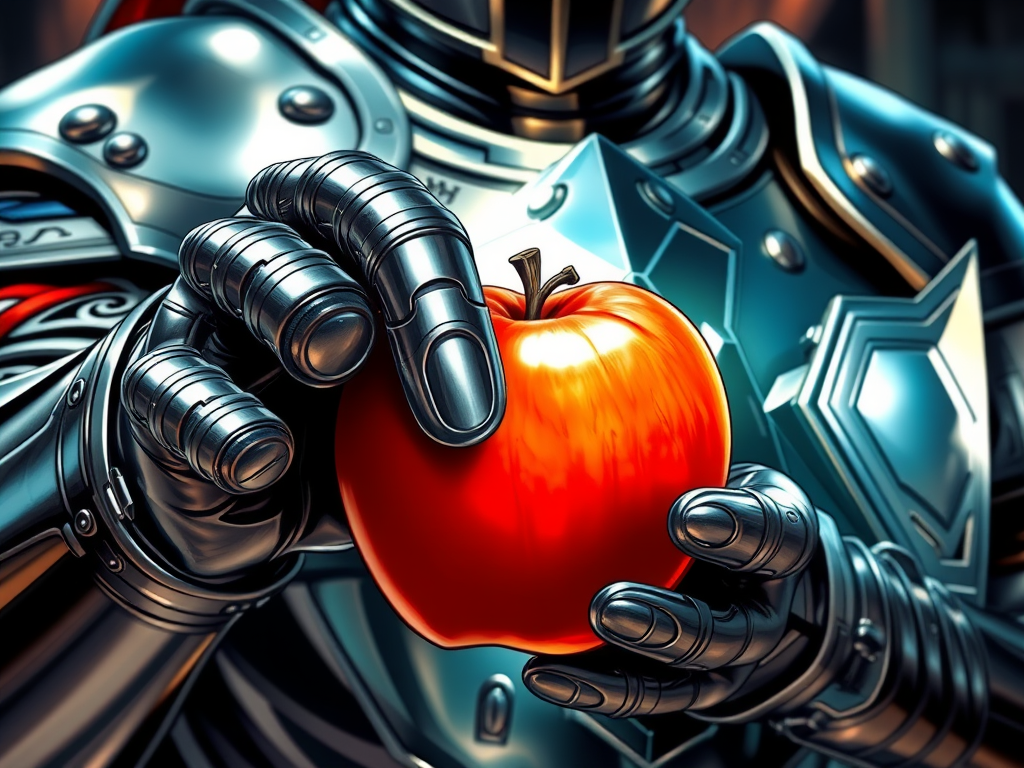
Image generated with AI. Apple is just one of those Knights. Also, this knight is missing fingers. AI isn’t taking anyone’s job.

Apple: A Double-Edged Sword of Security and Convenience

Apple products have long been hailed as the pinnacle of technological innovation and security. However, a closer look reveals a more nuanced picture. While Apple’s closed ecosystem undoubtedly offers a higher level of security compared to its open-source counterparts, it also comes with significant drawbacks.

The Security Dilemma: A Double-Edged Sword

One of the primary reasons people choose Apple is its robust security measures. The closed ecosystem limits access to the device’s core components, making it more difficult for malicious actors to exploit vulnerabilities. However, this security-focused approach can sometimes hinder user experience. For instance, recovering a lost or forgotten Apple ID password can be a frustrating ordeal.

Moreover, it’s important to remember that no system is entirely impenetrable. Even Apple devices can fall victim to targeted attacks and user error. The old adage, “The weakest link in the chain is often the user,” still holds true.

The Upgradeability Conundrum: A Step Backwards

One of the most significant criticisms leveled against modern Apple devices, particularly MacBooks, is their lack of upgradeability. While older models allowed users to customize their hardware by upgrading RAM and storage, newer models have adopted a more restrictive approach. This decision, while likely driven by cost and design considerations, limits the device’s lifespan and forces users to purchase entirely new machines when their needs change.

Image generated with AI. “I have an iproduct, I don’t have to worry about safety.”

A Balancing Act: Security, Convenience, and Innovation

Apple’s commitment to security is commendable, but it should not come at the expense of user experience and innovation. A balance must be struck between these competing priorities. By offering more flexibility and customization options, Apple could empower users to make informed choices about their devices without sacrificing security.

Ultimately, the decision to choose an Apple product is a personal one. While they offer a premium experience, it’s essential to weigh the benefits against the drawbacks. As technology continues to evolve, it’s crucial to stay informed and make informed choices.

What are your thoughts on Apple’s approach to security and upgradeability? Share your experiences and opinions in the comments below.

Love learning tech? Join our community of passionate minds! Share your knowledge, ask questions, and grow together. Like, comment, and subscribe to fuel the movement!

Don’t forget to share.

Every Second Counts. Help our website grow and reach more people in need. Donate today to make a difference!

One-Time
Monthly
Yearly

Make a one-time donation

Make a monthly donation

Make a yearly donation

Choose an amount

$5.00
$15.00
$100.00
$5.00
$15.00
$100.00
$5.00
$15.00
$100.00

Or enter a custom amount

$

Your contribution is appreciated.

Your contribution is appreciated.

Your contribution is appreciated.

DonateDonate monthlyDonate yearly