Android vs. Apple: Balancing Customization and Security

KeyTakeaways

Android vs Apple: The choice between Android and Apple boils down to valuing customization and freedom (Android) versus security and simplicity (Apple).

Android and Malware: While Android offers more openness, it also comes with a higher risk of malware. However, Google is constantly working on improving security.

Apple’s Security: Apple’s strict App Store and update control contribute to a more secure iOS system.

Importance of User Awareness: Regardless of the OS, users should be vigilant against malware by updating devices, avoiding suspicious links, and using strong passwords.

The Future of Mobile Security: The battle against malware is constantly evolving with advancements in AI and machine learning.

We know you’re listening and team android is better. Hail the green bubble.
Photo by cottonbro studio, please support by following @pexel.com

Malware in the depths

Ah, the age-old battle of Android vs. Apple, a saga more enduring than any soap opera, and with more plot twists than a telenovela. It’s the tech equivalent of the Montagues and Capulets, minus the tragic ending (we hope). So, grab your popcorn, and let’s dive into the melodrama that is the smartphone market!

Once upon a time, in the land of Silicon and Dreams, two mighty factions emerged: the sleek and stylish Apple, with its blue bubble of exclusivity, and the versatile Android, sporting a vibrant shade of green and a more… democratic approach to app selection. The stage was set for an epic showdown, the likes of which the tech world had never seen.

I’m telling you guys, apple has better products all round.
Photo by Karolina Grabowska, please support by following @pexel.com

Now, let’s address the elephant in the room: malware. It’s like the villain in our story, lurking in the shadows, ready to pounce on unsuspecting victims with a dastardly laugh. The Android market, bless its open-source heart, has become a bit of a Wild West, with reports of malware masquerading as apps, waiting to steal your credentials faster than a pickpocket in a crowded subway.

But fear not, dear reader, for it’s not all doom and gloom. The good folks at Google have been working tirelessly, like cyber sheriffs, patching up vulnerabilities with the urgency of a paramedic at a pie-eating contest. They’ve been squashing bugs left and right, from the Qualcomm GPU kerfuffle to the ARM Mali GPU hoopla.

On the other side of the fence, we have Apple, standing tall and proud, boasting about its security like a knight in shining armor. They’ve got a fortress around their App Store, scrutinizing every app like a hawk with a magnifying glass. It’s no wonder that many believe iOS to be the safer bet, with fewer vulnerabilities and a tighter grip on updates.

But let’s not forget our beloved Motorola Razr from the ’90s, a phone so sturdy it could probably survive a drop from the International Space Station. It’s the nostalgic hero of our tale, reminding us of simpler times when the biggest worry was running out of daytime minutes, not digital pickpockets.

So, where does this leave us, the humble users, in this clash of titans? Well, it boils down to what you value more: the freedom and customization of Android or the security and simplicity of Apple. It’s like choosing between a buffet and a set menu; both have their perks and quirks.

I don’t take calls from green bubble users, I’m sorry.
Photo by Andrea Piacquadio, please support by following @pexel.com

In conclusion, whether you’re team Android or team Apple, remember to keep your wits about you. Update your devices, don’t click on suspicious links, and maybe, just maybe, give a silent nod of respect to the indestructible phones of yesteryear. They didn’t have to deal with malware, just the occasional game of Snake.

And there you have it, folks, the latest chapter in the never-ending story of Android vs. Apple. Tune in next time for another thrilling installment, where we’ll probably still be debating the same thing, but with even more emojis. Stay safe, stay smart, and may the best OS win!

Enjoy what you read? Why not consider subscribing for more?

Don’t forget to share.

Tears for Fears Spreader Event

Quick note: if you’re viewing this via email, come to the site for better viewing. Enjoy!

Can’t wait to clear out this inbox. Oh? What’s this? A new script?
Photo by Andrea Piacquadio, please support by following @pexel.com

So you’re at your computer fast clicking through emails and you find one from Dave. You think to yourself, “I haven’t seen or heard from Dave for quite some time.” Dave is a friend from college if you went due to upbringing or peer pressure. And if you didn’t attend college, just know that Dave is someone you’re familiar with for the crucks of this story.

After viewing the email from Dave, you notice that the context of the conversation seems to be a bit off however, you figure it’s been a while and it would be nice to catch up on lost time.

You find that Dave had left an attachment at the bottom of the email and decided to check it out. After interacting with the attachment, you’re hit with a notification saying “We have downloaded all your files and encrypted them. You have 48 hours to pay a lump sum via Bitcoin or they will be deleted forever.” Big evil, diabolical laugh placed here.

Let me script the kind of event you may be facing here.

Peter: Oh look, Dave sent me an email!
William: Sir, are you sure that’s Dave? This email looks questionable.
Peter: Will, I’m tired of you and your lack of faith.
Photo by LinkedIn Sales Navigator, please support by following @pexel.com

Dave, not so Dave

The event you triggered is called ransomware, this is the act of gaining access to a target’s machine, collecting, and encrypting the data, and withholding it for ransom.

Many companies, big and small have encountered this at one point or another but the only difference between them and you are…well they usually have the money on hand to pay off the ransom whereas a regular person on the other hand may have a panic attack accompanied by the urge to run out and go play a game of Frogger.

Some time ago, certain ransomware surfaced going by the name of WannaCry. WannaCry had other names like WannaCypt and Wanna Decryptor but the end result was still the same.

Break in, collect, and encrypt the data, demand a nice close to unpayable ransom, and flake on the deal.

This isn’t how WannaCry looked but oh, I see what you did there.
Photo by Ketut Subiyanto, please support by following @pexel.com

Tears World Wide

So, how big of an effect did WannaCry have on the world? WannaCry was quite impactful, like a bully waiting for you outside of school at 3 o’clock wanting to punch your ever-loving lights out and you have no idea as to why, WannaCry knocked out more than 200,000 computers as a result quickly spreading across a span of about 150 countries.

This was a quick widespread infection that led corporate networks to panic which in turn led to catastrophic costs in billions of dollars in damages.

WannaCry even though it’s not prominent today and the event has been dealt with by a man going by the name Marcus Hutchins finding a kill switch, he inadvertently stopped the attack by registering a web domain found in the malware’s code. Didn’t know such a thing was possible but learning something new every day doesn’t hurt…well, not as much.

Enjoy the read so far? Why don’t you consider subscribing so you can keep up to date?

Hope you like your malware extra spicy.
Photo by Pixabay, please support by following @pexel.com

Spicy Malware

If you’re curious as to how WannaCry did its thing, don’t worry, you’re in good digital hands. WannaCry had a worm component to make it extra spicy.

Computer worms, if you’re not familiar with them, could infect other devices nearby without the need for interaction. This means that when a worm gets in, it immediately looks for other vulnerabilities and replicates itself, that way it doesn’t party alone.

Back to WannaCry, when it had found a device to infect, it would encrypt files, images, documents, and all those questionable videos that you made and stored on a hidden part of your c: drive labeled “I look good in my birthday suit, and you can’t tell me otherwise.”

There was no hacking of your computer on that one, just a lucky guess. But like with your interaction with Dave, when you click on the attachment you run the risk of all of that being lost.

Professor Ed: Folks, today we have to learn about handling questionable emails.
Student: What makes emails questionable?
Professor Ed: It’s questions like that is why you’re taking this training course.
Photo by RDNE Stock project, please support by following @pexel.com

Positive Ransom-forcement

What are some steps you can take to ensure your information doesn’t sign you up for a ransom note? Simple, avoid reconnecting with friends from school, it never ends well.

When receiving an email with any redirection be it a link or downloading of anything, cross-check with the sender to see if it’s in fact them and you are not getting spoofed.

Having an up-to-date anti-virus and up-to-date OS always helps as these patches are frequently released to prevent possible infection of your machine.

To owners of a business, have your staff properly trained in being aware of what to look for in suspicious emails.

Frequently back up your data on another device such as an external drive, that way if your information gets encrypted you can restore it from the last save.

If you do find that your device is infected, quickly isolate your system before it has a chance to extend its infection to other devices on your network.

It has been known that when dealing with a ransomware situation paying the ransom doesn’t guarantee the attacker will release your data back to you, they may in turn keep your data locked and sell it to other interested parties. All in all, just avoid it if possible.   

Professor: That’s excellent Tracy. How did you know about ransomware like this?
Tracy: Oh, I read a few scripts here and there.
Photo by Yan Krukau, please support by following @pexel.com

Made it this far and found this to be entertaining? Then a big thanks to you and please show your support by cracking a like, scripting a comment, or plug-in to follow.

Would like to give sincere thanks to current followers and subscribers, your support and actions mean a lot and has a play in the creation of each script.

Do you feel like there is something I may have missed on WannaCry? Script a comment below.

Cats & Hat Tricks

Consider following on social media!

Quick note: if you’re viewing this via email, come to the site for better viewing. Enjoy!

Yes human, keep petting me in hopes that I never turn on you.
Photo by Anna Alexes, please support by following @pexel.com

They are not Cats in a Hat and the eggs they offer will scramble your ham. If these cats come knocking at your door it’s not a good thing. Charming Kitten has employed a malicious tactic which is causing some major issues. We’re going to look at the attack, who is using it, the functionality and effects upon its release, and what are some ways to keep safe from these kittens dropping a plate at your doorstep.

That’s right kitty, you’re about to be exposed.
Photo by Cong H, please support by following @pexel.com

The Attack

Knocking on your door, what is this attack? Look no further than what’s being called “NokNok”. This is a backdoor type of malware, kind of like a trojan, that is targeting macOS (Mac Operating Systems).

Window users don’t let your hair down, you’re on the menu too. Like with trojans, once it’s in, it creates a backdoor for later entry and the victim won’t have a clue until it’s too late.

Jenny: Honey, the script said hackers, we can still trust the cat.
Brad: I still think we should get rid of it just in case.
Photo by Vlada Karpovich, please support by following @pexel.com

Who Can It Be Now

Now don’t let the name Charming Kitten fool you, there’s nothing cute about these cats. They are an Iranian government cyberwarfare group classified as an advanced persisting threat (APT) and have gone by other names such as APT35, Phosphorus, Ajax Security, and NewsBeef.

Enjoy the read so far? Why don’t you consider subscribing so you can keep up to date?

Things getting out of hand tend to take off.
Photo by SpaceX, please support by following @pexel.com

That Sinking Feeling

In this cyber-espionage comes the war you never wanted. Their targets include circles of US foreign affairs and nuclear security. Their attacks involve email phishing attempts, which could be considered whale phishing, to a nuclear security expert at the U.S.-based think tank, focused on foreign affairs to deliver a troublesome link to a Google script macro that would redirect to a Dropbox URL (Uniform Resource Locator) housing a RAR (Roshal Archive) archive.

Once presented with this file, an LNK dropper sets off a multi-stage process to deploy GorjolEcho, in turn, shows a decoy of a PDF document while awaiting the payload from a remote server. If it recognizes that it is in an Apple or MacOS, it will tweak its operation by sending a second email with a ZIP archive storing a Mach-O binary that masks as a VPN (Virtual Private Network) application. In truth, this would be an AppleScript to contact the remote server to download the payload to run the Bash script for the backdoor calling NokNok.

NokNok then retrieves modules that are able to gather information as to the running process, installed applications, and metadata from the system. The threat actor uses a fake file-sharing website which likely functions as a footprint for visitors and tracks new victims.

Out of all this, just know once it’s in it begins to collect information on the machine and user or users in secret.

Looks like that time for some awareness training.
Photo by cottonbro studio, please support by following @pexel.com

The Prevention

Charming Kitten has a high degree of adaptability because it can target both MacOS and Windows. It is strongly recommended when going through emails that caution is exercised.

Emails with attachments or links could be infectious which could put your machine at risk. Never download from untrusted or unknown sources as this could house malicious malware.

Always use and keep up to date with the anti-virus software as this will alert you to any danger on your machine. Frequent scanning of your computer should help safeguard you from experiencing a NokNok at your door.

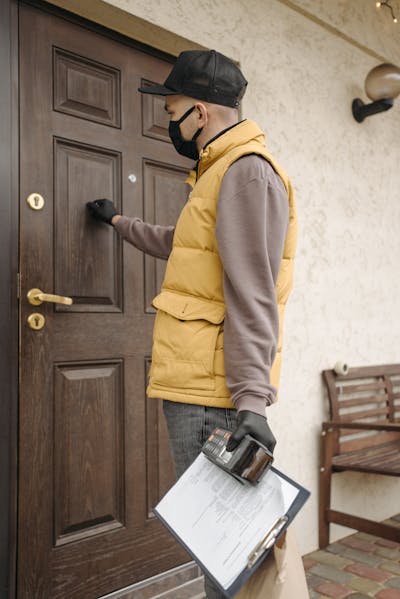
I have a malware package from “We are Cats-To-Go.”
Photo by Pavel Danilyuk, please support by following @pexel.com

Made it this far and found this to be entertaining? Then a big thanks to you and please show your support by cracking a like, sharing this with whomever, scripting a comment, or plug-in to follow.

Would like to give sincere thanks to current followers and subscribers, your support and actions mean a lot and has a play in the creation of each script.

Do you feel like there is something I may have missed on NokNok? Script a comment below.